Homeowner Says She Planned a Four-Foot Privacy Hedge Along Her Lakefront Yard, Then Her HOA Vice President Threatened to Sue Over the Trees Growing Above It
A person shared his story about planning a new landscape that seemed, at least on paper, to fit neatly inside every neighborhood rule. He wanted four-foot hedges along his side and backyard, with carefully selected trees planted behind them to create additional privacy. The plan sounded like a normal gardening project until his neighbor, who happened to be the HOA vice president, made an unexpected threat.
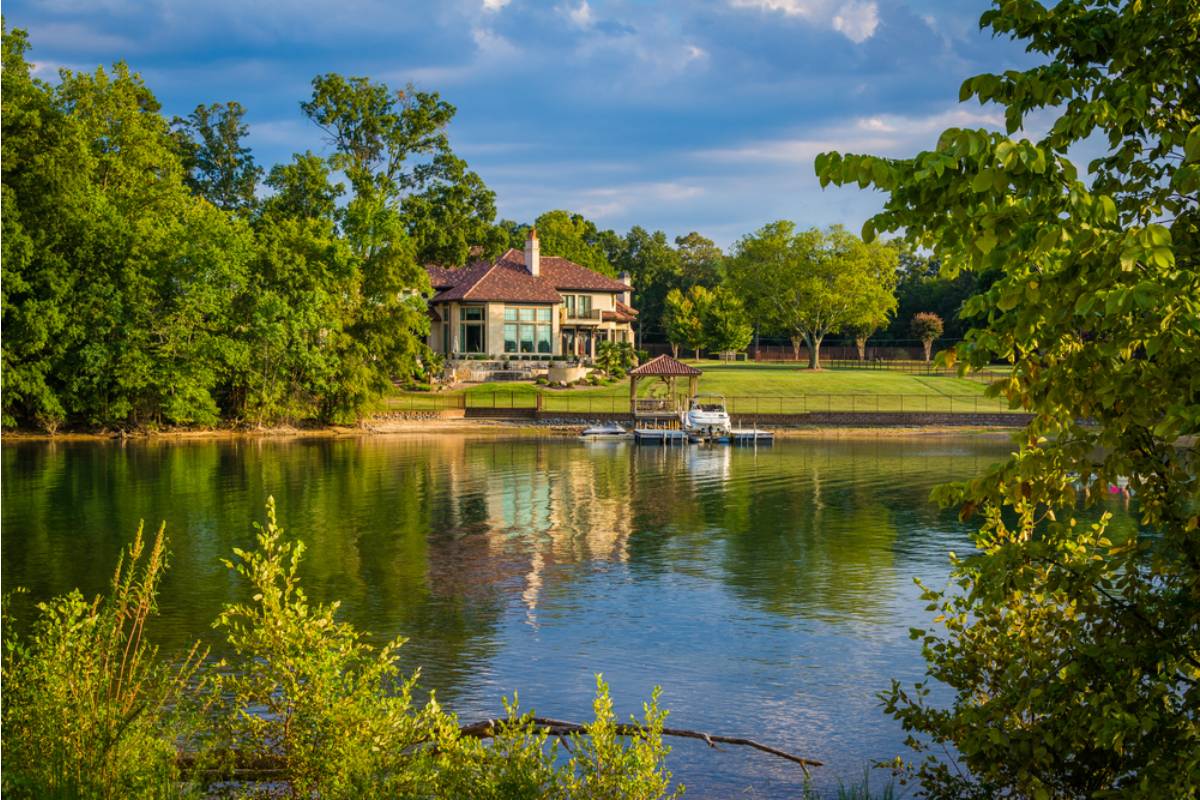
The neighbor did not object to gardening in general, but he strongly objected to the way the proposed plants would affect his view. From his property, the lake was visible through the homeowner’s backyard, and he apparently enjoyed that sightline. The homeowner now had a strange dilemma: should he give up his dream of privacy, or plant a perfectly ordinary garden and risk ending up in court?
The Backyard Privacy Problem
The homeowner explained that the neighborhood allowed hedges no taller than four feet in the side and backyard. At the same time, the rules allowed trees in those areas without specifying a maximum height. That combination gave him an idea that seemed almost too simple.
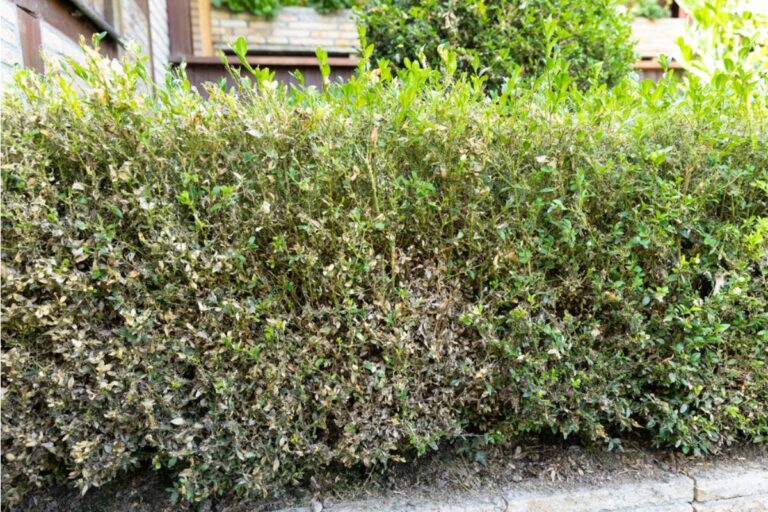
He planned to place four-foot hedges beneath trees whose branches would begin around the same height. The hedge would remain within the written height limit, while the tree canopy would naturally rise several more feet above it. From a distance, the landscaping could create an eight-to-twelve-foot visual barrier without technically turning the hedge itself into a twelve-foot wall.
The Neighbor Notices the Plan
The idea might have stayed peaceful if the neighbor had simply ignored it. Instead, the neighbor, who was also the HOA vice president, made it clear that he intended to take legal action if the landscaping went ahead. His primary objection was that the combined hedge and tree canopy would interfere with his view toward the lake.
That immediately changed the atmosphere around a project that had not even started. There were no installed plants, no completed landscaping, and no sudden wall appearing between the properties. There was only a plan on paper and a neighbor who was already talking about court.
The Rules Seemed Surprisingly Clear
The homeowner went back through the neighborhood’s rules searching for anything that specifically prohibited the proposed planting arrangement. He found restrictions on hedge height, but he could not find a rule banning trees from creating privacy above those hedges. He also found nothing that explicitly guaranteed the neighbor an unobstructed lake view.
That distinction became central to the entire dispute. The homeowner believed he was following the letter of the rules because every hedge would remain four feet tall and the trees were allowed. The neighbor, however, seemed to view the combined effect as a clever attempt to get around the purpose of the hedge restriction.
The Mysterious HOA Approval Process
There was another problem that made everything much messier. The neighborhood apparently did not have a formal architectural approval process, and the HOA was described as extremely hands-off. There were no regular meetings, detailed minutes, or newsletters providing residents with a predictable procedure for submitting landscaping plans.
The homeowner therefore did what seemed reasonable under the circumstances. He emailed the HOA president with his proposed plan, and the president told him that everything should be fine. That informal response felt reassuring at first, but the homeowner quickly realized that a casual approval might not be enough to protect him from someone who wanted to challenge the project.
He Decides to Get More Eyes on the Garden
Rather than relying entirely on the HOA president’s opinion, the homeowner contacted the local government. He wanted to make sure the particular tree and shrub species he had chosen were appropriate for the lakefront environment. That step gave him another layer of confidence that the garden itself was not environmentally inappropriate.
He also spoke with his landscaper, who agreed that the arrangement was not simply a hedge exceeding four feet. The landscaper put that opinion in writing, which gave the homeowner something more concrete than a casual conversation. Slowly, the proposed garden was gaining paperwork while the dispute was gaining tension.
The Plant List Gets More Interesting
The homeowner even had specific plants in mind for the project. Beneath the tree canopies, he considered camellias, gardenias, hydrangeas, and azaleas, while sunnier portions of the landscape could feature plants such as Texas sage, crotons, and shell ginger. The goal was not to create a single giant wall, but a layered garden with different plants occupying different levels.
That variety also made the project feel more like an actual landscape design than a loophole. Flowering shrubs would fill the lower level, tree trunks would create structure, and higher branches would provide privacy above the hedge. From the homeowner’s perspective, this was simply how attractive layered gardens naturally work.
Then Someone Questions the Definition of a Hedge
A response from a person raised an unexpectedly important point. The word “hedge” can sometimes refer to plants other than traditional shrubs, meaning that trees arranged in a row could potentially be considered part of a hedge depending on the governing language. Suddenly, the four-foot rule looked much less straightforward.
The homeowner realized that the entire dispute might depend on a single definition buried inside the community documents. If “hedge” was broadly defined, his neighbor could argue that the taller trees effectively formed part of the prohibited barrier. If the documents treated hedges and trees as separate landscaping categories, the homeowner’s position would look much stronger.
The Neighbor’s View Becomes the Real Issue
As the story developed, it became increasingly obvious that privacy was only one part of the disagreement. The homeowner wanted to enjoy his backyard without feeling watched by neighboring properties. His yard included a pool, and he wanted to spend time outside, exercise, and host guests without worrying that someone across the property line could easily see everything happening there.
The neighbor saw the exact same landscape from the opposite direction. To him, those trees and shrubs were not creating privacy; they were taking away a view he enjoyed. The same garden could therefore be described as a privacy screen by one person and a view obstruction by another.
The Homeowner Draws a Line
The homeowner admitted that he understood why the neighbor might be disappointed. Losing a pleasant lake view could certainly be frustrating, particularly for someone who had become accustomed to seeing the water through the neighboring yard. But he questioned whether his neighbor’s preference should control what could legally be planted on someone else’s property.
He also pointed out that the properties were not equally positioned. His home had the lakefront advantage, while the neighbor enjoyed looking through his yard toward the water. From the homeowner’s perspective, the view existed partly because his property happened to remain open, not because the neighbor had purchased a legal promise that it would stay that way forever.
Then Another Concern Appears
A response from a person introduced another possible complication: some properties can have specific rights or restrictions involving views, waterfront access, or neighboring property conditions. Those rights may not always be obvious from casual HOA rules, and their existence can depend on documents or local law. That meant the homeowner could not safely assume that the absence of a lake-view rule in the HOA paperwork ended the conversation.
This was enough to make him consider having an attorney review everything before spending a large amount of money on landscaping. A lawyer could examine the governing documents, property restrictions, and the precise wording surrounding hedges and trees. The homeowner wanted certainty, but he was beginning to understand that gardening and certainty do not always grow in the same soil.
The HOA’s Casual Culture Complicates Things
The homeowner found the HOA’s relaxed attitude both comforting and frustrating. Residents apparently handled many property decisions informally, and the president’s response suggested that people generally did their own thing. That worked perfectly well when nobody disagreed, but it created enormous uncertainty once someone decided to challenge a project.
Without a formal architectural committee or consistent written approval procedure, the homeowner worried about what could happen later. Could the association approve something casually and then change its interpretation afterward? Could a board member object personally even if the rest of the board was comfortable with the plan?
His Neighbor Had Some Rules of His Own
The homeowner also mentioned that the neighbor’s own backyard was hardly a perfect example of strict compliance. Visible from the street were assorted materials, damaged property, and a large tree that appeared to be declining. Yet the homeowner said he had never complained about those conditions because he was not interested in policing every detail of someone else’s property.
That contrast bothered him for another reason. He was being threatened over a future garden that had not even been planted, while existing issues on the neighbor’s property were apparently being tolerated. The dispute was beginning to feel less like a neutral discussion about landscaping and more like a personal conflict wearing an HOA costume.
People Begin Arguing About Intent
Some responses from people believed the homeowner was technically following the rules while violating their supposed spirit. Their argument was that the hedge restriction must have been designed to preserve openness, and using trees above the hedge to create a much taller privacy barrier defeated that purpose.
The homeowner saw the situation differently. To him, rules should be written clearly enough that residents know what they are allowed to do, rather than requiring everyone to guess at an invisible intention. He was willing to follow a clearly stated restriction, but he did not think he should surrender his privacy because someone believed his landscaping was too effective.
The Cost of Being Right
Another response from a person pointed out the uncomfortable reality that winning and avoiding a lawsuit are two different things. Even a homeowner who ultimately has the stronger position can still face legal expenses, stress, and months of uncertainty after someone files a case. That possibility made the planned landscaping feel much more expensive than the price quoted by the landscaper.
The homeowner began asking the question that mattered most: what happens if he spends thousands on trees, shrubs, soil preparation, and installation, only to be ordered to remove everything later? A lawyer could potentially reduce that risk, but legal advice itself would cost money before a single plant ever entered the ground. His garden budget suddenly needed a legal line item.
The Garden Becomes a Test of Autonomy
At the heart of the dispute was a surprisingly personal idea. The homeowner believed his property should remain his space, especially when his choices followed the written rules. Privacy in his own backyard seemed to him like a reasonable use of the property rather than an attempt to punish the neighbor.
The neighbor apparently viewed the situation through a different lens. He had grown accustomed to seeing the lake through the neighboring yard and did not want that view to disappear. Neither person seemed eager to give up what they considered a reasonable expectation, which meant the garden had become a physical symbol of two competing ideas about property.
The Final Question Hangs Over the Garden
The homeowner’s last concern was whether silence from the HOA could eventually count as approval. He had submitted his plans informally, received a positive response from the president, and started gathering supporting information from professionals. But without a clearly defined review timeline, he could not tell whether waiting a certain number of days would protect him.
That uncertainty left him standing at the edge of the project without planting the first shrub. Everything was ready in his imagination, from the flowering bushes to the tree canopy, but the final decision still depended on words in documents and interpretations that were anything but simple. The garden was waiting, while the possibility of court hovered over it like a storm cloud.
The Twist Behind the Privacy Garden
What began as a landscaping project intended to create a little backyard privacy had turned into a dispute about definitions, property rights, neighborhood expectations, and the strange power of an informal HOA. The homeowner had not built a wall, exceeded the stated hedge height, or ignored every authority around him. He had simply found a way to combine permitted plants in a way that produced a much bigger privacy effect than a four-foot hedge could provide alone.
And that was the twist: the most controversial part of the garden was not what the homeowner planned to plant, but how effectively those completely ordinary plants could work together. A four-foot hedge could remain four feet, a tree could remain a tree, and yet the finished landscape could still transform the view between two homes. By the time the homeowner was ready to plant, the question was no longer whether the garden could grow, it was whether the neighborhood would let him keep his privacy once it did.