Homeowner Says She Went Next Door to Comfort a Grieving Neighbor, Then a Few Unwanted Touches and a Garden Hose Made Her See Him Very Differently
A person shared his story after visiting an older neighbor whose partner had recently died. The neighbor had called because he said he was struggling with the loss, and despite not really wanting to go, the homeowner felt sorry for him. After all, this was not a complete stranger, because she had previously helped the couple with hospital trips and grocery runs.
What started as an act of kindness quickly became uncomfortable inside the neighbor’s home. Instead of simply talking about his grief, he began crossing boundaries that had nothing to do with mourning. By the time the visit ended, the homeowner was no longer thinking about helping someone through a difficult day and was already planning how to keep her distance.
Their History Made the Visit Feel Harmless
The homeowner had known the couple for some time, which made the situation feel safer at first. She had helped the man’s late partner get to the hospital and had occasionally picked up groceries for them. Those small favors had created the kind of familiarity people often associate with being good neighbors.
That history seemed to matter when the grieving man asked her to come over. She expected a difficult conversation, perhaps a cup of coffee and memories of the woman who had died. Instead, the visit took a turn she had never expected, proving that familiarity does not always mean someone will respect your boundaries.
The Conversation Took an Uncomfortable Turn
While crying about missing his partner, the neighbor began touching the homeowner’s thigh several times. She kept moving farther away each time it happened, quietly creating more and more space between them. When moving away was not enough, she even placed her bag between them as a physical barrier.
The homeowner later admitted that she wanted to tell him to stop but could not get the words out. Her body seemed to be doing the talking instead, with every movement showing that she was uncomfortable. The strange part was that she knew exactly what she wanted to say in her head, yet saying it aloud felt impossible in the moment.
Her Bag Became a Small Boundary Line
There was something almost painfully simple about the way she used her bag to create distance. It was not a dramatic confrontation or a shouted warning, just a small object placed between two people because one of them would not respect personal space. In a tense moment, that little barrier became the clearest signal she could manage.
The homeowner was also aware that making a scene might change the situation in ways she could not predict. Instead of challenging him directly, she kept trying to create space and move toward the end of the visit. Sometimes, the quietest actions are the ones people take when they are focused on getting themselves safely out of an uncomfortable situation.
She Could Not Understand Why She Froze
The homeowner explained that she had experienced serious boundary violations as a child, which has affected how she reacts when someone crosses a line. She described knowing exactly what she wanted to say while finding herself unable to actually say it. Afterwards, that silence left her angry with herself even though she had been trying to get through the situation.
A response from a person introduced the idea of a stress reaction sometimes called fawning, in which someone tries to keep the situation calm by becoming agreeable rather than confronting the threat. The explanation helped the homeowner understand why her response had not matched what she imagined she would do beforehand. Instead of seeing her behavior as weakness, she began viewing it as a reaction that helped her get through an alarming moment.
Then He Started Talking About a Young Woman
The conversation became even more unsettling when the neighbor said he could not be alone and wanted to find a young woman to live with him. The comment arrived while the homeowner was already trying to create distance, making the situation feel even more uncomfortable. Suddenly, his earlier behavior seemed less isolated and much harder to dismiss as an awkward attempt at comfort.
The homeowner did not entertain the idea. She continued saying no as the neighbor talked about the possibility of someone living with him. What had begun as a conversation about grief was now mixed with suggestions that made her feel increasingly trapped and uneasy.
The Free Shower Offer Came With a Bigger Proposal
The neighbor then offered the homeowner something that seemed oddly personal. Because she was renovating her own home and did not currently have a bathroom, he suggested that she shower at his place. He then went a step further and offered her the chance to move into one of his properties because, according to him, everything would be free.
Once again, she said no. The offers might have sounded generous on paper, but the timing changed everything because they came after he had repeatedly ignored her attempts to create physical distance. What should have been a simple favor between neighbors now carried a completely different feeling.
Her Renovation Suddenly Felt Like a Complication
The bathroom renovation was supposed to be an ordinary household inconvenience. Instead, it had accidentally become part of a situation that made the homeowner vulnerable to an offer she never wanted. A missing bathroom may be annoying when planning a garden or repairing a house, but it becomes a very different problem when someone uses it to invite themselves into your personal life.
That realization appears to have added another layer to the discomfort. The homeowner had gone next door intending to help someone through grief, not to accept housing, favors, or anything else from him. The more he offered, the more obvious it became that the visit was no longer simply about being a considerate neighbor.
By the Time She Left, She Felt Completely Different
Eventually, the homeowner managed to leave the house. The neighbor handed her the remainder of her coffee in a travel mug and told her to keep it so she would remember him after he died. Instead of becoming a sentimental keepsake, the cup became one more uncomfortable reminder of a visit she desperately wanted to put behind her.
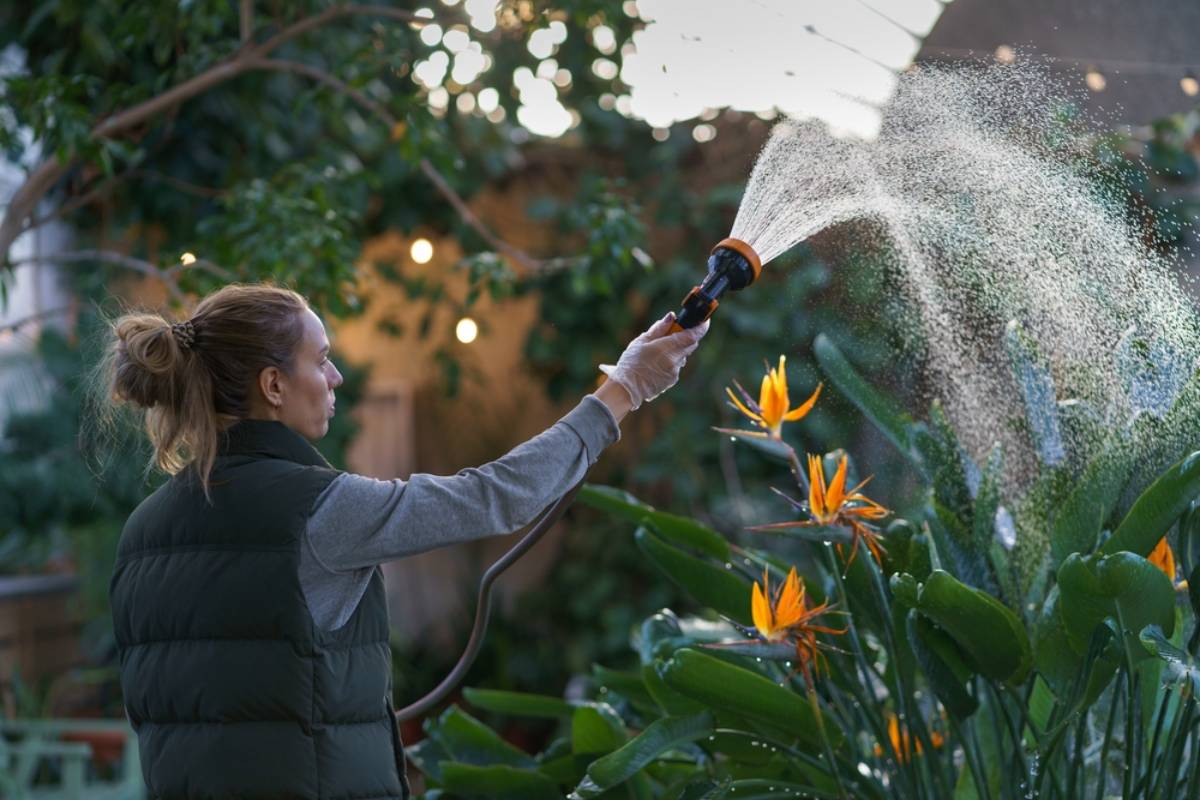
She threw the coffee away on the way home. In a detail that makes the story especially memorable for a gardening audience, she then stood outside and washed herself with a garden hose, as though she needed to physically shake off the entire experience.
The Garden Hose Became the Strangest Part of the Story
There is something striking about that garden hose moment because it was such an ordinary household object used in an extraordinary emotional moment. A hose usually means watering flowers, rinsing muddy tools, or cleaning soil from a patio after a long afternoon outside. For this homeowner, it became a private way of trying to feel clean and separate from what had just happened.
Gardening spaces can feel peaceful precisely because they belong to us. A backyard, a row of plants, or even a patch of soil can become a place where people regain a sense of control over their surroundings. After a visit where another person repeatedly ignored those boundaries, standing outside with the hose may have felt like reclaiming a small piece of that control.
Blocking His Number Was the Final Boundary
The homeowner later blocked the neighbor’s number. It was a straightforward decision, especially after realizing she did not want further contact with him. A response from a person encouraged her not to blame herself and suggested that cutting off communication was a sensible way to avoid another uncomfortable encounter.
For the homeowner, blocking the number also created a clear line where there had previously been uncertainty. She no longer had to wonder whether he would call again or whether she would feel pressured to answer. Sometimes the most important boundary is not the one you explain out loud, but the one you quietly enforce.
She Kept Wondering Whether She Had Done Enough
Despite leaving the house, creating distance, rejecting his offers, and blocking his number, the homeowner still questioned herself. She worried that freezing had meant she had failed to protect herself properly. That kind of self-doubt became one of the hardest parts of the experience because she was judging her own reaction after the danger had already passed.
A person responding to her story pushed back against that thinking. They pointed out that people do not always respond to frightening or threatening situations by fighting back, and that freezing or trying to keep someone calm can happen automatically. The homeowner said that explanation changed the way she looked at the entire experience.
Kindness Was Never the Problem
The homeowner had gone there because she cared about someone who had just lost a partner. She had already spent time helping the couple in practical ways, from hospital visits to grocery runs, and there was nothing unreasonable about wanting to offer comfort. The problem was not that she had been compassionate, but that her kindness was met with behavior that made her uncomfortable.
That distinction became one of the biggest lessons from the story. Being a good neighbor does not mean giving someone unlimited access to your time, home, body, or personal space. Just as a gardener decides where a path ends and a flower bed begins, people are allowed to have boundaries that others are expected to respect.
The Twist Was Not What She Expected From a Neighbor
The homeowner expected grief, sadness, and perhaps an emotional conversation over coffee. Instead, she encountered unwanted touching, uncomfortable offers, and behavior that made her rethink the relationship entirely. The person she had approached as someone deserving sympathy became someone she no longer felt comfortable being around.
That is what gives the story its unsettling twist. Nothing about the visit began as a dramatic confrontation, yet a simple act of neighborly kindness ended with a garden hose, a discarded coffee, and a blocked phone number. Sometimes the most revealing moment is not when someone tells you who they are, but when they ignore the first boundary you quietly put in front of them.
For Her, Home Meant Drawing the Line Again
After everything happened, the homeowner was left trying to make sense of an experience she never expected to have. The garden hose, the renovation, the coffee mug, and even the familiar neighbor’s house had all become connected to a memory she would rather forget. Still, there was one thing she could control: who was allowed back across her personal boundaries.
Like a garden fence, those boundaries do not have to be aggressive to be real. They simply need to be there, and they need to be respected. This homeowner may have gone next door intending to offer comfort, but she ultimately returned home with a much clearer understanding of where her own line begins and ends.