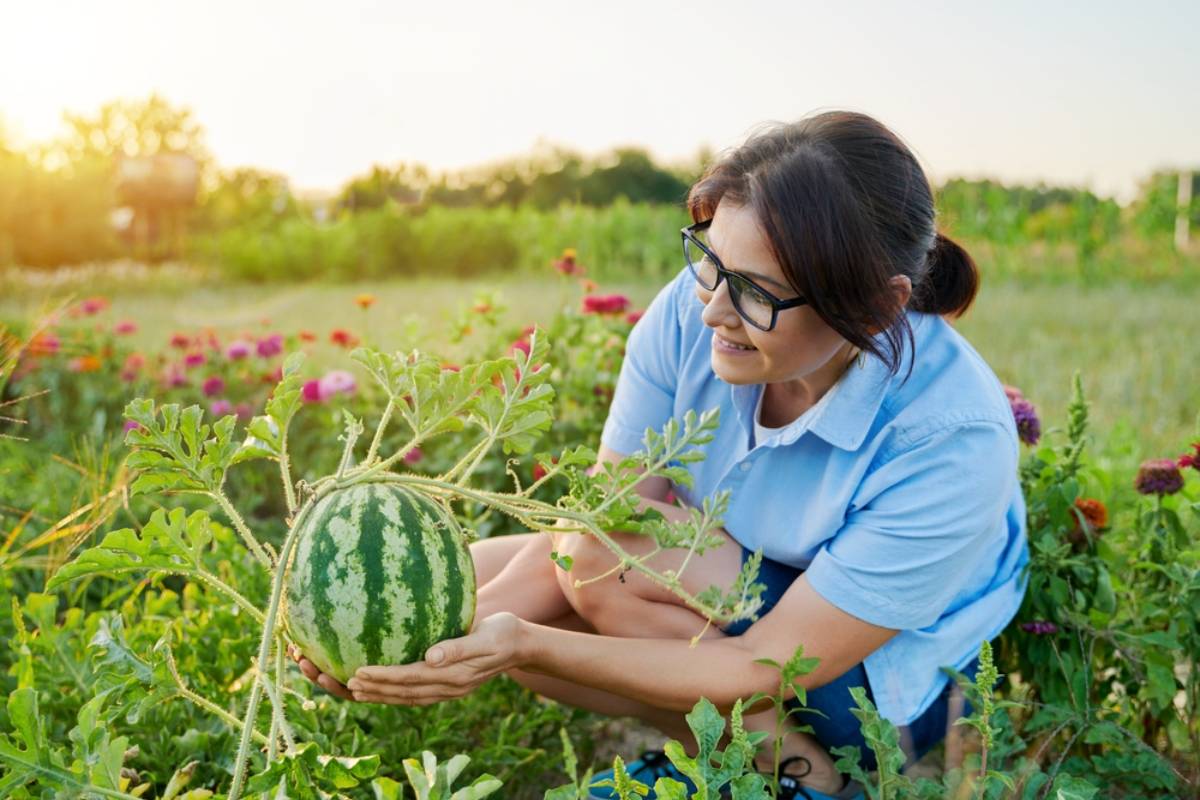
Homeowner Says Someone Helped Themselves to His Homegrown Watermelon Before He Could Enjoy the Harvest, Then the Garden Mystery Took an Infuriating Turn
A person shared his story about a gardening experiment that began with a simple question: could he grow a watermelon himself? Rather than investing in a large vegetable garden, he planted a single seed in a big pot and waited to see what would happen. What followed was a surprisingly successful little gardening project that gave him every reason to feel proud.
The plant thrived, and watching it grow turned a casual experiment into something worth celebrating. For anyone who has ever nurtured a plant from seed, the excitement is familiar, especially when the first fruit finally begins to develop. Little did he know that his first homegrown watermelon would eventually become the source of a family dispute.
The Little Plant Outgrew Its First Home
At first, the watermelon plant seemed perfectly happy growing in its large pot. As it developed, however, the plant eventually became too big for its original container, creating a new challenge for its enthusiastic grower. His experiment had worked so well that he now needed more room for the plant to continue growing.
That is a pretty good problem for any gardener to have, even if it requires some rearranging. Watermelon vines can spread considerably, and their developing fruit often benefits from having enough space and suitable growing conditions. Instead of giving up on his ambitious little plant, he accepted an offer that seemed to solve everything.
His Sister Offered the Perfect Gardening Solution
His sister and her husband had a piece of land with a new vegetable patch, making their property a promising place for the growing watermelon. They offered to look after the plant, giving it more room than the pot could provide. For the original grower, this sounded like a practical arrangement that would allow his experiment to reach its full potential.
There was also an important promise attached to the offer. His sister said she would let him know when the watermelon was ready so he could come over and eat it himself. With the plant in seemingly capable hands, he had every reason to expect a happy ending.
The Watermelon Was Supposed to Be a Shared Celebration
The arrangement was not simply about finding somewhere to put an oversized plant. The watermelon had started as his own gardening experiment, and he had followed its progress from a single seed to a thriving fruit-bearing plant. Getting to taste the finished product was part of the experience he had been looking forward to.
His sister’s invitation made that expectation even clearer because she specifically promised he could come over when the fruit was ready. It was a small gesture, but it gave the project a satisfying finish to anticipate. Unfortunately, the people responsible for protecting that ending apparently had a different plan.
One Visit After Work Changed Everything
One day, the man stopped by his sister’s property after finishing work to see how the watermelon was doing. It was the sort of casual visit any excited gardener might make when waiting for a long-awaited harvest. Instead of finding a fruit he could finally enjoy, he discovered that his sister and her husband had already eaten it.
The entire point of the arrangement had been to let him share in the harvest, so the discovery was understandably upsetting. This was not a stranger sneaking into the garden or an animal nibbling on a vine overnight. The people who had agreed to look after the plant had consumed the very fruit they had promised him.
The First Homegrown Harvest Was Gone
Growing a watermelon requires patience, attention, and time, even when the project involves just one plant. From planting the seed to watching the fruit develop, the grower had invested himself in seeing whether he could successfully produce a watermelon. Now the experiment had reached its final stage without giving him the reward he had anticipated.
The loss was especially frustrating because there was no second watermelon waiting in the garden to make up for the disappointment. The story did not describe a failed crop or an unexpected gardening problem that destroyed the fruit. Instead, the watermelon was gone because his sister and brother-in-law had eaten it before he had the chance.
The Most Infuriating Part Was Their Lack of Remorse
Losing the watermelon would have been disappointing enough, but the man’s account highlighted another detail that made the situation sting. He described his sister and her husband as showing zero remorse after eating it. That reaction made the incident feel less like an innocent misunderstanding and more like a disregard for the promise they had made.
A sincere apology might not have brought the fruit back, but it could at least have acknowledged the time and effort behind the project. Instead, the story left readers wondering how anyone could eat the one fruit someone had grown from seed for the first time. For a gardener who had been excited to taste the results of his work, that lack of consideration was difficult to overlook.
A Response From a Person Suggested Raiding Their Vegetable Patch
A response from a person proposed a cheeky way to settle the matter: the man could start taking whatever was ready to harvest from his sister’s vegetable patch. The suggestion was clearly intended as petty revenge rather than serious gardening advice. After all, if someone had helped themselves to his carefully grown watermelon, the temptation to return the favor was easy to understand.
The idea also turned the story into a playful battle over homegrown produce. Vegetable patches can contain weeks of effort in the form of ripening tomatoes, cucumbers, peppers, and other crops. Of course, taking someone else’s harvest would only repeat the original problem, but the suggestion captured the frustration of a gardener whose patience had gone unrewarded.
Another Person Brought Groundhogs Into the Story
Another response from a person suggested blaming the missing produce on groundhogs. The joke added an unexpected wildlife angle to an incident that had nothing to do with a confirmed animal attack. In a real garden, groundhogs can damage vegetable plants and eat developing crops, making them familiar suspects whenever a harvest mysteriously disappears.
That made the suggestion particularly amusing in the context of a family dispute. Instead of discussing the promise that had been broken, the imaginary culprit could conveniently become a hungry garden visitor. The watermelon might already have been gone, but the conversation had found a way to turn the loss into a running joke.
The Garden Became the Perfect Setting for Petty Revenge
The responses continued exploring the idea of returning to the vegetable patch and helping oneself to the harvest. Some suggestions imagined the man taking produce openly, while others leaned into the running groundhog joke. Although none of these ideas was reported as an action he actually took, they showed how quickly a missing watermelon could inspire elaborate revenge fantasies.
There is something particularly frustrating about having someone else enjoy the results of your gardening work without asking. A ripe vegetable or fruit represents more than its value at the grocery store because it also reflects the effort involved in getting it to harvest. That is why the suggestion of raiding the vegetable patch struck a nerve with people who understood the satisfaction of growing their own food.
Gardeners Know That One Fruit Can Mean a Lot
For someone who has never grown produce, a single watermelon might not seem worth getting upset over. Yet growing a plant from seed can create a personal attachment that makes the eventual harvest feel like a genuine achievement. When the first fruit disappears before the grower can even taste it, the disappointment can be much greater than the price of replacing it.
Watermelon plants also require suitable temperatures, consistent moisture, sunlight, and room for their vines to develop. Their fruits take time to mature, so a gardener cannot simply replace a lost harvest overnight. The man had successfully grown his first watermelon, but the chance to enjoy that accomplishment had been taken away.
Growing Food Requires More Than Good Soil
The story also highlights a side of gardening that rarely appears on seed packets or in growing guides: other people need to respect the work involved. Healthy soil, regular watering, and a suitable growing space are essential, but they cannot guarantee that someone will leave the finished produce alone. Even a successful crop can become a source of frustration when expectations are not respected.
For gardeners who share space with family members, friends, or neighbors, agreeing on who owns the harvest can prevent awkward situations. A quick conversation about which fruit belongs to whom may sound unnecessary when everyone is getting along. However, this watermelon story is a reminder that clear expectations matter just as much as good growing conditions.
The Funniest Revenge Ideas Still Could Not Replace the Fruit
Some responses suggested giving the sister and her husband watermelon-related gifts at future celebrations, while others imagined repeatedly reminding them of what they had done. The suggestions were exaggerated, humorous, and clearly rooted in the frustration of watching a long-awaited treat disappear. A few people even entertained the idea of making the incident a running family joke.
Still, no amount of teasing could recreate the experience of tasting the original harvest. The man’s first watermelon had been a personal gardening milestone, and that particular moment could not be repeated with a store-bought fruit. The incident had transformed a small experiment into a memorable family story, although probably not the kind of memory he had hoped to create.
His First Watermelon Left Behind a Bigger Lesson
The original experiment was a success in one important sense because the man proved that he could grow a watermelon from a seed in a pot. The plant thrived, outgrew its container, and developed far enough that it could be moved to a larger growing space. The disappointing ending came not from the plant itself but from the people who had agreed to care for it.
A response from a person captured the broader frustration by pointing toward the importance of respecting someone else’s time and effort. That lesson applies to everything from picking flowers without permission to harvesting vegetables from a shared garden without checking first. Homegrown food may look tempting, but the person who grew it deserves the chance to decide when it is ready to share.
The Next Harvest Deserves a Better Ending
After this experience, the man may think twice before handing another carefully grown plant over to someone else, although he did not describe any specific future plans. His successful watermelon experiment showed that he had the patience and ability to grow something worthwhile. The next challenge, should he decide to try again, would be making sure he gets to enjoy the results himself.
Perhaps the most satisfying ending would be another watermelon grown from seed, carefully tended until the day it is ripe and ready to eat. This time, a clear agreement about who gets the first slice could prevent a repeat of the previous disappointment. After all, gardening should end with the grower enjoying the harvest, not arriving after work to discover that the entire reward has already vanished.