Homeowner Says the HOA Denied Trimming Her Tree, Then She Discovered a Serious Split and Learned the Tree Had Been a Disaster Waiting to Happen
A homeowner became suspicious after noticing that her tree had been trimmed farther into her property than expected. She cared for her own yard and said she had only ever seen the HOA’s gardeners working on the opposite side of the fence. When she asked about the trimming, the HOA denied that its gardeners had touched her tree, leaving her wondering who had actually made the cuts.
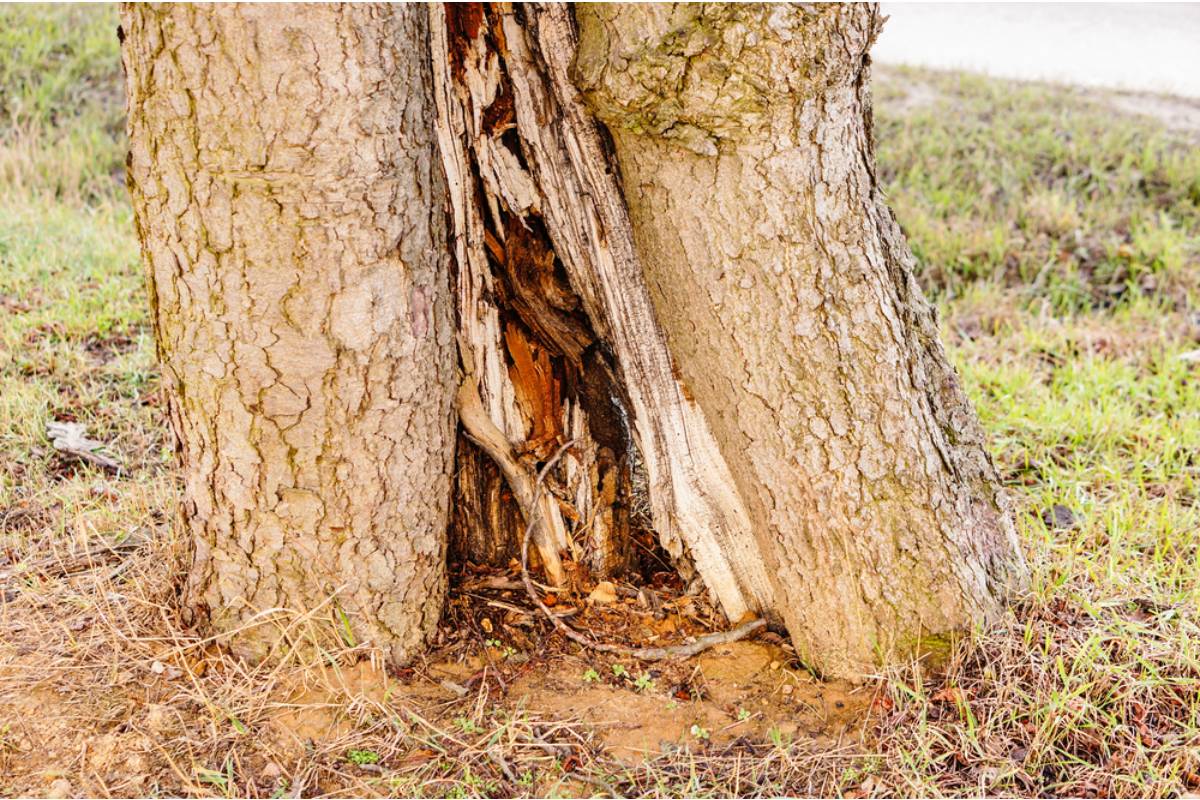
Then she noticed something much more concerning. A large split had appeared in the tree’s trunk, and she could not tell whether the trimming had caused it or simply exposed a weakness that was already there. What followed was less of a straightforward HOA dispute and more of a lesson in how quickly a seemingly healthy tree can become a safety concern.
The Tree Was Supposed to Be Her Responsibility
The homeowner explained that she normally takes care of her own yard rather than relying on the HOA’s landscaping crew. The distinction mattered because she knew where the property line was and had watched the HOA gardeners working on the other side of the fence. She said she had never seen them intentionally working on her tree.
That made the discovery particularly frustrating. According to her account, the gardeners had trimmed roughly two feet onto her property, even though the HOA denied that they had done so. She was left trying to determine whether the trimming was connected to the problem she noticed afterward.
Then She Spotted the Split
The most worrying discovery was a large split in the tree’s trunk. The homeowner could not prove that the split had been caused by the recent trimming, but the timing naturally made her suspicious. She wanted to know how serious the damage was before deciding what to do next.
The tree appeared to be a maple, which added another detail to the discussion. But identifying the species alone could not determine whether the tree was dangerous. Several people pointed out that an in-person assessment would be needed to understand the tree’s condition.
The First Responses Were Surprisingly Blunt
A response from a person immediately separated the two events, arguing that someone trimming the tree and the tree having a split did not necessarily mean the two things were connected. That distinction became a recurring theme throughout the discussion. The homeowner had noticed two events close together, but timing alone could not establish what caused the structural problem.
Another response from a person who identified as an arborist went even further. They said the split appeared to be related to the tree’s existing structure rather than something the gardeners had recently done. That shifted the conversation away from the HOA and toward the tree itself.
The Tree Had a Structural Problem
Several people examining the situation believed the tree had poor branch structure long before the alleged trimming occurred. The trunk appeared to divide into multiple major stems, creating a configuration that can place unusual stress on the tree as it grows. One arborist described the three-trunk arrangement as a recipe for trouble.
According to that assessment, the structural problem should have been addressed years earlier. The suggestion was that careful pruning when the tree was younger could have encouraged a stronger single-trunk structure. Instead, the tree had continued growing with the existing configuration.
The Split May Have Been Waiting to Happen
That explanation created an unexpected twist in the story. The homeowner had initially wondered whether the HOA’s gardeners had damaged her tree, but the responses suggested the split could have developed because of the tree’s own architecture. In that scenario, the recent trimming might have had nothing to do with the failure.
Trees can develop weaknesses at points where major stems meet, especially when multiple trunks grow together at awkward angles. Those weak points can remain hidden for years before becoming obvious. By the time a homeowner notices a visible split, the underlying structural problem may already be well established.
The Trimming Was Still a Separate Issue
Even if the split was unrelated, that did not automatically settle the homeowner’s complaint about the trimming. She believed the HOA’s gardeners had crossed roughly two feet onto her property. The HOA, however, denied that its crew had performed the work.
That left two separate questions on the table. One involved who had actually trimmed the tree and whether they had permission to do so, while the other involved whether the tree itself had become structurally unsafe. The responses largely focused on the second question because that was the part that could potentially create an immediate hazard.
An Arborist Recommended Taking the Problem Seriously
A response from a person familiar with trees suggested that the homeowner have an arborist evaluate the tree’s health. Another person described the split as appearing older rather than freshly created. Without an inspection, however, nobody online could reliably determine how stable the tree was.
That advice was arguably more useful than trying to assign blame immediately. A professional could examine the split, the branch unions, the overall canopy, and the surrounding conditions. The homeowner could then have a clearer idea of whether the tree needed monitoring, pruning, structural support, or removal.
The Three-Trunk Design Raised Eyebrows
The tree’s structure became one of the biggest clues in the discussion. Instead of having one dominant trunk, it appeared to have multiple substantial stems competing for space. That arrangement can create weak attachment points where the trunks meet.
One response from a person suggested that the problem should have been corrected when the tree was much younger. A couple of carefully chosen pruning cuts years earlier might have produced a more stable shape. Now that the tree was mature, fixing the structure would be considerably more complicated.
Someone Suggested Turning It Into a Bonsai
One particularly memorable response from a person took the situation in a humorous direction. They joked that the homeowner should keep the tree short enough that it could not reach anything if it eventually fell. The comment effectively suggested treating the damaged tree like a giant bonsai.
Behind the joke was a serious concern. If a tree has a significant structural weakness, reducing the potential distance it could fall can reduce the consequences of a failure. That does not make the tree safe by itself, but it showed why people were thinking about the possibility of the tree eventually coming down.
The Homeowner Still Wanted Answers
The homeowner’s original concern remained understandable. She knew she had not hired anyone to trim the tree and believed the HOA’s landscaping crew had crossed onto her property. The HOA’s denial left her without a clear explanation for who had performed the work.
At the same time, the responses suggested that proving the trimming caused the split would be much harder. The tree appeared to have structural problems that predated the incident. Even if the trimming was unauthorized, that would not automatically mean it created the trunk failure.
The Tree’s Age Could Explain More Than the Trimming
One response from a person described the split as an older structural issue. If that assessment was correct, the visible damage may have been the result of gradual stress rather than a sudden injury. Trees can carry structural defects for years before a crack or separation becomes obvious.
That possibility changed the timeline completely. What looked like a new problem after the gardeners arrived could actually have been a long-standing weakness finally becoming visible. The homeowner’s discovery may therefore have revealed a problem rather than created one.
The Maple Identification Added Another Clue
The homeowner believed the tree was a red maple, and several responses agreed that the identification appeared plausible. Knowing the species can help an arborist understand its typical growth patterns and structural characteristics. But it still would not be enough to determine the seriousness of one particular split.
The important issue was the tree’s actual condition rather than its name. A professional would need to examine the location and depth of the split, the attachment points, the branches above it, and the tree’s overall stability. A photograph can start the conversation, but it cannot replace a physical inspection for a potentially hazardous tree.
People Were More Concerned About Safety Than HOA Drama
The HOA naturally became the villain in the homeowner’s account, and one response from a person simply summarized the situation as “HOA bad.” But most of the more detailed responses concentrated on whether the tree itself posed a danger. That was a notable shift from the original dispute.
The reason was simple: an argument over unauthorized trimming can be handled through documentation, photographs, property records, and communication with the HOA. A structurally compromised tree is different because it can become a physical hazard. If a major trunk or limb fails, the consequences could extend well beyond the property line.
The Split Became the Real Story
What began as a question about whether HOA gardeners had crossed a property line turned into an unexpected investigation of the tree’s history. The homeowner suspected that recent trimming might have caused the split, but multiple people familiar with trees believed the structure itself was the bigger issue. The three-trunk configuration appeared to be the clue that changed everything.
The most important conclusion was that the homeowner should not assume either explanation without professional evaluation. The trimming dispute and the structural problem could be completely unrelated, or the work could potentially have affected an already vulnerable tree. Until someone qualified examined it, the split remained a mystery with potentially serious consequences.
A Simple Yard Dispute Turned Into a Bigger Warning
The homeowner started with a straightforward concern: someone appeared to have trimmed her tree despite the HOA denying responsibility. Then she noticed a large split and realized the tree might have been carrying a hidden structural problem for years. What looked like an HOA mystery suddenly became a question of whether the tree was safe enough to remain standing.
A response from a person suggested the tree should have received corrective pruning much earlier, while another recommended having an arborist assess its current health. The lesson was clear even without settling the HOA dispute: a suspicious crack in a large tree deserves more attention than an argument over who held the pruning shears. Sometimes the most important discovery is not who touched the tree, but why the tree was vulnerable in the first place.