Some Couples Are Splitting Their Yard Into His-and-Hers Garden Sections After Disagreeing on Style, And It’s Actually Working Better Than Expected
When Megan and Daniel bought their suburban home in Oregon, they agreed on almost everything inside the house. The kitchen was easy, the furniture was simple, and even paint colors rarely caused debate. The one place they could never fully agree on was the backyard.
Megan wanted structured flower beds with seasonal color rotations, while Daniel preferred a practical setup with vegetables and low maintenance plants. At first, they treated it as a lighthearted disagreement, something they could figure out over time. But over two growing seasons, the yard slowly became the one topic that neither of them could drop.
The disagreement that kept showing up in small ways
It started with harmless compromises that never quite felt balanced. Megan would add ornamental flowers near the fence, and Daniel would quietly replace a section with raised vegetable boxes. Neither of them removed the other’s work, but they also did not fully accept it. Conversations about the yard began ending with short silences instead of solutions. Friends visiting for weekend barbecues started noticing the tension before either of them admitted it. The backyard became less of a shared project and more like two competing visions living side by side.
Measuring tape divides the yard
One Saturday morning, Daniel placed a measuring tape across the grass without saying much. Megan watched from the patio as he marked a straight line down the center with small garden stakes. He explained that dividing the yard would prevent future confusion and wasted effort. Megan did not like the idea, but she also could not think of a better solution in the moment. By afternoon, one side was unofficially labeled his section and the other hers. The yard suddenly felt smaller even though nothing had physically changed.
First weekend builds reveal conflict
The following weekend, both of them started working at the same time without coordinating. Daniel built raised beds using reclaimed wood, while Megan installed curved stone borders and decorative edging. Each side looked intentional on its own, but together they felt disconnected and mismatched. At one point, Daniel accidentally stacked tools on Megan’s planting area, which led to a sharp exchange. Megan responded by shifting one of his compost bins slightly out of her space. Neither of them said it out loud, but the competition had clearly begun.
Irrigation system argument
Things escalated when Daniel installed a simple drip irrigation system for his vegetable beds. Megan argued that the water lines crossed into her flower section and disrupted her design. Daniel insisted it was efficient and would not affect her plants if adjusted correctly. The discussion turned technical, then emotional, then quiet again without resolution. Later that night, Megan noticed part of the system had been rerouted. She did not ask who changed it, but she already knew the answer.
Neighbors start noticing split yard
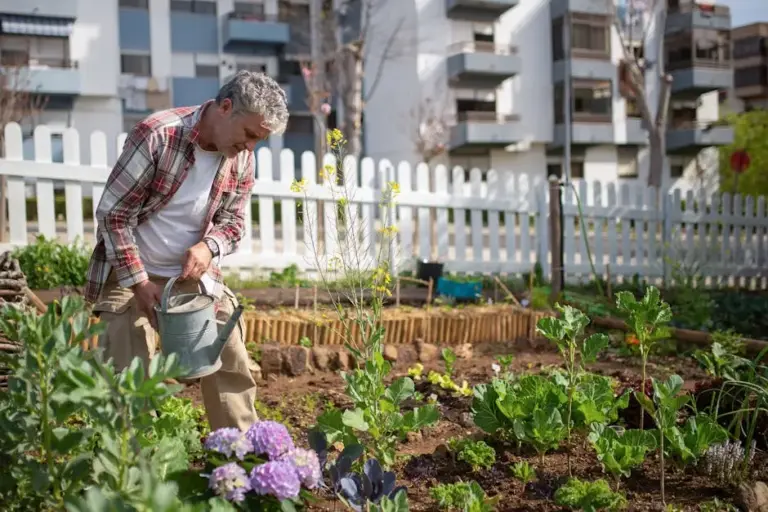
By mid season, neighbors walking their dogs began slowing down in front of the house. The yard now had a clear visual split, one side full of vegetables and the other filled with decorative blooms. Some neighbors found it creative, while others thought it looked like an argument frozen in landscaping form. Megan overheard one comment suggesting they were competing instead of collaborating. Daniel shrugged it off, but Megan started feeling more aware of how visible their disagreement had become. The yard was no longer private in the way they had expected.
HOA letter arrives
A letter from the homeowners association arrived one afternoon, referencing inconsistent landscaping aesthetics. It did not demand immediate action, but it recommended “visual harmony across shared property frontage.” Megan read it twice before handing it to Daniel without a word. Daniel argued that there were no specific rules being broken, only subjective opinions. Megan worried that their private disagreement was now becoming an external issue. For the first time, both of them considered that their solution might not be sustainable.
His side thrives, her side struggles
As summer progressed, Daniel’s vegetable section began producing heavily. Tomatoes, peppers, and herbs filled baskets that he proudly shared with neighbors. Megan’s flower section, however, started showing uneven growth after she adjusted plant placements several times. Some flowers thrived, but others struggled due to changing light exposure. She blamed soil conditions while Daniel quietly focused on his harvest. The imbalance added a new layer of frustration neither of them had anticipated.
Accidental crossover plants
One morning, Megan found a row of basil growing inside her flower beds. She assumed Daniel had planted it there by mistake, but he insisted he had not. Later, Daniel discovered marigolds growing among his cucumbers. After some confusion, they realized bees and wind had mixed seeds across both sections. Instead of laughing it off, they both saw it as a violation of the boundary they had agreed on. The yard itself was no longer respecting their division.
A fight over color palette
Megan decided to introduce a set of bright seasonal plants to balance the visual contrast. Daniel argued that the colors clashed with the practical layout of his side. The argument escalated quickly because it was no longer about gardening but about control over shared space. Megan accused him of turning everything into utility, while Daniel said she cared more about appearance than function. They stopped speaking about the yard for several days after that conversation. The silence felt heavier than any previous disagreement.
Contractor miscommunication
A landscaping contractor arrived one afternoon assuming he was working on a single unified design. He began adjusting both sides of the yard before Megan and Daniel noticed. Megan immediately told him to stop touching her section, while Daniel insisted he continue a few adjustments on his side. The contractor became confused and left early, saying he needed clearer instructions. That moment made it obvious to both of them that outsiders could not even understand what they were trying to do. It also made the division feel more fragile than ever.
Unexpected storm exposes flaw
A heavy storm rolled through the neighborhood and flooded parts of the yard unevenly. Daniel’s raised beds drained properly, while Megan’s flower section collected water in several low spots. By morning, some plants were damaged and others were uprooted entirely. They both worked separately to fix their sections without speaking much. The damage made the separation feel less like a solution and more like a structural weakness. Neither of them said it, but they both knew something had to change.
Temporary truce
After the cleanup, Megan suggested they stop treating the yard like two separate projects. Daniel hesitated but eventually agreed to sit down and plan together again. They spent hours discussing what had worked and what had clearly failed on both sides. For the first time in months, they were not arguing but actually listening. The idea of rebuilding a shared plan slowly replaced the idea of separation. It was not a full resolution, but it was the first real step back toward cooperation.
A surprising new design takes shape
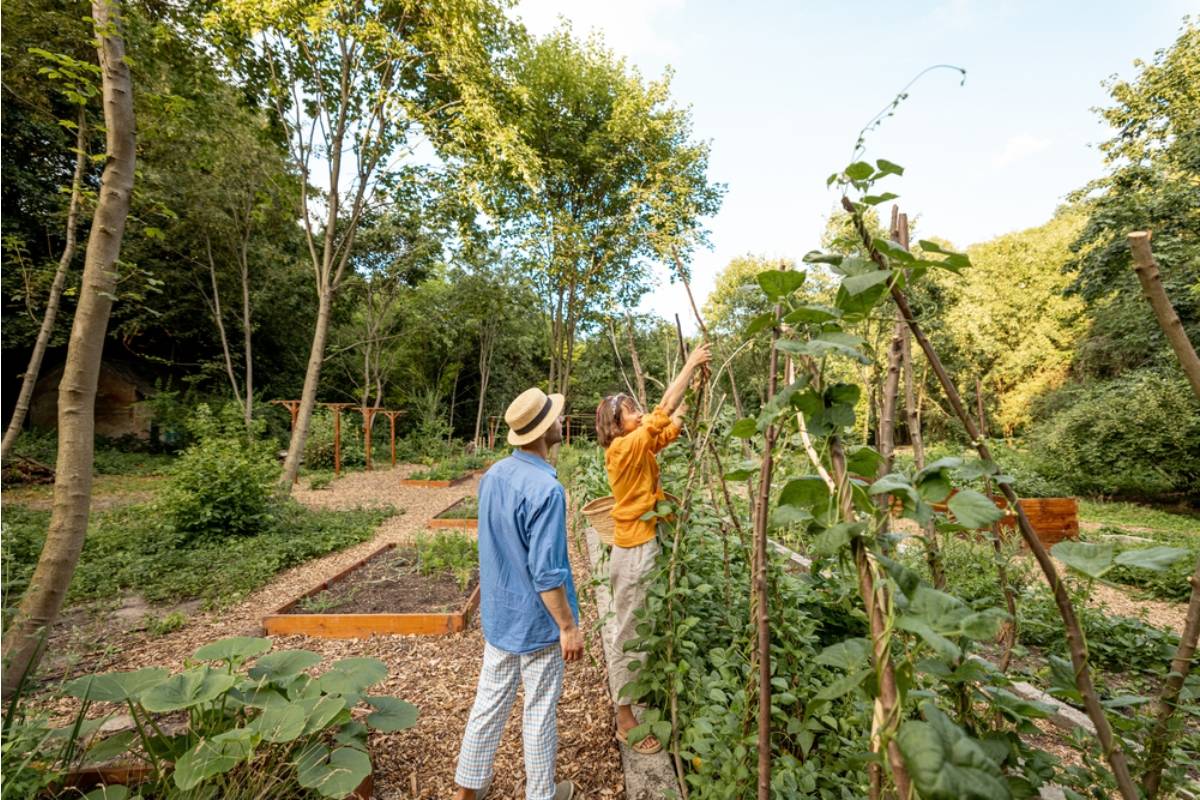
Instead of removing either side, they created a blended transition zone in the middle of the yard. Vegetables and flowers began growing in mixed sections designed to complement each other. Bees moved freely between plants, and the visual contrast started to look intentional instead of divided. Neighbors who passed by now saw a unified garden rather than a split property. Megan and Daniel still had different preferences, but the yard finally reflected both without conflict. What began as separation ended up becoming a design neither of them would have created alone.