Kentucky Coffeetree Reaches About 75 Feet With Leaves Up to 36 Inches Long, and Its 5- to 10-Inch Pods Can Hang On Through Winter, Illinois Extension’s Emily Swihart Writes
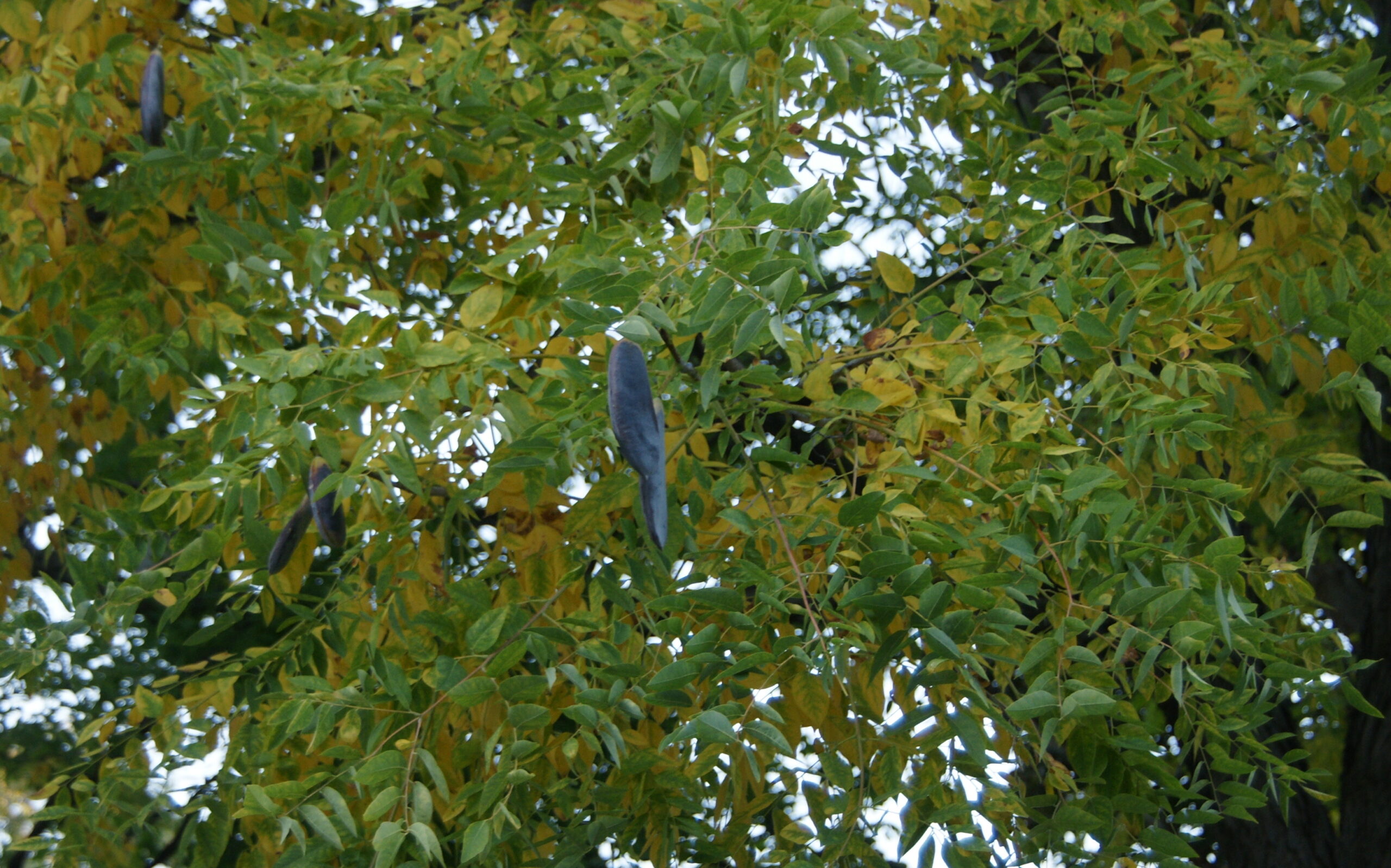
A vase-shaped crown with few side branches, bark that curls outward in gray scales and, on female trees, seed pods that hang on after the leaves are gone: the Kentucky coffeetree looks unlike most yard trees once autumn ends. Emily Swihart, a University of Illinois Extension horticulture educator, writes in an Oct. 30 Good Growing post that mature trees reach about 75 feet tall with a spread of about 50 feet. The leaves can be about 36 inches long, and the 5- to 10-inch pods can persist through winter.
Leaves Up to 36 Inches Long
The leaves are the tree’s most distinctive summer feature. Swihart describes them as alternate and bipinnately compound, meaning each leaf is divided and then divided again, and she puts them at about 36 inches long and 24 inches wide. That makes them among the largest leaves of any Midwest-native tree, she writes.
The tree is also slow to wake up in spring. Leaves emerge late in spring with a reddish-pink tint before turning green for the summer. A plant profile from the University of Connecticut gives similar dimensions, listing leaves up to 3 feet long and 2 feet wide, with 6 to 14 pinnae per leaf. It also cautions that fall color is inconsistent, sometimes yellow but often poor, and that the large fallen leaf stems can be a litter problem.
An archived Missouri Botanical Garden Plant Finder entry says the greenish-white flowers appear in May to June, with the female flowers fragrant, and that the tree suckers to form colonies in the wild. The Missouri Plants profile describes the blades as twice pinnately compound, with 4 to 7 pairs of pinnae each carrying 4 to 6 pairs of leaflets.
Pods That Hang On Through Winter
Kentucky coffeetree is dioecious, so each tree is either male or female. Female trees bear small, fragrant, greenish-white flowers, three-quarters of an inch to an inch across, in spring, according to Swihart. Those flowers become the seed pods, which are 5 to 10 inches long and hold a few large seeds. Insects, including bees and butterflies, are the primary pollinators.
The pods are the reason the tree stands out in the cold months. The University of Connecticut profile describes them as chunky, dark reddish brown pods 1.5 to 2 inches wide, with a leathery texture and very hard seeds, ripening in October. The Missouri Botanical Garden entry says mature female trees are attractive in winter because of their hanging pods, though it notes the leaves and pods can both make litter.
Swihart calls the open, irregular branching a “spooky” silhouette once the leaves drop. Young trees, she notes, are especially sparse and can look like a stick in a container.
The Poison Behind the Coffee Name
The name comes from history. Early settlers used the seeds as a coffee substitute, according to Swihart, but Illinois Extension does not recommend consuming any part of the tree. The seed pods contain an alkaloid. It can cause gastrointestinal upset in mild cases and death in more extreme ones. Toxicity is believed to be neutralized by cooking, but Swihart says brewing the beans is not recommended.
The Missouri Plants profile treats the toxin question more cautiously. It says unroasted pods and seeds are considered toxic, probably because of poorly characterized glycosides and saponins, while claims that the seeds contain cytisine are of obscure origin and at least one modern study failed to detect it. The raw seeds are also very hard and could cause dental injury, it says. A 2004 study by J.P. Spaeth and J.W. Thieret of Northern Kentucky University had 20 volunteers rate coffee-like brews, and the authors wrote that the plant “poses no serious threat to Maxwell House or Starbucks.” A native-plant database entry at wildflower.org lists raw seeds as poisonous and the tree as a larval host for two honey locust moths.
Swihart adds a footnote of state history. Kentucky coffeetree was Kentucky’s state tree until 1994, when it was redesignated the Kentucky Heritage Tree. The tulip tree is now the state tree.
Tough Enough for Hard Sites
Swihart writes that the species has no serious insect or disease problems and tolerates challenging sites, including urban pollution and a range of soil conditions. The University of Connecticut profile rates it hardy to USDA zone 4 and notes it prefers full sun with deep, moist, rich soil but adapts to many soils and tolerates drought and pollution. The Missouri Botanical Garden entry says it dislikes heavy clay.
Its native range runs through the central Midwest: eastern Kansas, northeast Oklahoma, southern and eastern Iowa, Missouri, Illinois, Indiana, western Ohio and southern Michigan, Swihart writes. The wildflower.org entry notes that the tree is threatened in Ontario and endangered in New York, while populations in the rest of its U.S. range appear safe.
Despite those strengths, it has been overlooked by the nursery industry, Swihart writes, though it is turning up more often on boulevards, in parks and in home landscapes. The University of Connecticut profile calls it hard to find in the trade and lists fruitless male cultivars named ‘Expresso,’ ‘J.C. McDaniel’ (sold as Prairie Titan) and ‘Stately Manor’ that are upright and elm-like, reaching 50 to 70 feet tall and 20 to 40 feet wide. They may suit street planting, the profile says. Swihart also notes that fruitless and smaller cultivars exist.
Size varies by source. Illinois Extension and the University of Connecticut both cite a mature height of about 75 feet, while the Missouri Botanical Garden entry gives 60 to 80 feet, occasionally up to 100. Growth is slow, according to the wildflower.org entry, which recommends pulling occasional root suckers and pruning in winter or early spring. Missouri Plants says the pods are velvety when young, turn woody and often persist into winter, usually holding one to four seeds embedded in green, jelly-like pulp. For general steps on getting a new tree into the ground this month, extension experts’ November planting steps cover hole size and depth.
This article was produced with AI assistance and edited for accuracy against the sources linked above.
Image: “Gymnocladus dioicus, Chicago 02” by romana klee from usa is licensed under CC BY-SA 2.0 (Wikimedia Commons).