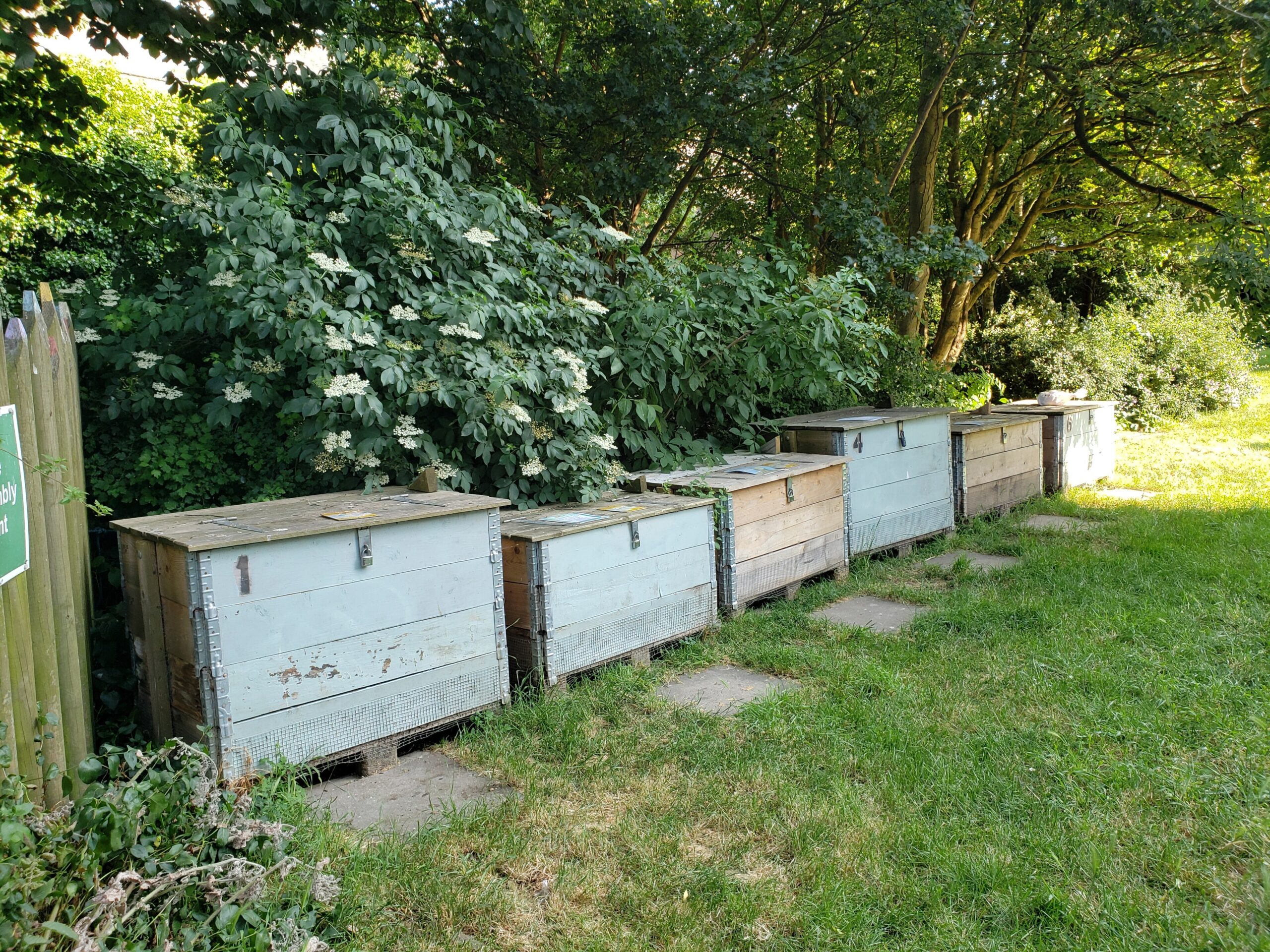
Colorado State Extension’s Fall Leaf Compost Recipe Calls for a 3-Foot Bin, Up to 1/2 Cup of Lawn Fertilizer per Bushel and Leaves as Wet as a Sponge
A pile of fallen leaves left alone can take 2 to 3 years to break down, while one managed with a few basic steps can be ready by late spring, according to Colorado State University Extension’s PlantTalk Colorado service. Its fall leaf compost instructions start with a bin at least 3 feet on each side and end with leaves dampened to the feel of a wet sponge. In between sits a small dose of lawn fertilizer, measured by the bushel.
Three Feet Each Way, and Why Wider Is Not Better
The PlantTalk page on composting fall leaves sets the minimum bin size at 3 feet by 3 feet by 3 feet. It also sets a ceiling of sorts: bins wider than 6 feet across may limit airflow and slow decomposition. The page names no individual author and carries no publication date.
The size matches what other extension services recommend. In Minnesota, the University of Minnesota Extension page on composting in home gardens keeps a pile about 3 to 5 feet in each direction. Smaller piles do not generate enough heat, the page says, and larger ones limit air and water penetration. It draws on a guide by Carl J. Rosen, Deborah L. Brown, Robert J. Mugaas and Thomas R. Halbach.
Oregon State University Extension’s publication Do the Rot Thing, by OSU compost specialists with Lane County Master Gardeners, describes a hot composting bin as about 1 cubic yard, “3 feet by 3 feet by 3 feet or more.” The same publication lists a low-fuss option, a wire bin for leaves, from which finished material is removed after about a year before the bin is refilled.
Fertilizer, Greens and the Wet-Sponge Test
Leaves are high in carbon and low in nitrogen, and decomposing bacteria need nitrogen. Colorado State offers two ways to supply it. One is 1/4 to 1/2 cup of standard lawn fertilizer per bushel of leaves, avoiding any fertilizer that contains weed killers. The other is to mix dry leaves with fresh grass clippings or similar green garden debris at a ratio of 1 part leaves to 2 parts greens.
Minnesota gives a different measure for the same job. Its page names ammonium nitrate, ammonium sulfate or a high-nitrogen lawn fertilizer without herbicide, at 1/3 to 1/2 cup per 25 square feet of surface area, which it equates to a 5-by-5-foot bin. Gardeners with access to livestock can use a 2-inch manure layer instead, and the page notes that lime is usually unnecessary for leaves.
Moisture is the third piece. Colorado State says to dampen leaves as they go into the bin until they feel like a wet sponge, to check regularly and add water as needed, and to avoid overwatering so the pile never turns soggy. Water soaks slowly into leaf piles, the page adds. Oregon State uses a similar test, saying the compost should be as wet as a wrung-out sponge. If it is too wet, Oregon State says to add dry browns and turn more often, and in the rainy season to keep the pile covered.
Minnesota adds a layering method. It starts with a layer of leaves, grass or plant trimmings about 8 to 10 inches deep, waters each new layer and repeats until the pile is about 5 feet tall. An optional 1-inch layer of soil or finished compost adds microbes, though the page says most leaves already contain enough.
Whole or Shredded, and How Long Until the Compost Is Ready
The guides split on shredding. Colorado State prefers whole leaves, warning that finely chopped or mower-mulched leaves can pack down and restrict airflow. Minnesota says the opposite, advising gardeners to shred leaves and small twigs with a shredder or power mower first because smaller pieces break down faster.
Timelines also vary with the method. Colorado State says fall-leaf compost can be ready by late spring when managed as described, against the 2 to 3 years for an unattended pile. Minnesota puts a well-managed pile at 2 to 4 months in the warm season, with an untended one taking a year or more, and says an active pile heats to 130 to 160 degrees Fahrenheit and shrinks to about half its original height. It recommends turning once or twice a month.
Oregon State’s hot-pile schedule runs about a month, followed by 4 to 6 more weeks of curing before the compost goes on tender seedlings or vegetable beds, and it says piles held consistently at about 135 degrees may kill pathogens and weed seeds. For a hot pile, it says to check the center temperature after a few days and, when the pile cools after about 5 to 10 days, to restack it, moving the outer material to the inside.
Finished compost has a job waiting in the beds. In a separate Oregon State piece on adding organic matter to garden soil, Logan Bennett, the Small Farms and Master Gardener Program coordinator, says to spread 1 to 3 inches of composted organic matter over a bed and work it into the top 6 to 8 inches of soil, repeating the addition annually.
Not every leaf needs a bin. Oregon State’s November garden calendar says to rake and compost leaves that are free of diseases and insects, and in western Oregon to spread a 3- to 4-inch layer of leaves over the garden plot to eliminate winter weeds.
Gardeners dealing with city leaf rules can see how one town handles it in the site’s report on Greenwich’s leaf collection and plastic bags, and a related story follows a gardener’s steaming leaf pile.
Get stories like this by email. Sign up for The Parent Diaries Letter.
This article was produced with AI assistance and edited for accuracy against the sources linked above.
Image: Andy Li, CC0, via Wikimedia Commons