Greenwich Leaf Collection Starts Nov. 9, and Leaves Set Out in Plastic Bags Will Not Be Picked Up
Leaves set out in plastic bags will not be collected in Greenwich, Connecticut, when the town’s annual leaf program begins on Monday, Nov. 9. The Greenwich Free Press, summarizing the 2026 program, quotes the rule plainly: “Leaves in plastic bags will not be collected.”
Residents with leaves already stuffed into plastic have a few days to switch to paper or biodegradable bags, or to rake the leaves into a neat pile at the street edge instead.
Piles and Bags That Will Be Picked Up
The Greenwich Free Press reports that leaves may go out in neat piles or in biodegradable bags at the street edge. Piles belong as close to the street edge as possible while staying off the road, the sidewalk, catch basins and open channels. The paper says piles in those places can be a safety hazard for pedestrians and cyclists and can hurt stormwater drainage.
The Town of Greenwich’s own leaf collection page says the same about raking leaves onto pavement, sidewalks, catch basin grates or open channels, noting that it can cause drainage and flooding problems. It also states that plastic bags are not collected and that leaves belong at the curb in biodegradable paper bags.
Contents matter as much as containers. Both piles and bags must be free of branches, sticks and garden refuse, and the town says sticks, branches and garden refuse are not collected.
The paper also advises residents to rake early and often rather than let leaves build up into one large job.
Two more rules apply to the pile itself:
- Only residential properties of half an acre or less (zoning R-20) on public roads are covered by the program.
- Residents must remove any leftover piles after the second collection, a requirement the Free Press ties to Connecticut General Statutes Chapter 368m, Sec. 19a-335, which covers nuisances on highways.
Dates, Sections and the Days Without Pickup
Collection runs Monday through Saturday, with two collections per numeric section, and is expected to finish in mid-December. The town’s page puts the program at about six to eight weeks. Dates can change because of weather or other unforeseen events, and the second and final collection begins once the first is finished in all sections.
The town lists no collection on Wednesday, Nov. 11 (Veterans Day), Thursday, Nov. 26 (Thanksgiving) and Friday, Nov. 27.
The tentative first collection on Monday, Nov. 9 covers these sections:
- Sections 3 and 4: Old Greenwich and Riverside
- Section 9: Cos Cob
- Section 13: Boro (Central Greenwich)
- Section 17: Glenville
Other sections had not been scheduled when the town’s page was last updated on Nov. 3. A road section lookup and a street list PDF on the town’s page show which numeric section a street falls in. The town also runs a 24-hour leaf collection hotline at (203) 618-7698, and its page says a section that is not heard or seen on the hotline has not been scheduled yet. The Department of Public Works at 101 Field Point Road can be reached at (203) 618-3001, Monday through Friday, 8 a.m. to 4 p.m.
According to the Free Press, the town removes more than 30,000 cubic yards of leaves a year on average, and the leaves go to a Connecticut farm for composting.
Mulching Leaves in Place Instead of Bagging Them
The town’s page encourages mulching and leaving leaves in place where appropriate. The Free Press says doing so can improve lawns and reduce the environmental footprint of collection, hauling and composting, and points to a homeowner guide from the LELE campaign for details.
The LELE guide describes mulching with a mower or leaf shredder as reducing leaf volume about 10 to 1. It suggests starting with one section of the yard, using a high-torque mower, and setting the cutting height between 2.5 and 3 inches as a starting point. It says shredded leaves feed the soil as they break down and can green up a lawn.
The University of Connecticut’s extension service gives firmer limits in a guide to mulch mowing. It says mulching mowers can finely chop up to 6 inches of leaves at a time, and that a traditional mower should be raised to its highest setting for several crisscross passes. No more than 1/3 of the leaf blade should be removed per mowing, mowing should happen only when the turf is dry, and a dust mask is recommended.
UConn also says no more than 20% of the lawn should be covered by leaves after each mulching event, so sunlight still reaches the grass. A 2-inch layer of leaves mulched into turf over the fall adds about 3.44 pounds of nitrogen per 1,000 square feet, according to the extension guide.
For leaves that do not fit on the lawn, UConn suggests spreading them 4 to 6 inches deep in landscape beds, leaving a 6-inch clear circle around each plant’s crown. It also warns that leftover leaves in late fall and winter can encourage snow mold, and that remaining leaves slow spring green-up. Heavy mulch in beds can attract voles and other burrowing pests.
Connecticut Public Radio’s Connecticut Garden Journal host Charlie Nardozzi gives similar advice. A thin layer of fallen leaves can be chopped with a mower and left to decompose, he says, and earthworms and other soil creatures then improve the soil under the grass. A thick layer can harm the grass, so some of it should be raked or bagged.
Nardozzi adds that shredded leaves piled around newly planted garlic, tender roses and other perennials in November can insulate them, but whole leaves mat down and can cause plants to rot. A related piece on this site looks at shredded leaves as free winter mulch for garden beds.
Residents who prefer not to leave leaves at the curb have one more option, according to the Free Press: the Holly Hill Resource Recovery Facility accepts leaves, though a permit is required. The town’s page does not cover drop-off options, pile size or placement limits beyond those listed, or what happens to a section that is missed.
Leaves that carry disease or weed seeds are a different case. UConn advises that if problems recur, the leaves should be bagged and disposed of following local yard waste rules, which in Greenwich means paper or biodegradable bags rather than plastic. Greenwich is not the only town that treats plastic-bagged leaves differently; D.C.’s leaf vacuum season sends plastic-bagged leaves out as trash.
Get stories like this by email. Sign up for The Parent Diaries Letter.
This article was produced with AI assistance and edited for accuracy against the sources linked above.
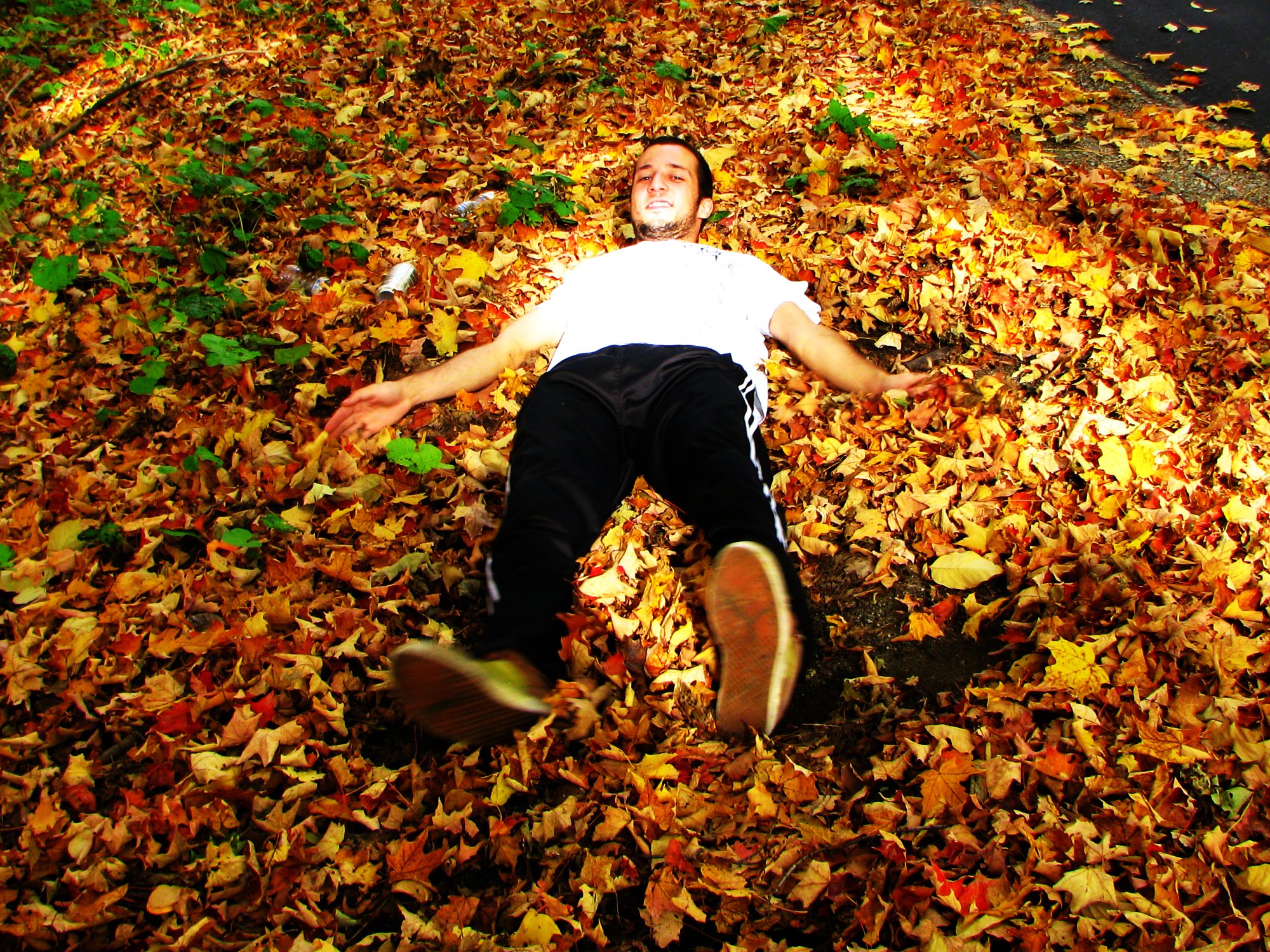
Image: Michael from Calgary, AB, Canada – CC BY 2.0/Wikimedia Commons