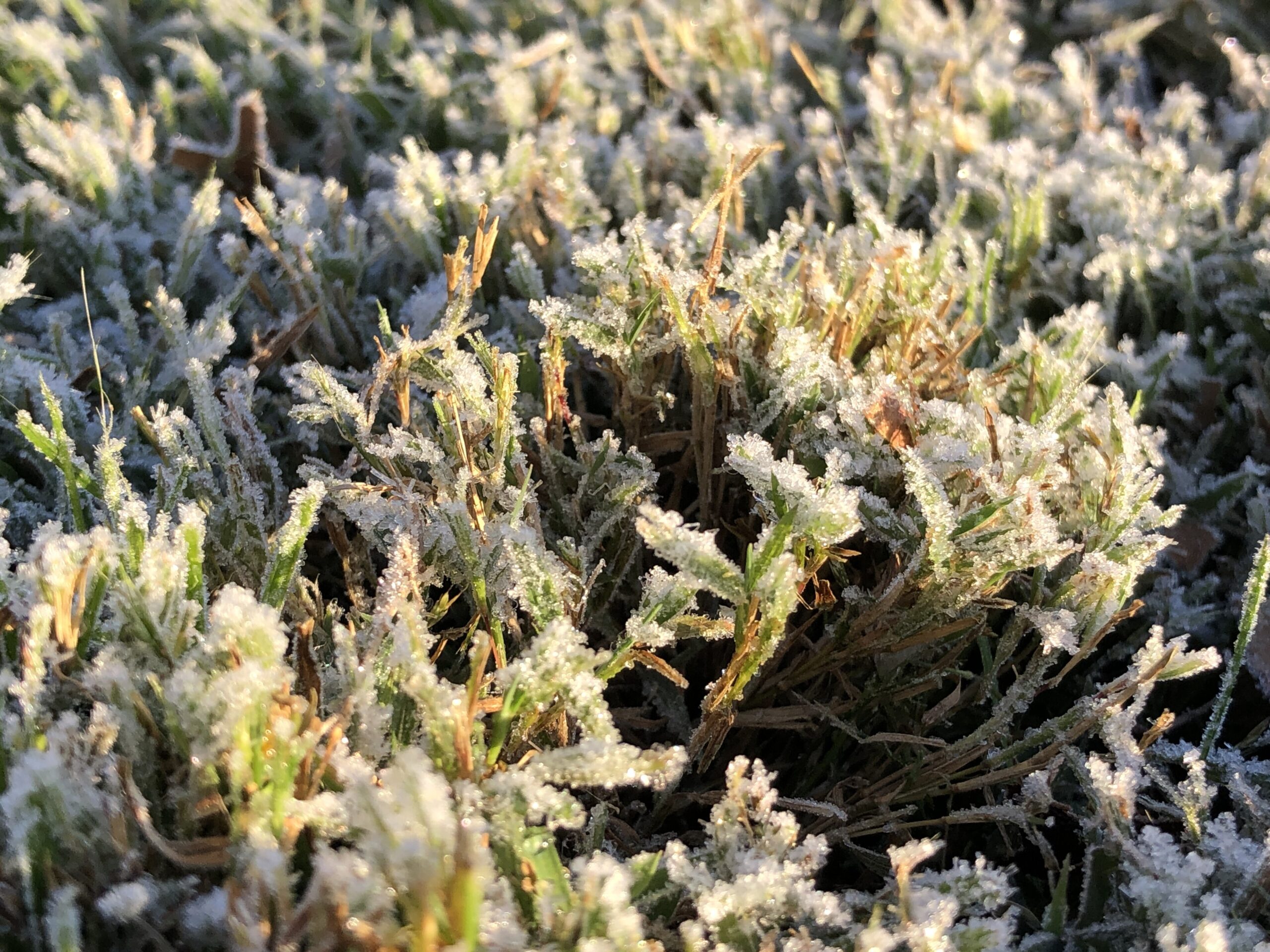
UMass Extension Times Fall Broadleaf Weed Spraying on Lawns to the First Light Frost, With Highs Above 50 Degrees for Three to Five Days After
Fifty degrees is the number that decides whether a fall broadleaf weed spray on a lawn does its job. University of Massachusetts Extension says to apply the herbicide just before or after the first light frost, then look for daytime highs above 50 degrees Fahrenheit across the following three to five days. The advice appears in the Oct. 16 Landscape Message, which also tells gardeners to bring liquid pesticides indoors before the first hard freeze.
The same message notes that the Pioneer Valley saw its first frost on Oct. 7, mostly in valley bottoms, and that no hard freeze had followed as of the report. For homeowners elsewhere in New England and beyond, the calendar date matters less than the weather the lawn is actually getting.
Why Fall Spraying Reaches Weed Roots Better Than Spring
UMass Extension opens its weed section by saying that fall is a great time for broadleaf weed control in turf. The reasoning is about where a plant sends its sugars. In fall, herbicide moves downward with those sugars toward roots, rhizomes and crowns, according to the Landscape Message, so the product reaches the parts of the weed that survive winter.
Kansas State University Extension describes the same pattern. As days shorten and temperatures cool, perennial broadleaf weeds move nutrients from their leaves to their roots, so a herbicide applied to the foliage travels down with them, according to an October 2021 article from K-State’s Wild West District. The article reports that university tests showed a fall treatment often gave more than 90 percent dandelion control the following spring, compared with 50 percent or less from a single spring or summer treatment.
UMass adds a second benefit. Spraying after winter annual broadleaf weeds have germinated can control both perennial and winter annual broadleaves in one pass, which may reduce the need for spring broadleaf applications.
The First Light Frost and the Three-to-Five-Day Warm Window
The timing rule has two parts. The first is the frost: UMass says to apply just before or after the first light frost. The second is the weather afterward. Daytime highs should stay above 50 degrees Fahrenheit for three to five days after the application, because cooler, sugar-moving plants take up herbicide best in that window.
A light frost is not a hard freeze, and UMass treats them as separate milestones: the spray goes on around the first, while the pesticide storage advice is tied to the second. The message gives no temperature for a hard freeze.
K-State recommends a similar daytime floor. Its article advises choosing a day when the daytime temperature is at least 50 degrees, and it gives mid-October to early November as the target period for perennial broadleaf weeds such as dandelion and field bindweed. Oklahoma State University Extension, in a 2021 Grow column, puts the ideal spraying range at 50 to 85 degrees and advises spraying early in the day when winds are low.
Mowing also figures into the schedule. Oklahoma State says to wait about three days after treatment before mowing a lawn that has been sprayed.
Triclopyr, 2,4-D and What the Label Controls
UMass names a category rather than a brand. Wild violets and ground ivy, two of the hardest lawn weeds to kill, are best controlled with fall applications of a broadleaf turf herbicide containing triclopyr, the Landscape Message says. It lists no specific lawn product or rate, and it directs readers to follow the label for rates and conditions. The message mentions Scythe and Reward only for poison ivy, where they provide burndown but not adequate control.
K-State names different active ingredients for different weeds. For dandelion, 2,4-D in amine or ester form gives good to excellent control, and combination products containing 2,4-D and dicamba plus quinclorac or MCPP work best. For field bindweed, premixes of dicamba and quinclorac gave the best control. The article advises checking the active ingredients section of the label, not just the brand name, and says label rates are usually enough for excellent fall control.
Oklahoma State notes that dandelion, plantain and clover are easy to control with post-emergent herbicides, while ground ivy, thistles and wild violets may need several applications. Its label advice is to read and follow all directions, spot spray when possible instead of blanket spraying, and avoid overapplying near tree and shrub roots.
Spraying is not the only fall option. A Michigan State University study covered earlier on this site found that mowing fallen maple leaves into the lawn gave about 80 percent dandelion control without any spray.
Bringing Liquid Pesticides Indoors Before the Hard Freeze
The last step in the UMass message has nothing to do with the lawn. Before the first hard freeze, the message says, it is time to bring pesticides inside from the outdoor shed or unheated garage. Liquids can separate and may not re-mix after thawing, especially combination products, while powders and granules are generally unaffected by freezing.
University of Illinois Extension horticulture educator Richard Hentschel makes the same point in a 2016 article on winter storage. Liquids and emulsifiable concentrates must be kept above freezing to prevent separation and potentially bursting the container, he wrote, while freezing will not harm dusts or wettable powders. He suggests a garage that stays above freezing or a basement away from heat sources, and a lockable cabinet or a shelf out of reach of children and pets.
Nebraska Extension educator Sarah Browning, in a 2022 article, adds that every product should stay in its original container with the label attached. Without the label, she wrote, a homeowner loses the toxicity warnings, cleanup steps, first aid instructions and rate information. She also advises storing pesticides away from food, pet food, seed and fertilizers.
The last Landscape Message of 2026 is scheduled for Nov. 13. The Pioneer Valley’s lawns were still bright green and growing strong in mid-October, per the message, which is the condition the frost-and-50-degrees rule assumes. Another seasonal lawn hazard is covered in a piece on footsteps on a frosted lawn.
Get stories like this by email. Sign up for The Parent Diaries Letter.
This article was produced with AI assistance and edited for accuracy against the sources linked above.
Image: Famartin – CC BY-SA 4.0/Wikimedia Commons