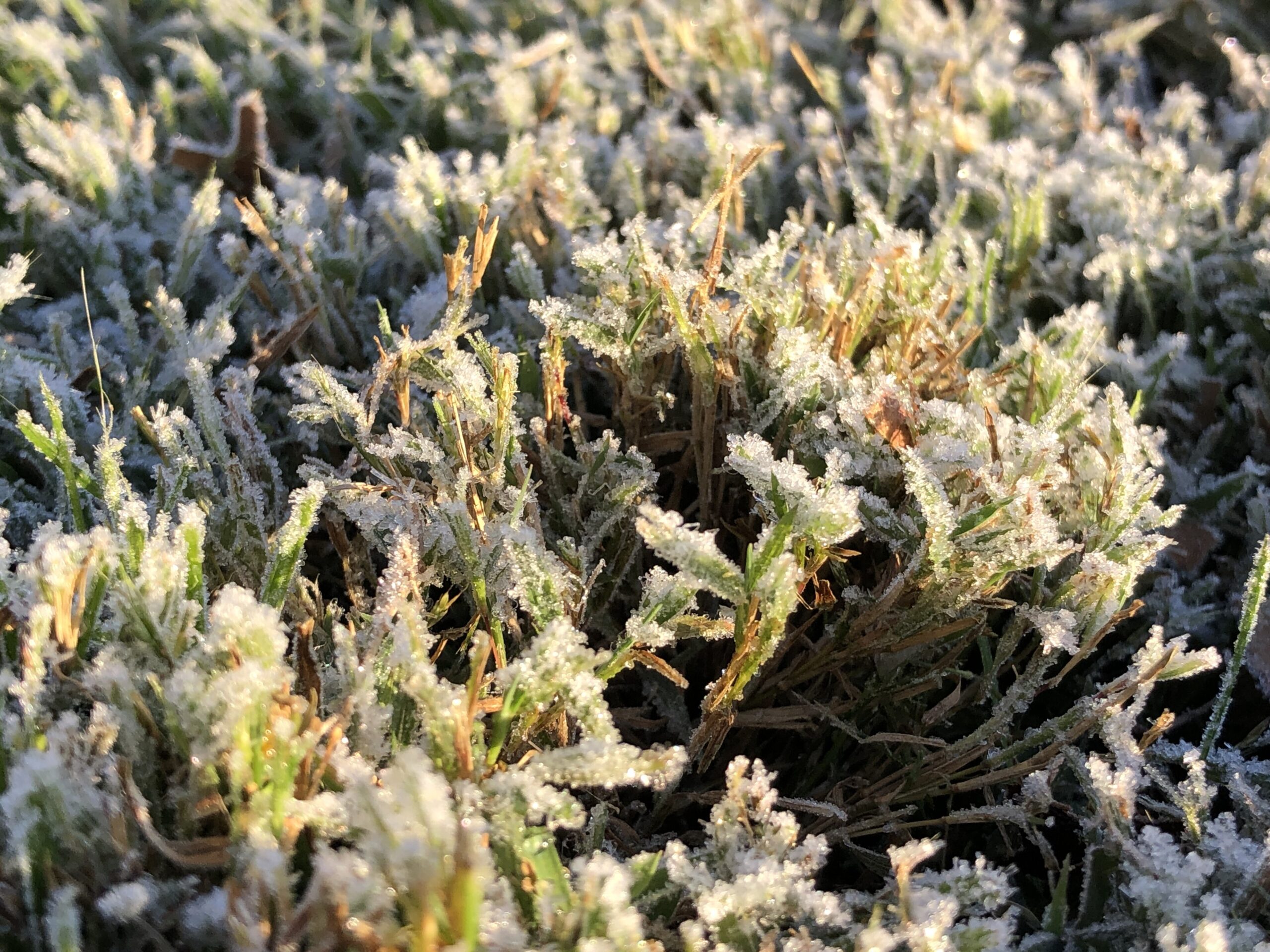
Footsteps on a Frosted Lawn Rupture the Grass, Purdue Says, Leaving Tracks That Turn Black, Then Brown, and Take Weeks to Recover
A shortcut across a frosty lawn on the way to the car can show up days later as a trail of dead footprints. Purdue University says traffic on frosted turf ruptures plant cells, because the ice crystals in the grass break the cell walls. The damaged leaves turn black, then brown, and recovery takes several weeks, longer when it happens late in the season.
Cool-season lawns handle frosty mornings fine on their own. It is the weight on top of the frost that does the damage.
What Happens Inside a Frozen Blade
John Orick, Purdue’s Master Gardener state coordinator, explains in a Purdue winter lawn care guide that cool-season grass can tolerate frost as long as no foot or vehicle traffic crosses it. When someone walks on frosted turf, ice crystals break the cell walls, and the cells rupture.
Jared Hoyle of Kansas State University’s turfgrass research and extension program described the same process in the K-State Turf and Landscape Newsletter. The ice crystals “act like knives and cut into the turfgrass leaves,” he wrote, once weight is applied to them.
The problem has been understood for decades. In 1977, Virginia Tech turf extension specialist John F. Shoulders put it in one line in Tech Turf Topics: “Any traffic on frosted turf causes injury.” Stepping on frost-covered grass kills the blades within the footprints, he wrote, while crowns and roots usually sustain little or no damage.
How the Damage Shows Up
The tracks are unmistakable. Purdue says affected leaves turn black, then brown, and the footprints mark exactly where the damage occurred. Virginia Green, a lawn care company, lists brown footprints or patches, weakened turf, more disease and thinning, and poor spring green-up as signs on lawns that were walked on while frosted, and notes that frost alone doesn’t cause the browning.
Recovery depends on timing. Purdue says it takes several weeks when the damage happens early in fall and longer later in the growing season. Hoyle warned that in late fall “there isn’t much time before winter for it to recover,” which means a November footpath can still be visible in spring.
Frost, Frozen Ground and Snow
The same caution carries through the winter. University of Illinois Extension Master Gardeners Mary Boldan, Mary Moisand and Donna Siemro wrote in the Daily Herald that “walking on frozen grass damages the crowns of the grass plants and breaks the blades of grass,” and that repeatedly crossing the same frozen area can leave a visible path once the ground thaws.
Snow brings a different risk. Packing it down by walking the same route insulates the grass and keeps it cold after the soil starts to warm, the master gardeners wrote, which can smother the grass and let snow mold develop.
Who Should Wait
The fix is patience. Purdue’s advice is simply to avoid walking on turf before the frost has melted. Hoyle extends that to every yard chore: walking, driving, rolling and mowing should all wait until the frost is gone. He said he had seen people mowing and fertilizing lawns while frost was still on the grass.
Virginia Green says frost usually melts by late morning or early afternoon, depending on sun and temperature, and that the blades should be fully thawed before anyone crosses them.
That matters for more than homeowners. Lawn crews, delivery drivers and kids cutting across to the bus stop leave the same marks. A flagstone path or a few stepping stones along the usual shortcut can spare the grass all winter.
Other Late-Season Lawn Rules
Purdue’s winter guide adds a few more. Stop applying fertilizer and broadleaf herbicides once the turf is dormant or the soil is frozen, since the grass can’t use the nutrients and weeds won’t move the herbicide through their tissue. Clear heavy leaf cover by mulching or raking so the grass still gets light and air. Before storing the mower, empty the fuel tank, change the oil and have the blades sharpened for spring.
For lawns still getting a final trim this month, the site has covered how short the year’s last mowing should leave the grass. On frosty mornings, though, that mowing can wait until the white is gone.
Get stories like this by email. Sign up for The Parent Diaries Letter.
This article was produced with AI assistance and edited for accuracy against the sources linked above.
Image: Famartin – CC BY-SA 4.0/Wikimedia Commons