My Neighbor Refused to Pay for His Tree Removal, Then Left the Trunks in My Yard
When a homeowner refused to pay half the cost of his neighbor’s tree removal, he still tried to be helpful by allowing the tree company access through his yard. He even removed his fence posts so the workers could get the equipment through. What happened afterward left him wondering whether his attempt to be a good neighbor had been taken advantage of.
The neighbor had approached him about splitting the cost of having several trees removed. He declined, explaining that the trees belonged to the neighbor and that he wasn’t willing to pay half of the bill.
Despite that disagreement, he agreed to give the tree company access through his property. He removed sections of his fence so the workers could reach the trees without causing additional problems.
The tree company did most of the cleanup. They chipped up much of the material and, according to the homeowner, generally did a good job.
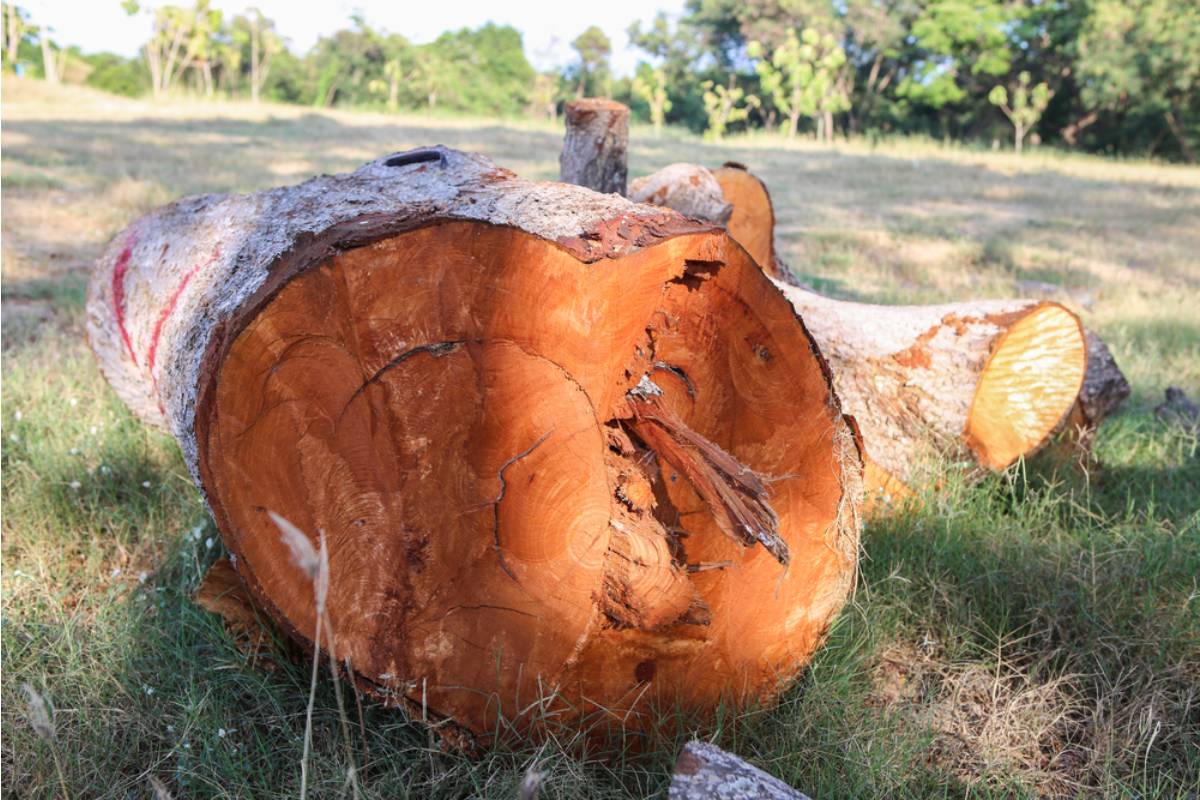
But they left behind five enormous sections of tree trunk.
Each piece was roughly eight feet long and weighed well over a thousand pounds. Worse, the homeowner later learned that the tree company had apparently been instructed by his neighbor to leave the trunks in his yard.
That was the part that really bothered him.
He hadn’t agreed to store the neighbor’s trees. He had only agreed to provide temporary access.
He Thought He Was Doing the Neighbor a Favor
The homeowner explained that he had lived there for three years and had barely interacted with this particular neighbor. The neighbor only began speaking to him shortly before asking him to contribute toward the tree removal.
When he declined to pay, the relationship apparently became even colder.
Still, when the neighbor needed access through his yard, the homeowner didn’t make things difficult. He removed his fence posts so the tree company could get through.
He later described himself as someone who genuinely tries to be a good person, but this situation made him question that instinct.
He had provided access because he thought it was the neighborly thing to do. He never imagined that helping would somehow turn into having several massive logs dumped onto his property.
Five Huge Logs Were Suddenly His Problem
The trunks weren’t small pieces of firewood that someone could simply pick up and move.
They were enormous sections of tree, each around eight feet long. The homeowner said they were so heavy that even the smaller pieces made the ground shake when the workers dropped them.
There was also something particularly frustrating about where they were placed.
The workers didn’t simply leave the trunks on the other side of the property. They actually put them over the homeowner’s fence and into his yard.
As he pointed out, doing that appeared to require additional effort.
The homeowner couldn’t understand why anyone would deliberately move something that heavy into someone else’s yard unless they had been told to do it.
The Neighbor Had Asked Him for Money First
The situation became even more suspicious because of what had happened before the tree removal.
The neighbor had specifically asked the homeowner to pay 50 percent of the cost.
The homeowner refused.
After that, the neighbor became distant and stopped talking to him. His wife even noticed that whenever she waved at the neighbor, he would quickly turn his head as if he hadn’t seen her.
That made the homeowner suspect the logs weren’t simply the result of an innocent misunderstanding.
He believed his neighbor had retaliated because he wouldn’t contribute to the tree removal.
Still, he didn’t immediately know what to do.
People Immediately Told Him to Document Everything
The first wave of advice was remarkably consistent.
People told him to photograph the logs, the yard, the fence, and anything else that had been disturbed.
Several commenters emphasized that photographs could become important if the dispute turned into a legal matter.
Fortunately, the homeowner had already thought ahead.
He had photographs of the property before the work began. He also had photographs afterward, along with pictures showing the tree company’s truck and workers performing the removal.
His security cameras had even been pointed toward the area while the trees were being cut down.
In other words, he had a surprisingly detailed record of what happened.
He Hadn’t Given Permission to Dump Anything
One commenter argued that because the homeowner had agreed to give the tree company access, he had effectively accepted whatever happened on the property.
The homeowner strongly disagreed.
He explained that giving someone permission to enter your property for a specific purpose doesn’t mean you’ve given them unlimited permission to do whatever they want.
His analogy was simple: if someone is allowed onto your property to perform a particular job, that doesn’t automatically mean they’re allowed to leave a dumpster there afterward.
For him, access and disposal were two completely different things.
And he hadn’t agreed to the second one.
Then He Contacted the Tree Company
The homeowner eventually contacted the tree removal company to find out what had happened.
Their explanation only made the situation more irritating.
According to the homeowner, the company told him that his neighbor had instructed them to leave the tree trunks in his yard.
That seemingly confirmed his suspicion that the logs hadn’t simply been forgotten.
The tree company had apparently followed their customer’s instructions, even though the homeowner was the person whose yard they were using.
Reddit Had Plenty of Suggestions
The comments quickly turned into a debate over what the homeowner should do next.
Some people recommended calling the police and creating an official record of the incident. Others suggested contacting a lawyer or filing a claim for the cost of removing the logs and repairing any damage.
A number of commenters also suggested contacting the homeowner’s insurance company.
Others took a more practical approach and told him to contact the tree company directly and demand that they return to remove the trunks.
That option turned out to be the most effective.
Some People Thought the Logs Might Be Valuable
Not everyone saw the giant logs as nothing but a nuisance.
Several commenters pointed out that depending on the species of tree, large sections of trunk could potentially have significant value.
Oak, black walnut, and other hardwoods can sometimes be useful to woodworkers or sawmills.
One person suggested finding someone who could mill the logs into lumber. Another suggested selling them instead of paying someone to haul them away.
The homeowner admitted that the wood might actually be useful.
The problem was that he didn’t own the equipment needed to process enormous logs, and he certainly wasn’t interested in spending money to deal with a problem his neighbor had created.
Others Wanted Him to Throw Them Back
Some of the more entertaining comments proposed simply returning the logs to where they came from.
A few commenters suggested dragging them back across the property line. Others joked about renting a wood chipper and sending the material right back into the neighbor’s yard.
The homeowner admitted that he had thought about retaliating.
But there was a limit to how far he was willing to go.
He didn’t want to spend his own money or destroy his own equipment simply because somebody else had dumped a huge amount of work on him.
His Chainsaw Wasn’t Up to the Job
At one point, someone suggested that he simply cut the logs himself.
He explained that he already had a chainsaw.
Unfortunately, it wasn’t powerful enough for the job.
He said it took an extremely long time just to get through one of the logs, and the work was hard enough on the saw that he wasn’t interested in buying a heavier-duty chainsaw solely to deal with somebody else’s mess.
His attitude was basically: if the neighbor wanted the trees removed, the neighbor could figure out what to do with the trees.
He wasn’t going to finance the cleanup.
The Neighbor Had Apparently Made His Choice
The homeowner’s frustration wasn’t really about the trees themselves.
It was about the principle.
He had refused to pay for something that wasn’t his responsibility. Even so, he had still helped by allowing the tree company onto his property and removing part of his fence to make their job easier.
In return, he ended up with five massive trunks sitting in his yard.
To him, it felt like his willingness to cooperate had been mistaken for permission to take advantage of him.
That was why he repeatedly described himself as being “fucked over by kindness.”
Then His Facebook Post Changed Everything
After trying to contact the tree company by phone and repeatedly reaching voicemail, the homeowner took another approach.
He posted about the situation on Facebook, including his complaints about the company.
The post apparently got enough attention to produce a result.
The tree company eventually sent someone back to the property.
This time, they cut up the remaining trunks and removed them.
The enormous logs that had been sitting in his yard were finally gone.
The Tree Company Didn’t Exactly Leave Happily
The homeowner said the person who came back to clean everything up had a bad attitude.
But by that point, he wasn’t particularly concerned.
He hadn’t hired the company. He hadn’t instructed them to leave anything behind. And, according to him, the company had already acknowledged that his neighbor had told them to leave the trunks there.
As far as he was concerned, the cleanup was simply correcting a problem that shouldn’t have happened in the first place.
He wasn’t interested in turning the situation into a massive legal battle if it could be resolved without one.
In the End, the Logs Were Gone
The update was considerably less dramatic than many Reddit commenters expected.
The tree company returned, removed the trunks, and cleaned up the remaining mess.
There was no lawsuit.
There was no prolonged police investigation.
And there was no need to hire a lawyer.
The homeowner got his yard back.
But the experience left him with a very different view of his relationship with that neighbor.
He Learned a Lesson About Being a Good Neighbor
The homeowner said he had tried to help because that’s the kind of person he wanted to be.
He removed his fence posts, gave the workers access and made the tree removal easier for someone else.
Instead of receiving appreciation, he ended up dealing with a pile of enormous logs that he had never agreed to accept.
His conclusion was simple: he would be much more careful about helping this particular neighbor in the future.
Sometimes being a good neighbor means cooperating. But it also means making the boundaries of that cooperation very clear.
In this case, allowing someone through the gate never meant allowing them to leave five thousand pounds of tree trunks behind.