Nashville Electric Service Crews Cut Sadie Kochans’ Old Woodbine Front-Yard Maples So Far Back She Fears They Won’t Survive, and the Utility Later Took One Down
The two maples in Sadie Kochans’ front yard in Nashville’s Woodbine neighborhood were very old trees. Then Nashville Electric Service crews came through under the utility’s new, wider clearance rule around power lines.
Kochans says some of the cuts went back so far that she believes the trees will not heal. NES later removed one of the maples entirely. The other is still standing, but lopsided.
What happened to the Woodbine maples
Kochans described the trimming to WKRN News 2 reporter Katelyn Quisenberry in a report published Oct. 30. She said the crews cut well beyond the 15-foot clearance the utility now requires, and that the cuts on her trees went deep enough that she expects them to die.
With the maples cut back, her front yard is now fully exposed to the sun, and she told the station she expects that to raise her electric bills.
Kochans said NES instructs its crews to cut to a set point, and that the approach benefits the utility more than the people whose trees are being cut. What she wants, she said, is for crews to be better aligned with keeping the trees alive.
Why NES widened its clearance to 15 feet
The policy behind the cuts dates to last winter. After a historic ice storm in late January knocked out power to more than 230,000 customers, NES announced a more “aggressive” approach to tree trimming, WSMV reported on Feb. 25. Half of the utility’s customers lost power during the storm, and NES said most of the outages came from trees and heavy limbs falling on lines.
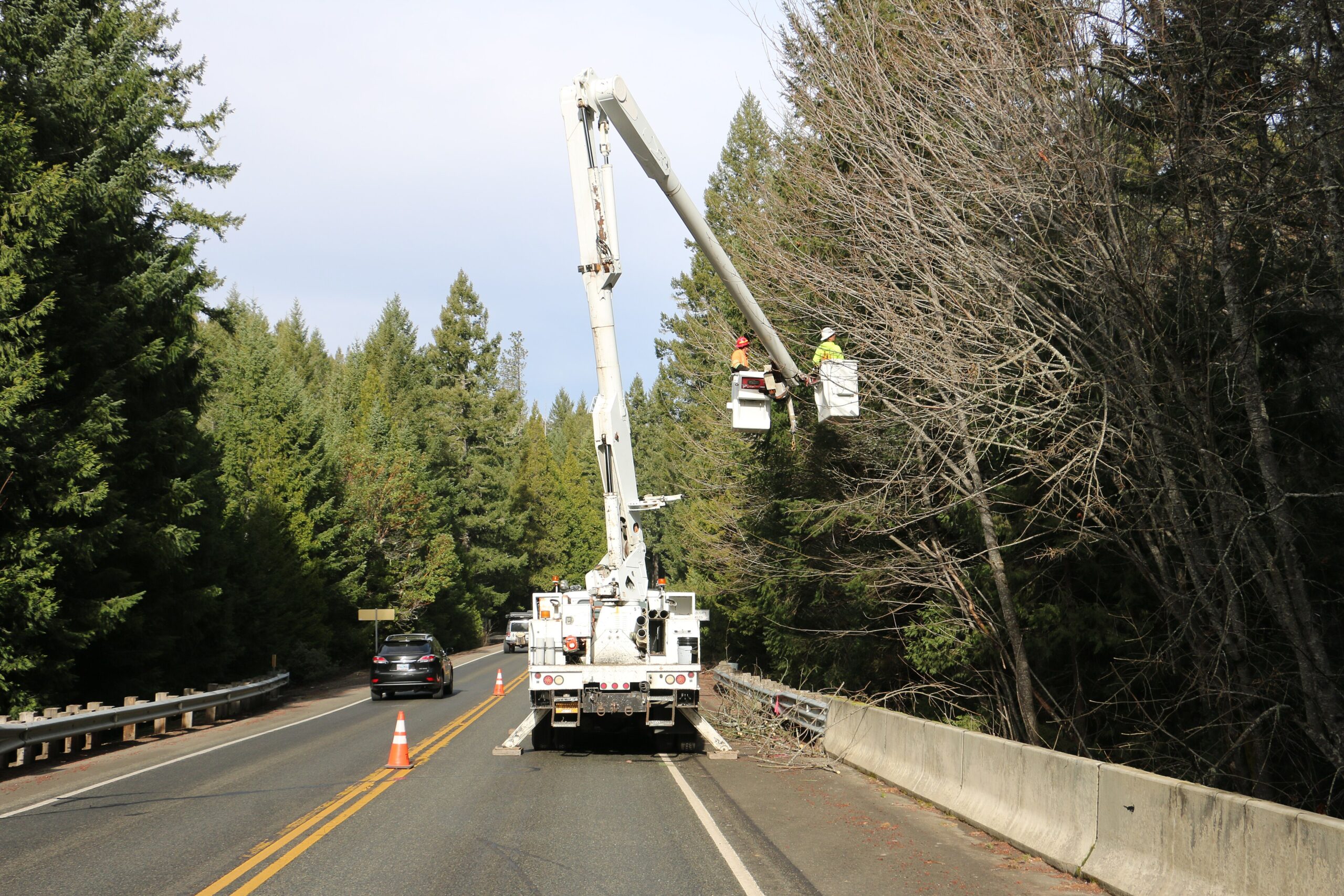
Under the new protocol, clearance on both sides of a power line rose from 10 feet to 15 feet. NES said trimming would now run from the base of the tree to the top, which it calls “ground to sky,” and that trees growing directly under or within 15 feet of lines may be removed, with the site then reviewed for the utility’s tree planting program. NES says it has planted more than 65,000 trees since 1989.
The utility also said it would use LiDAR, a laser imaging technology, to scan its 4,800 miles of overhead lines and build a 3D map of the grid.
A trimming schedule that fell behind
By late September, NES was behind on its own targets. Through August, the utility had trimmed 89 miles against a goal of 258 miles for that point in the fiscal year, about 34 percent, WSMV reported on Sept. 23. CEO Teresa Broyles-Aplin blamed new contractors that were still ramping up crews and a vendor that took longer than expected to process the LiDAR data. The NES board approved up to $15 million in additional vegetation-management contracts.
At the time, Stephanie Mahnke, executive director of the Nashville Tree Conservation Corps, told WSMV the group was getting about one inquiry a week from residents asking what could be done, and that some homeowners with heritage trees were seeing them cut down entirely. She worried that a push to catch up could lead to rushed work and more damage.
The pace has since picked up. WKRN reported that NES had trimmed 313.5 miles so far this fiscal year, about 62 percent of a target of just over 500 miles by year’s end. A spokesperson said crews trimmed 67 miles in a single week and that the pace has roughly doubled with added resources. NES’s annual vegetation management goal rose from 1,200 to 1,600 miles as it moved to a three-year maintenance cycle.
Nashville Mayor Freddie O’Connell praised the utility at a Friday roundtable, saying some of its policies “may be unpopular” but are “incredibly effective in reducing outages,” according to WKRN.
What a good line-clearance cut looks like
Trees cut back from power lines often look strange afterward, and some of that is by design. Penn State Extension’s guide to pruning for utility line clearance explains that the preferred method, directional pruning, removes branches growing toward the lines and keeps those growing away, with cuts made back to a side branch at least one-third the diameter of the branch removed. Trees under lines end up U- or V-shaped, and trees beside lines can look L-shaped, though they tend to look more natural from across the street as they fill in.
The same guide warns against topping. “Current research shows that topping or heading cuts create entry points for wood decay,” the authors write, which weakens trees, shortens their lives and raises their risk of storm damage. Industry pruning standards known as ANSI A300 endorse directional pruning and prohibit topping.
For homeowners, the Nashville Tree Conservation Corps has published advice for working with NES on tree trimming. It says residents can ask crews why they are cutting during a scheduled trim and can raise concerns if the cutting seems excessive. It recommends keeping trees on private property maintained by a certified arborist and clear of lines, noting that NES generally does not need to trim a well-maintained tree unless it crowds the lines or becomes hazardous. For new planting, it suggests shorter species near lines and larger trees farther away.
Woodbine’s lopsided maple
For Kochans, the guidance comes too late for one of her two maples. The one that remains stands lopsided in a yard that now sits in full sun.
Nashville is not the only place where line clearance has collided with front-yard trees. In the Houston area, CenterPoint said it trims about 1 million trees a year after a Cypress homeowner’s lopsided tree drew 700 comments.
NES is aiming to finish just over 500 miles of trimming by the end of the year, so crews will keep working through neighborhoods across its service area in the coming weeks.
Get stories like this by email. Sign up for The Parent Diaries Letter.
This article was produced with AI assistance and edited for accuracy against the sources linked above.
Image: Oregon Department of Transportation – CC BY 2.0/Wikimedia Commons