Newly Planted Evergreens Need About 2 Inches of Water a Week Until the Ground Freezes, Twice What Established Ones Get
Evergreens keep losing water through their needles all winter, University of Illinois Extension horticulture educator Ken Johnson writes in a fall guide to getting trees and shrubs ready for winter. Newly planted trees are unlikely to have an extensive root system to replace what is lost. That is why Carla Williams of University of Wisconsin-Madison Extension in Dane County says newly transplanted conifers need about 2 inches of water a week until the ground freezes, twice the 1 inch that established plants need.
Two Inches for New Conifers, One for Established Ones
Williams draws the line at three years. Established plants, those in the ground over three years, should receive at least 1 inch of water a week into mid or even late November if the ground has not frozen. Conifers planted within the past three years need about 2 inches a week, she writes.
A September 2026 column from Extension in Chippewa County, Wisconsin, written by Margaret Murphy, repeats the numbers: established evergreens should receive approximately 1 inch of water per week, and newly transplanted evergreens up to 2 inches. Watering continues, Murphy writes, until the soil freezes in autumn or there is significant snowfall.
Soil type can raise the numbers. Lisa Johnson of Extension Dane County, in a Wisconsin forestry newsletter piece on fall watering, says sandy soils may need 2 inches for established plants, and new conifers possibly more. She offers an alternative formula too: 10 gallons of water for each inch of trunk diameter, measured 4.5 feet above the ground.
Not every extension program uses the same figures. The Master Gardeners of Northern Virginia, in an article on watering new plantings in winter written by Joyce Hylton and edited by Extension Agent Kirsten Conrad, say all newly planted trees should have 1 inch of water per week, even in winter, for two years.
Why Winter Sun and Wind Dry the Needles Out
Williams explains the mechanism. Warm spells or direct sun can bring evergreen foliage out of dormancy, and the plant then gives off water through its foliar pores. It cannot replenish that water through its roots, because the ground is frozen.
The result is winter burn, which the Virginia Master Gardeners describe as what happens when evergreen trees cannot get enough water from the soil. The key to survival, their article says, is giving trees adequate moisture before winter freezes the ground.
The same problem can hit broadleaf evergreens. Lovely Garden Roots covered one example in a post on rhododendrons and burlap windbreaks against winter burn.
How the water is delivered matters. Ken Johnson says to provide enough water to moisten the soil 6 to 8 inches deep, which reaches the feeder roots. Williams defines the watering area as the ground from the trunk to the dripline.
Mulch helps hold the moisture in. Williams recommends 1 to 3 inches spread evenly over the root zone and kept away from the trunk. Ken Johnson suggests 2 to 4 inches, ideally out to the drip line, and says it should look like a donut, not a volcano. The Virginia Master Gardeners say up to 3 inches of mulch helps protect roots from freeze-thaw cycles and reduces water loss.
When to Stop Watering
The end date is set by the ground, not the calendar. Ken Johnson says to continue watering trees and shrubs, if rainfall is not enough, until the ground freezes. Cooler weather means less frequent watering, perhaps every other week, he writes.
The Virginia article quotes Purdue guidance on what to do after that. The best time for winter watering is a warm day, when the temperature is above 40 degrees, and it is needed only if limited rain or snow suggests drought. Once the ground is frozen, the article says, watering is not possible.
The site has also covered the other side of dry fall weather in a post on Virginia Cooperative Extension’s advice for stressed landscape trees.
For a young spruce or pine planted this year, the guidance from these programs adds up to a short list: roughly 2 inches a week while the ground is open, deep enough to wet the root zone, mulch kept off the trunk, and a last watering on a mild day before the freeze.
Get stories like this by email. Sign up for The Parent Diaries Letter.
This article was produced with AI assistance and edited for accuracy against the sources linked above.
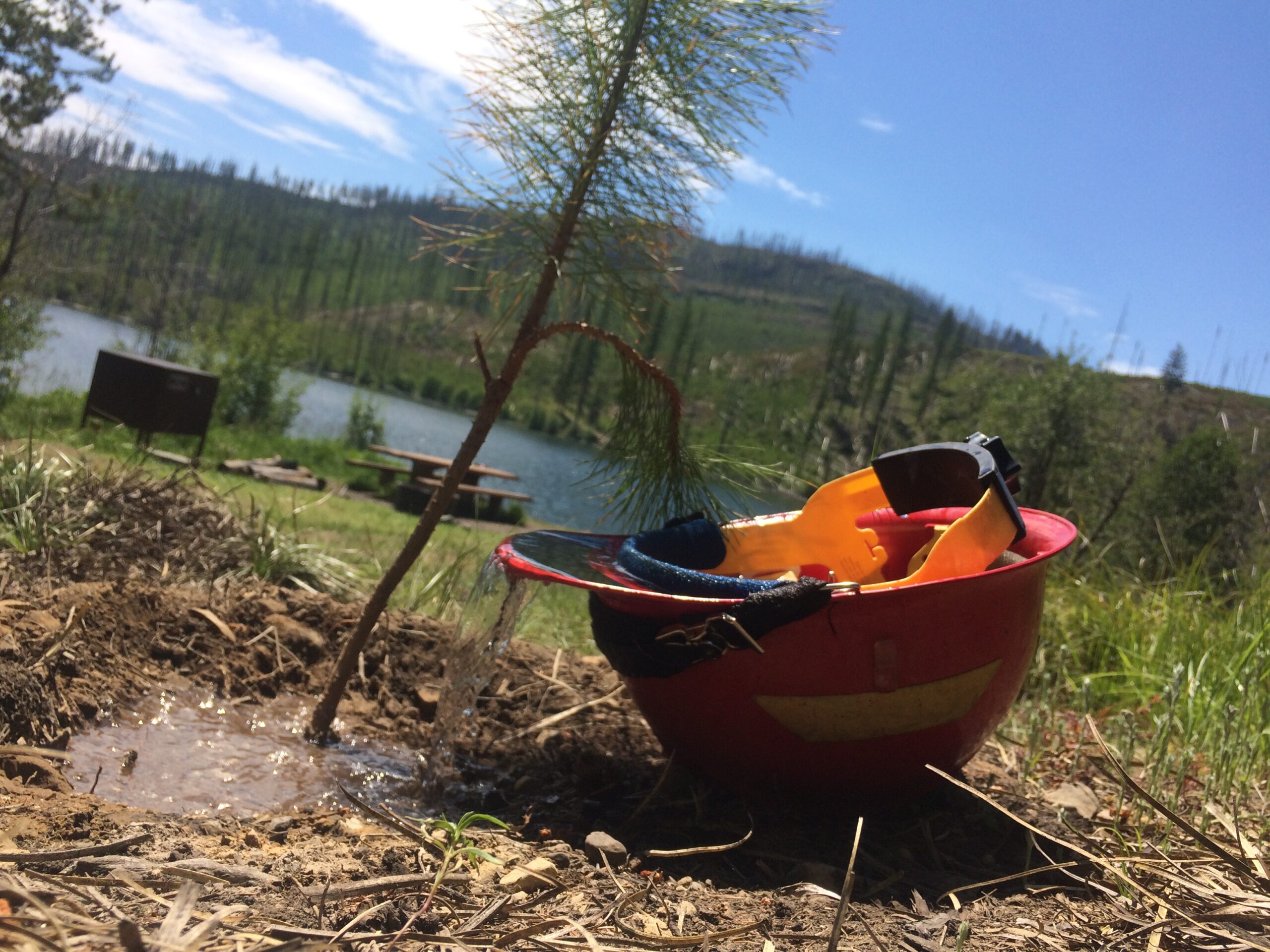
Image: Forest Service – Northern Region – Public domain/Wikimedia Commons