Virginia Cooperative Extension Says a Year of Dry Weather Has Left Landscape Trees Stressed, and It Recommends Deep Weekly Watering Until the First Frost
A year of dry weather has left Virginia’s landscape trees stressed and more open to attack from insects and disease, according to Virginia Cooperative Extension. With hot, dry conditions running into fall, the extension’s advice to homeowners is to keep watering their yard trees deeply every week until the first frost, and to watch closely for early signs of trouble. The guidance was published by Virginia Tech News on Oct. 9.
A Dry Year Has Weakened Virginia’s Yard Trees
Jason Fisher, a forestry and natural resources agent with Virginia Cooperative Extension, said many landscape trees are already stressed, “which leaves them more vulnerable to pressure from insects or disease.” He warned that the decline is easy to miss. Struggling trees often go unnoticed “until it is too late,” he said.
Fisher is the extension’s district agent for forestry and natural resources in its Central District, which covers 18 counties and four cities, according to his Virginia Tech profile. He has worked with the extension for about 30 years, holds a forestry and wildlife degree from Virginia Tech, and is a certified arborist and Tree Farm inspector.
Drought doesn’t often kill a tree outright, Virginia Tech News reported. Instead, it weakens the tree’s ability to cope with other stresses, such as a poor planting site or pressure from pests, and those problems can build on each other over time until a tree is pushed beyond its ability to recover.
Trees in home yards are often already dealing with many stressors, Fisher said, and they “may be planted in conditions that don’t match their species’ natural growing requirements.”
Deep Weekly Watering Until the First Frost
The extension’s core recommendation is regular watering through fall, until the first frost, rather than waiting for a tree to show visible damage. During dry weather, homeowners should water deeply each week across the entire root zone beneath the canopy, not just at the trunk.
Young trees need the most attention. Trees under two years old are especially vulnerable and need extra water and care while their roots establish, according to the extension.
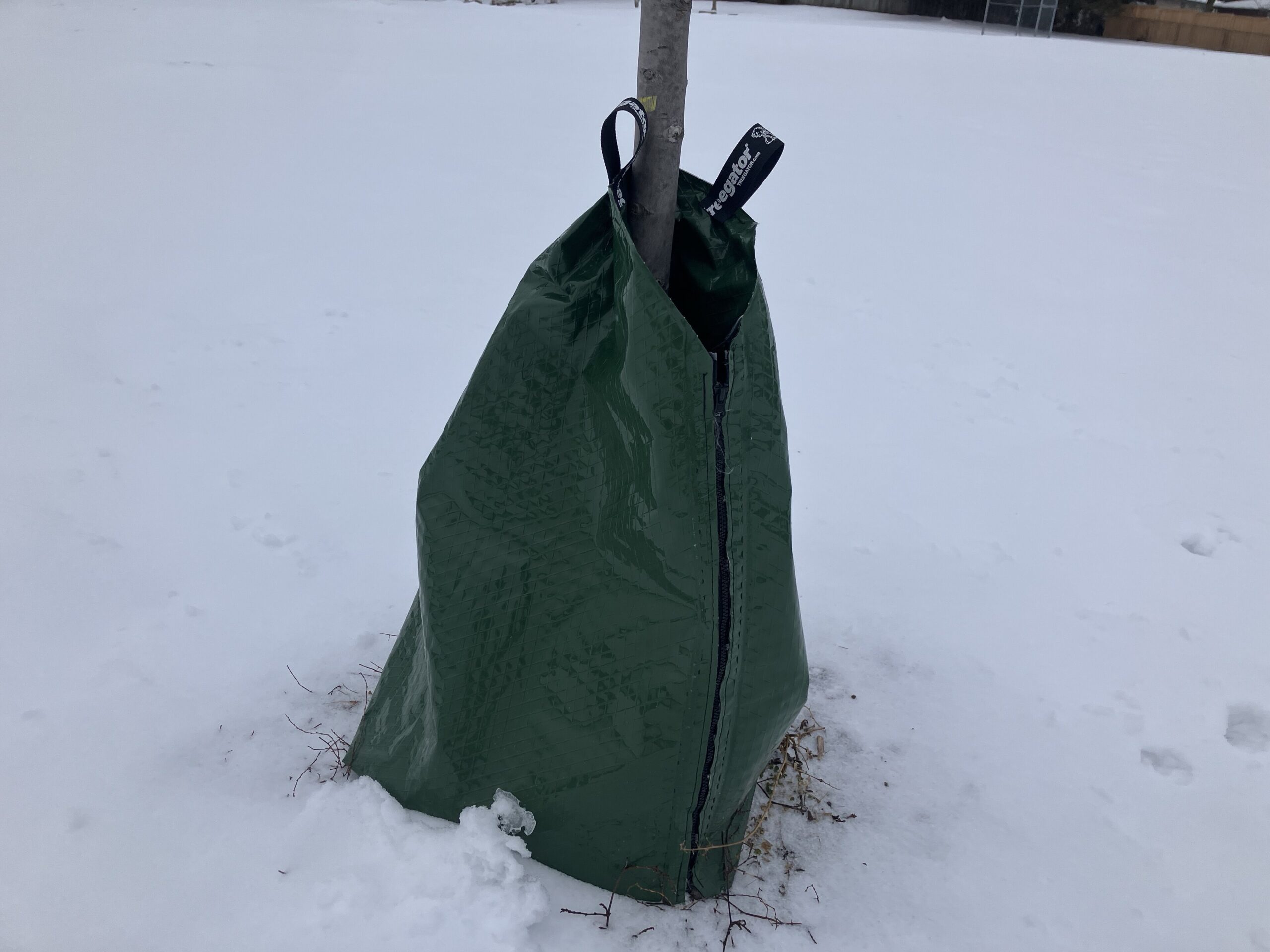
How the water goes on matters as much as how much. Drip irrigation is recommended because it lets water soak slowly into the soil. Pouring a large amount at once does little good, Fisher said, because “most of that water is going to run off or evaporate before it soaks deep into the soil.”
The Five-Gallon Bucket Method
For homeowners without a drip system, Fisher offered a simple alternative. “Get a five-gallon bucket and drill a few holes in the bottom,” he said. “Then leave the bucket under the tree for the water to slowly seep out.”
The slow release is the point. Water that seeps out over time has a chance to soak into the soil around the roots, where pouring a bucket all at once would mostly run off, according to Fisher. The extension’s broader advice still applies: the goal each week is to wet the entire root zone beneath the canopy.
Signs a Tree Is in Drought Trouble
Virginia Cooperative Extension lists several warning signs of drought stress:
Leaves that brown or curl at the edges. Leaves that drop early without their usual fall color. Evergreens shedding an excessive amount of needles in fall and winter. Any unusual browning or other change in how the tree looks.
Photos accompanying the Virginia Tech report showed drought-related browning on maple, pine and dogwood.
When those signs appear, the extension recommends contacting a local Virginia Cooperative Extension office or a certified arborist to find the cause. The extension’s office directory lists 107 local entries across the state, searchable by locality.
Where Virginia Homeowners Can Get a Diagnosis
The Virginia Department of Forestry also helps homeowners with sick trees. Its guidance on sick trees suggests identifying the species, describing the symptoms and where they appear, photographing the whole plant along with close-ups of the damage, and recording the date, location and number of plants affected. Samples can be submitted to the Virginia Tech Plant Disease Clinic and Insect ID Lab for diagnosis.
The department calls its Tree and Forest Health Guide its “premier source for forest health concerns and a good place to start,” and it also points homeowners to the Virginia Cooperative Extension Pest Management Guide for horticultural and forest crops and to the extension’s forestry publications on trees, shrubs and groundcovers.
The department takes urban and community tree questions at [email protected] and general forest health questions at [email protected].
The department also tracks the insects and diseases that threaten Virginia trees. Its insects and diseases page covers emerald ash borer, hemlock woolly adelgid, southern pine beetle, spongy moth and spotted lanternfly, along with diseases such as beech leaf disease, oak decline and thousand cankers disease. The department sorts tree pests by the damage they do: wood borers bore into trees, defoliators eat leaves, and sapsuckers feed on sap.
Dry conditions are shaping yard care well beyond Virginia this fall. In Colorado, Denver Water has banned all lawn watering since Oct. 1, and in Arkansas, 51 counties are under burn bans during a historic drought.
For Virginia homeowners, the extension’s recommendation runs on a simple calendar: deep weekly watering across the root zone in dry weather, extra care for trees planted in the last two years, and a call to the local extension office or a certified arborist at the first sign of browning, curling or early leaf drop, all the way until the first frost.
Get stories like this by email. Sign up for The Parent Diaries Letter.
This article was produced with AI assistance and edited for accuracy against the sources linked above.
Image: Gogerr – CC BY-SA 4.0/Wikimedia Commons