New York Law Keeps Lawn Fertilizer Off the Grass From Dec. 1 to April 1, and Suffolk County’s Own Cutoff Already Arrived on Nov. 1
Whether a New York lawn can still be fertilized today depends on which county it sits in. On Long Island, Suffolk County closed its window on Nov. 1. Everywhere else in the state, the cutoff is Dec. 1, 27 days from now, and the ban then runs through April 1.
The state rule comes from New York’s Nutrient Runoff Law, and counties are allowed to go further. For homeowners with one last bag in the shed, the difference between the two calendars decides what is legal this week.
Suffolk’s Line Fell on Nov. 1
Suffolk County’s Healthy Lawns, Clean Water page states the county rule in a single sentence: “Application of all fertilizers between November 1st and April 1st is prohibited.” The page explains the timing by saying this is when nitrogen leaching and runoff into water are most likely, and it adds that violators may be fined up to $1,000.
The county rule covers all fertilizers, not only the ones sold for turf, and the page links the full text of Local Law 41-2007. The New York State Department of Environmental Conservation has pointed to Suffolk as the example of a locality that is stricter than the state. In a November 2018 bulletin, the agency reminded residents of the state cutoff and noted that Suffolk County bars applying lawn fertilizer after Nov. 1.
The State Gap Runs Dec. 1 to April 1
For the rest of New York, the state’s lawn fertilizer FAQ says fertilizer application is prohibited between Dec. 1 and April 1. The ban applies to products containing nitrogen, phosphorus or potassium, and the FAQ says products with none of those nutrients can be applied in winter.
The text of the law on the DEC’s site says the same thing in legal terms: no fertilizer on lawn or non-agricultural turf from Dec. 1 through April 1 each year. The law took effect Jan. 1, 2012, and it lets local governments adopt stricter standards, though ones enacted after Jan. 1, 2011 must first show the DEC that they are needed for local water quality.
The village of Ardsley, in Westchester County, repeats the date on its village website, saying that fertilizing lawns between Dec. 1 and April 1 is “against New York State law.”
What Happens to a Homeowner Who Spreads It Anyway
The state law is written to educate before it fines. For a household owner or occupant, the DEC’s text lists a written warning and educational materials for a first violation, up to $100 for a second violation, and up to $250 for later ones. People and companies that apply fertilizer as regulated persons face up to $500 for a first violation and up to $1,000 for each one after that.
Suffolk’s ceiling is higher for a single violation, at $1,000. That makes the county’s Nov. 1 date worth marking on the calendar for anyone who lives there.
Phosphorus Stays Limited All Year
The winter ban sits beside a rule that applies in every month. According to the DEC FAQ, lawn fertilizer may be applied only if it has less than 0.67 percent phosphate by weight, wherever it was bought, including online or out of state. Higher-phosphorus products are allowed only when establishing a new lawn or when a soil test shows a need.
The NYSDEC bulletin advises choosing a lawn fertilizer with no phosphorus, since excess phosphorus in freshwater lakes and ponds can cause algae overgrowth that harms the environment and public health. Cornell Cooperative Extension’s Monroe County page on lawn fertilizer adds that most soils already contain adequate phosphorus and turf absorbs it efficiently, so it is usually unnecessary.
That page recommends a soil test, available through Cornell Cooperative Extension, to show how much phosphorus and potassium a lawn needs. If the test shows no need for either, it says to use nitrogen sources with little or no phosphorus and potassium.
Twenty Feet From the Water, Gardens Left Alone
The law also sets distances. Per the DEC’s text, lawn fertilizer cannot go within 20 feet of surface water, unless a continuous natural vegetative buffer at least 10 feet wide separates the lawn from the water. Where a spreader guard, deflector shield or drop spreader is used, the setback shrinks to 3 feet. Fertilizer may not be applied to parking lots, roads or sidewalks, and any that lands there must be contained right away and either applied legally to turf or put in a container.
The ban is also narrower than some homeowners assume. The DEC FAQ says gardens, trees, shrubs and agriculture are not regulated and may be fertilized at any time of year, including deep root feeding of trees. The state’s winter reminder, in the 2018 bulletin, makes the same point: the law does not cover agricultural fertilizer or fertilizer for gardens. Ornamental grasses are covered only if they are closely mowed.
Other states run on similar fall calendars. Maryland’s Nov. 15 lawn fertilizer rule has its own details, and Minnesota’s guidance on dormant seeding in November shows what lawn work is still on the table once the fertilizer goes away.
Get stories like this by email. Sign up for The Parent Diaries Letter.
This article was produced with AI assistance and edited for accuracy against the sources linked above.
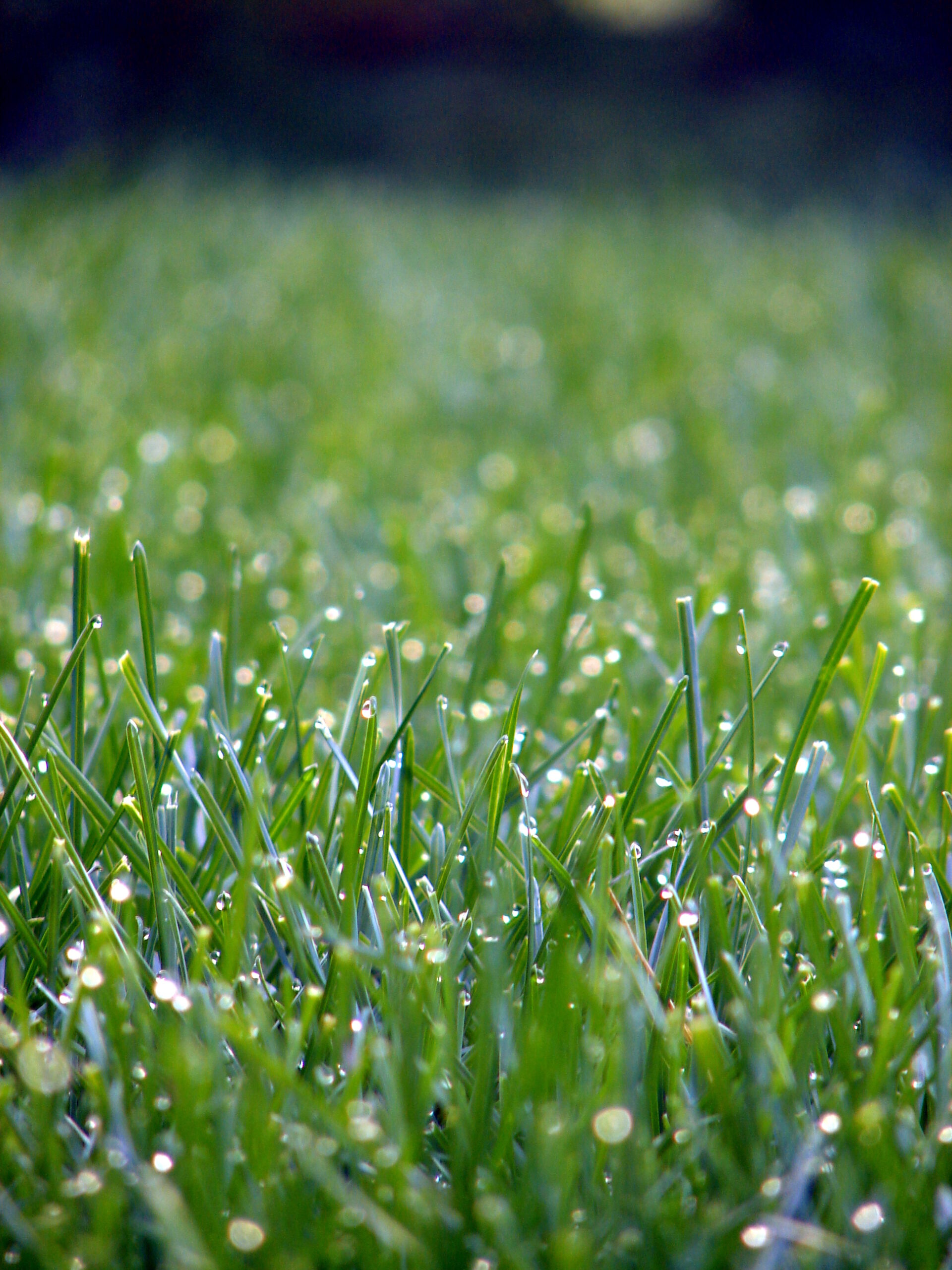
Image: “Lawn grass” by MichaelPloujnikov, CC BY-SA 3.0, via Wikimedia Commons