Kim Dinan and Brian Patton Tore Up the Paved Lower Driveway on Their Western North Carolina Lot and Turned It Into a Wildlife-Certified Garden for Their Two Kids
The only flat ground on Kim Dinan and Brian Patton’s western North Carolina mountainside lot was a slab of pavement nobody used. It was the former lower drive, set below the house and separated from the upper drive by a retaining wall, and it is now a vegetable, herb and pollinator garden that the couple’s two children pick from, according to an HGTV garden gallery by Kelly Smith Trimble. The garden is certified as a Wildlife Habitat by the National Wildlife Federation.
The HGTV feature carries no publication date, and the project itself began in 2020, so it reads best as a worked example of what a paved corner can become rather than as news.
The Only Flat Spot on the Mountain
Dinan is a travel writer and a mother of two, HGTV says. In 2020, at the height of the Covid-19 pandemic, she wanted to garden, to have a place to teach her children where food comes from, and to have a retreat of her own. She described a physical desire to get her hands in the dirt.
The trouble was the lot. The family lives on a mountainside in western North Carolina, and HGTV reports they had no flat, sunny space for growing food. The one level spot was a large paved area beside the house, which the family was not using for much beyond letting the children ride bikes and play.
Rented Equipment and a Local Designer
Dinan and Patton removed the paving themselves with rented equipment, according to HGTV. They then hired Gardens of Eatin, a local ecological design company, to draw up a permaculture plan. HGTV describes permaculture as aiming for a sustainable, self-sufficient garden.
Gardens of Eatin is based in Asheville. Its about page describes an ecological landscaping company that designs sustainable, regenerative spaces, including native landscapes, edible gardens and organic garden maintenance. Owner Anna Timmerman, who goes by Chief Shoveler, is listed as a certified permaculture designer, ecological landscaper and former organic farm manager.
The company’s organic landscaping page says organic work starts with soil health, not plant selection, and that it excludes synthetic nitrogen fertilizers. The same page lists vegetable beds, native pollinator gardens and design packages among its services. HGTV does not say which of those services the family used, and it does not give costs, bed counts or the garden’s size.
Beds, Trellises and a Bamboo Tipi
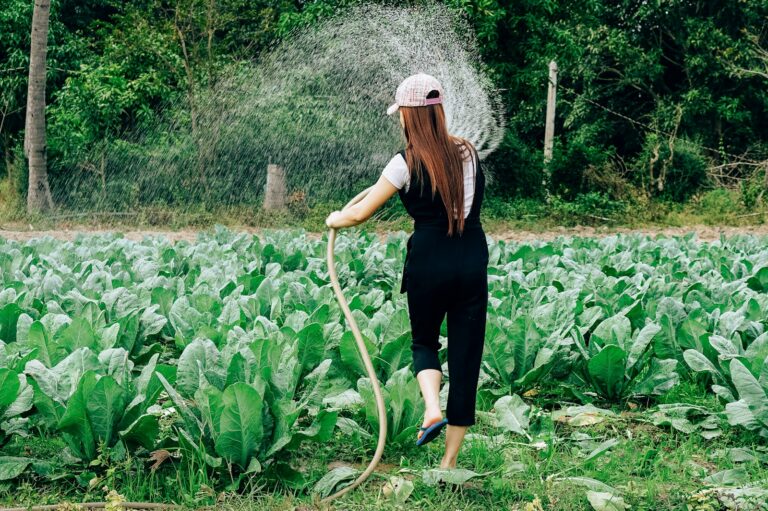
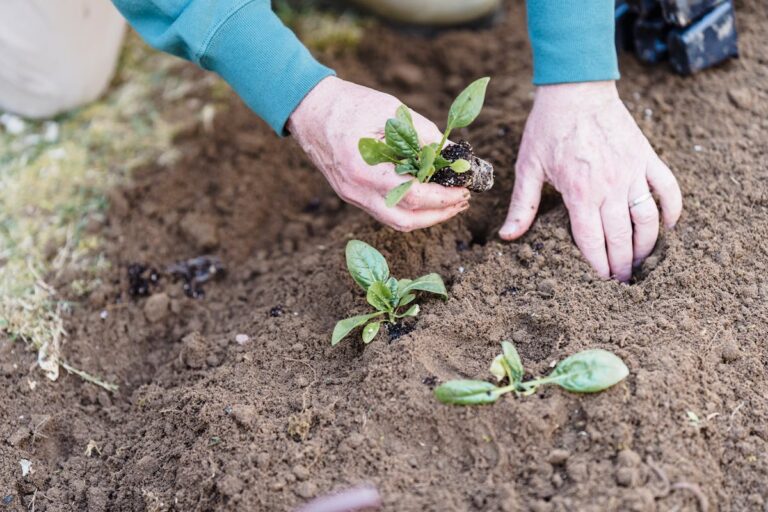
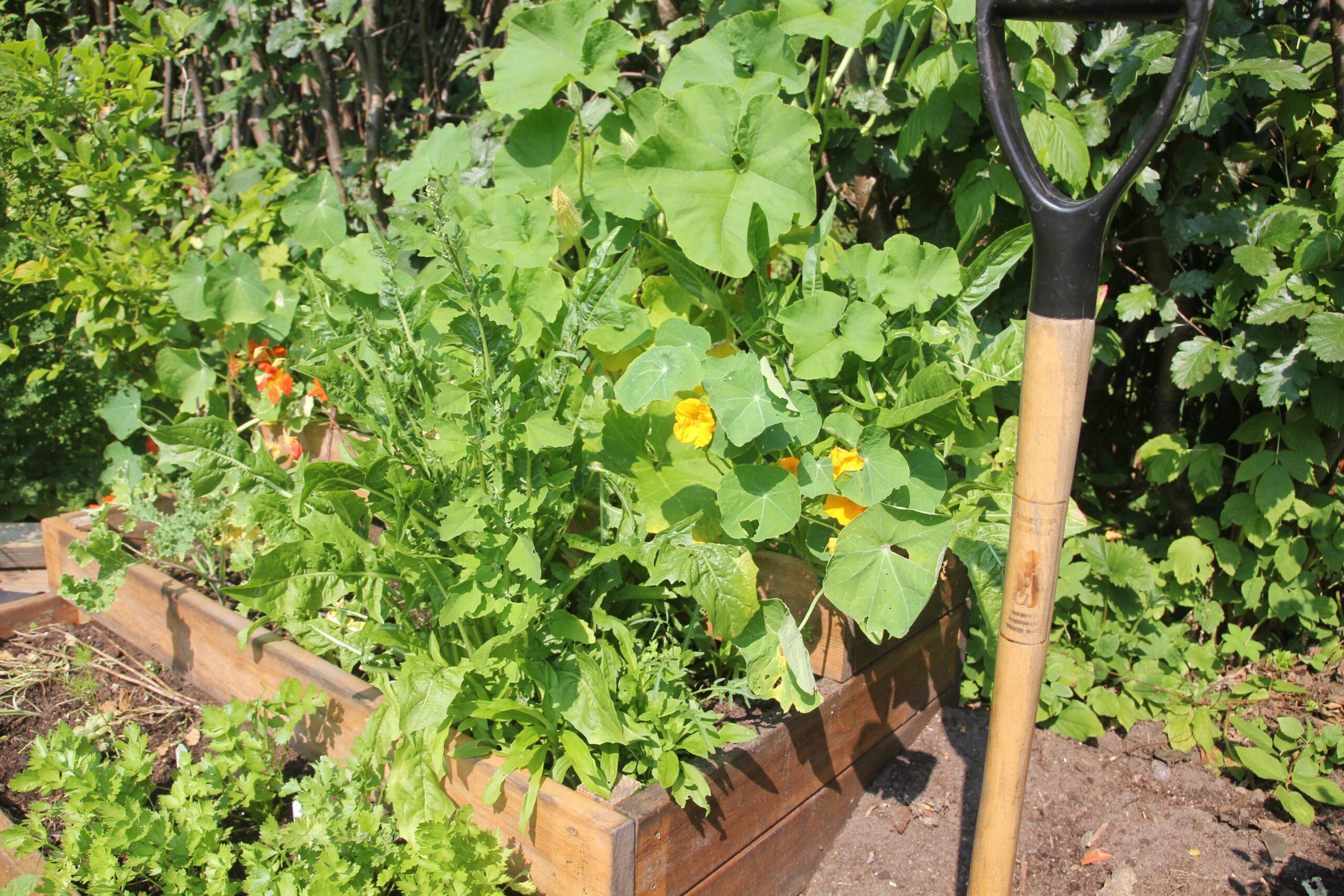
The beds themselves went in by hand. Dinan and Patton built the raised beds, HGTV says, with vegetables on one side of the garden and a bed along the retaining wall for tomatoes and other vining plants. A perennial pollinator bed grows in the ground on the opposite side.
The details are where the garden gets its character, in HGTV’s account. A V-shaped wooden herb bed has a built-in bench and holds lavender, thyme, sage and rosemary, which prefer drier soil. Flagstone paths run between the beds, and a steel hog-wire trellis on the retaining wall carries indeterminate tomatoes. A bamboo tipi supports pole beans and doubles as a hideout for the children, and Patton ties raspberry canes to a twine trellis.
Basil and watermelon share another raised bed fitted with PVC hoops so a floating cover can go on during heat waves or frost. An apple tree and a compost tumbler sit in a corner, and a sunburst gate marks the entrance. Pollinator plantings include coreopsis, purple verbena, pink coneflower, magenta bee balm, cosmos, sunflowers and Russian sage, with a rock cairn tucked among the Russian sage.
What Earns a Wildlife Habitat Certification
HGTV lists the garden as a National Wildlife Federation Certified Wildlife Habitat and says certification asks for food, water, cover, places to raise young and sustainable practices. The federation’s Garden for Wildlife page puts the core idea this way: “All wildlife need food, water, cover, and places to raise their young.”
The program is not reserved for large properties. The page says a habitat can be a yard, community space or container garden, and the federation’s certification page says any small space with native plants and a water source can qualify, recommending native plants make up at least 70 percent of plantings. In the Dinan-Patton garden, HGTV points to a bird bath for water and a mix of pollinator plants that draw bees, butterflies and birds.
Children Who Eat Out of the Garden
The children are the point of the project. HGTV describes a daughter picking beans and a son riding a tricycle around the paths, and Patton built a mud kitchen for them. The article does not give the children’s names or ages.
Dinan says the children are so into the garden that they help with planting and harvesting whatever there is, and HGTV adds that the garden was abundant in its first year.
The practical lesson is a modest one. A paved area that gets little use can be a site for beds, and the work does not have to be done all at once or by professionals. In this case the homeowners handled the demolition and the building, with a local design company supplying the plan.
Get stories like this by email. Sign up for The Parent Diaries Letter.
This article was produced with AI assistance and edited for accuracy against the sources linked above.
Image: Kerstin Namuth – CC BY-SA 4.0/Wikimedia Commons