Poinsettias Need Total Darkness From 5 p.m. to 8 a.m. to Color Up Again for December, University of Illinois Extension Says
A poinsettia that is expected to color up again for Christmas needs complete darkness from 5 p.m. to 8 a.m. each day, starting about the end of September and lasting until the bracts show good color, according to University of Illinois Extension. Color usually arrives in early to mid-December, the extension says.
That is a 15-hour night. Clemson University’s version is an hour shorter and starts in the first week of October, but the two extension services agree that the plant must go back into a bright window every morning.
The 15-Hour Night Illinois Extension Describes
Poinsettias are short-day plants, Illinois Extension explains, meaning they need long, uninterrupted nights to form flowers. The care page tells growers to use a closet or to cover the plant with a box from 5 p.m. to 8 a.m., then return it to the sunny window during the day. The dark treatment continues until the bracts are almost fully expanded.
The extension’s frequently asked questions page gives the same hours but says to begin around Oct. 1. It adds a warning about light leaks: “Any little exposure to light can prevent flowering.” Covering the plant with a light-proof bag in a closet may work, the page says.
Temperature matters during the dark weeks as well. Illinois Extension says to keep the plant between 60 and 70 degrees Fahrenheit, and that nighttime temperatures above 70 to 75 degrees may delay or prevent flowering.
Where Clemson’s Schedule Differs
Clemson University’s Home and Garden Information Center describes a shorter dark period. In its poinsettia factsheet, the center says to start in the first week of October and keep the plant in total darkness for 14 continuous hours each night for 8 to 10 weeks. A closet or a large box works, the factsheet says.
Clemson also gives daytime numbers. During the light part of the day, the plant should get 6 to 8 hours of bright sunlight, and daytime temperatures should stay at or below 70 degrees. Chilling below 50 degrees can cause premature leaf drop. Depending on the cultivar, the factsheet says, the plant should bloom in November or December.
The factsheet was revised Dec. 20, 2015 by Joey Williamson, building on work by Robert F. Polomski and Nancy Doubrava. Illinois Extension’s page does not list an author or date.
What the Plant Needs From Sunrise to 5 p.m.
The dark period is only half the routine. Illinois Extension recommends indirect light, ideally about 6 hours a day, for poinsettias kept as holiday plants, and says to keep foliage from touching cold windows. The plant should stay away from heating vents, doors and drafts in a cool room, with daytime temperatures of 60 to 70 degrees and nights around 55 degrees.
The extension’s lighting page adds that flowering in some plants depends on day length, so day length should be considered when adding artificial light. It also says plants should not be exposed to more than 16 hours of light because they need a rest period too.
Watering follows the same cautious pattern. Illinois Extension says to water only when the soil is dry, let it drain and discard excess water, and to punch holes in decorative foil so water can drain into a saucer. Wilted plants drop bracts sooner, the extension says. Fertilizer is not recommended while the plant is in bloom.
Making a Store-Bought Poinsettia Last
For plants that are only meant to carry a household through the holidays, Illinois Extension says a poinsettia lasts about 6 to 8 weeks indoors with good care, and some varieties stay attractive for months. High temperatures shorten the plant’s life. The extension’s poinsettia overview says red poinsettias still account for more than 70% of sales, and that the plant should be about 2.5 times taller than its container’s diameter when selected.
The same page says to choose fully colored bracts and dark green foliage down to the soil line, and to look for fresh green or red-tipped true flowers, since yellow pollen suggests the bloom will not hold as long. It also says to sleeve or cover the plant when outdoor temperatures are below 50 degrees. Extension advice on carrying poinsettias home in cold weather covers that step in more detail.
From Dormancy to Another Fall
Illinois Extension lays out the full year for growers who keep the plant. After the bloom, once about half the leaves and bracts have dropped, watering is reduced until the soil is completely dry, and the plant is stored in a cool, dark place with just enough water to keep stems from shriveling.
In spring, usually early May, the plant is cut back to 4 to 6 inches above the soil, repotted if needed and set in a sunny window. It can go outdoors once frost danger has passed and nighttime temperatures stay above 50 degrees, with sun exposure increased gradually over one to two weeks, in a spot with 6 to 8 hours of direct sun and some afternoon shade. Shoot tips are pinched every 3 to 4 weeks until mid-August to keep the plant bushy, and the plant comes back indoors when nights drop to 55 to 60 degrees.
Clemson’s factsheet gives its own post-holiday numbers: prune to about 8 inches around March to April, fertilize every 2 to 3 weeks in spring, summer and fall, repot in early June into a container 2 to 4 inches larger, and stop pinching back after Sept. 1. That timing matters because the dark treatment then starts again in the fall.
Get stories like this by email. Sign up for The Parent Diaries Letter.
This article was produced with AI assistance and edited for accuracy against the sources linked above.
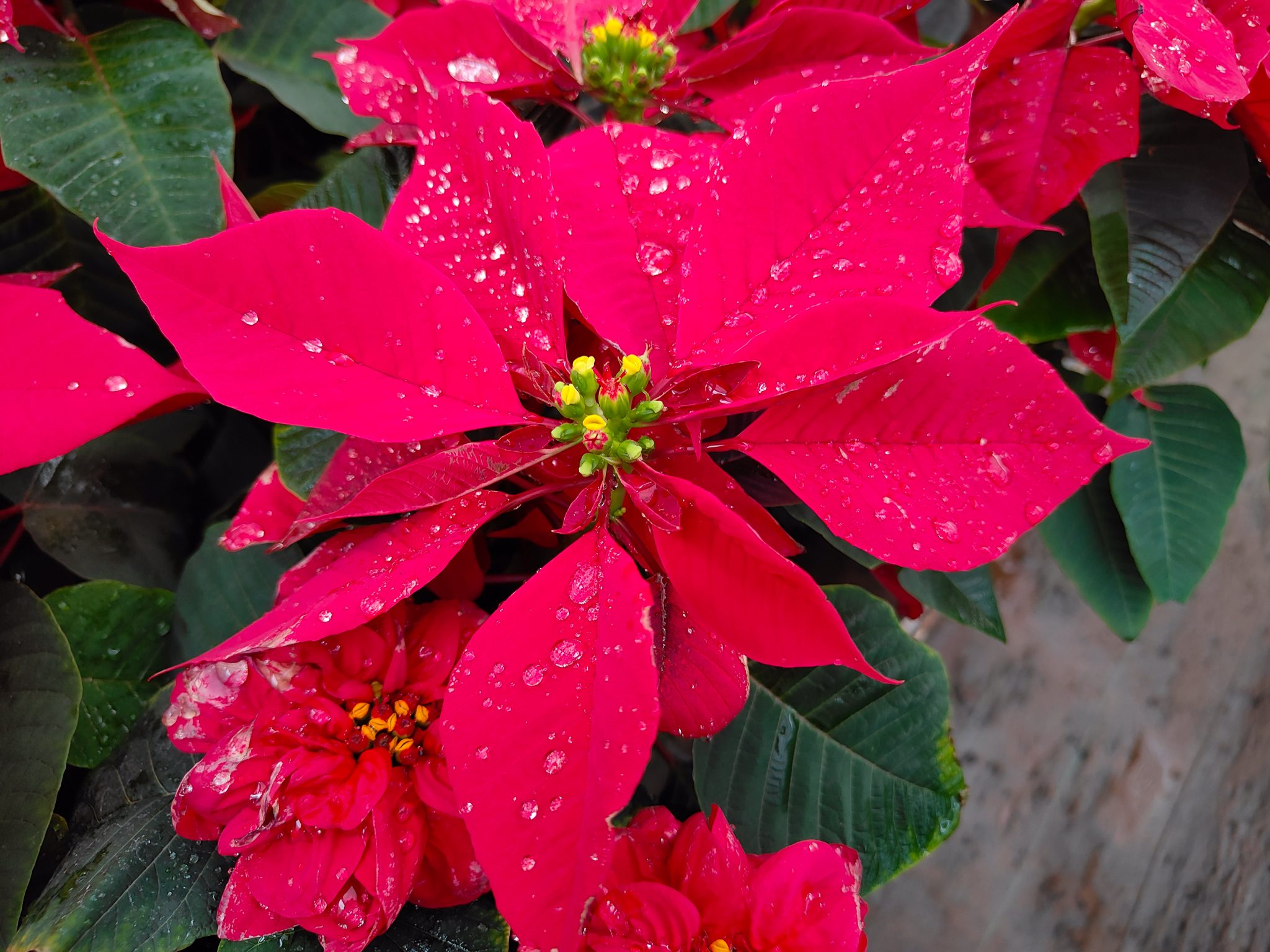
Image: Nilesh Shiragave, CC0 1.0, via WordPress Photo Directory