Perennial Beds Shouldn’t Get Winter Mulch Until the Soil Starts to Freeze, Then Minnesota Extension Recommends 5 to 6 Inches of Leaves or Straw
Mulching perennials too early, during fall cleanup and before the soil freezes, can encourage new growth under the mulch that weakens the plants, according to University of Minnesota Extension. The better moment comes later, once the ground begins to freeze.
Katie Drewitz, a University of Minnesota Extension educator, recommends 5 to 6 inches of leaves, compost, corn stalks or straw applied at that point. Extension guidance from Iowa and Oregon agrees on the timing and differs mainly on depth and material.
The Freeze Marks the Start
Drewitz says mulch goes on once the soil begins to freeze, or any time after that. The goal is not to warm the ground. It is to keep the soil steadily cold so plants stay dormant through winter thaws.
Iowa State University Extension’s Aaron Steil gives the same signal in the university’s fall garden tasks guide. If perennials need more protection, he says, wait until the ground freezes, which is typically around late November in much of Iowa.
Oregon State University Extension’s Amy Jo Detweiler writes in her winter care guide for perennials that mulch should go on after the ground has frozen lightly, which keeps it frozen. Mulch applied earlier, she says, may not be as effective.
Why Early Mulch Backfires
The University of Minnesota warns against mulching during fall cleanup, before the soil freezes, because the cover can encourage growth that weakens plants. For spring bulbs, it says, mulching after the soil starts to freeze also keeps them from emerging too early.
Iowa State makes a similar point in two places. Applying mulch too early can delay dormancy and increase cold damage, Steil says, and in a guide to using mulch in the garden he advises waiting until plants go dormant.
The university’s frost protection page adds a reason: perennials need to experience cold temperatures to help them fully enter dormancy.
Oregon State explains what the mulch is for. It holds winter moisture and insulates roots, and repeated freezing and thawing can damage root tissue and kill roots.
Depth and Materials
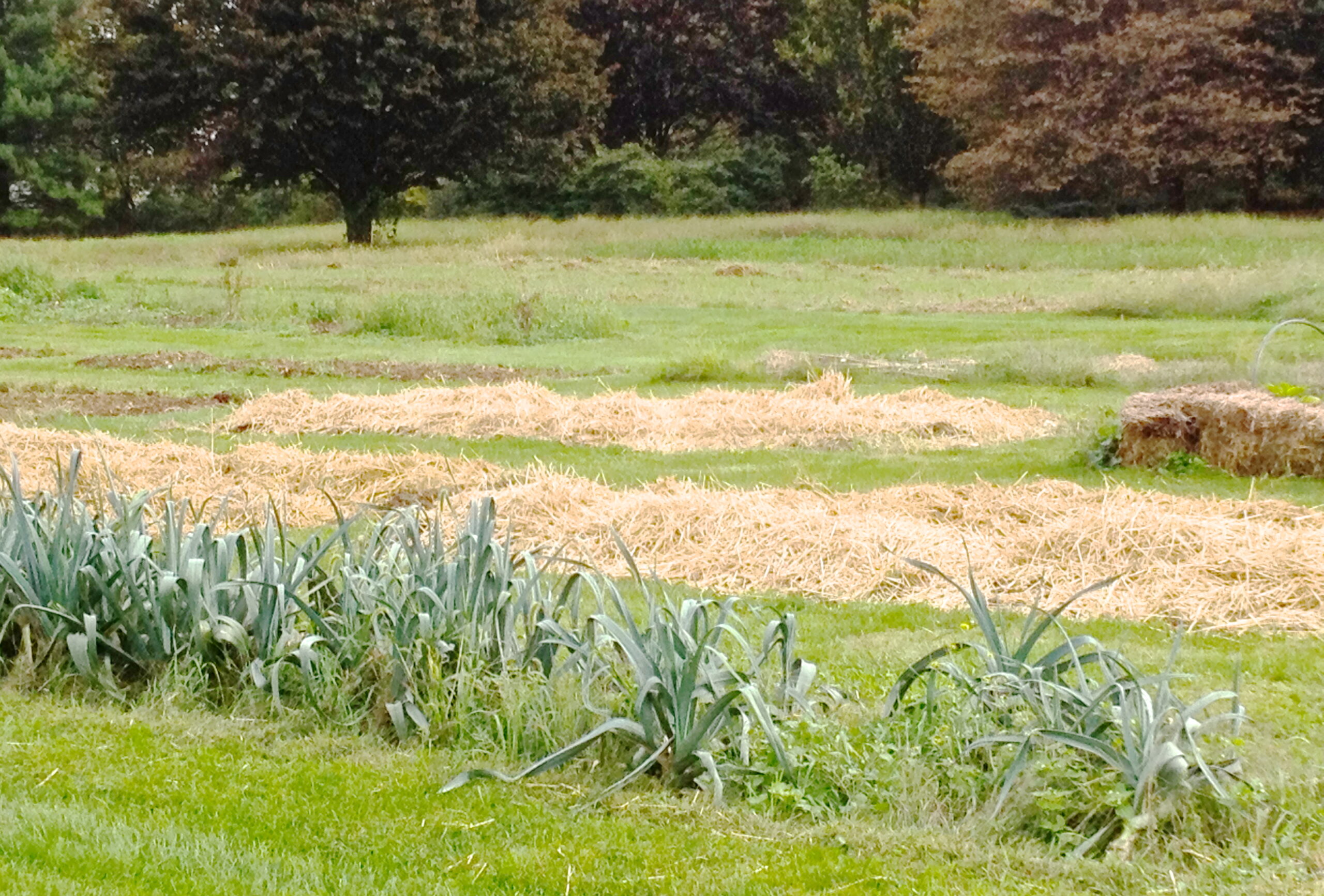
Minnesota’s recommendation is the deepest of the three. Drewitz suggests 5 to 6 inches of whole or shredded leaves, partially decomposed compost, ground corn stalks or straw. Wood chips and shredded bark are good mulches, she adds, but are best used between plants, where they can stay undisturbed all year.
Iowa State’s fall guide calls for about 4 inches over the crown. Oregon State suggests 2 to 5 inches for most perennials and 5 inches or more for very tender ones, naming ajuga, bergenia, lavender and chrysanthemums as plants that need extra cover.
Oregon State also lists perennials that do better without winter mulch because they dislike wet soil: asters, daylilies, irises, penstemon and yarrow. For those, it says, mulch can lead to root rot or lost centers.
Gardeners who already mulch with leaves in beds can see how Oregon State’s chrysanthemum advice combines cutting back with a leaf blanket.
Leaves Versus Straw
The three universities do not fully agree on leaves. Minnesota lists whole or shredded leaves first among its materials. Iowa State’s mulch guide says straw is an ideal mulch for overwintering perennials and that leaves can mat down and smother herbaceous perennials.
Iowa State’s fall guide repeats the warning for marginally hardy perennials, which it protects with cages filled with straw or pine needles rather than leaves. It also advises against Styrofoam cones or domes, which can trigger early warming in spring.
The practical reading is that shredded leaves, which pack less tightly than whole ones, suit Minnesota’s guidance, while straw is the safer choice where matting is a worry.
Spring Removal
Winter mulch is temporary. Drewitz says to pull it off as it thaws in early spring to avoid crown rot and other fungal problems, while keeping some cover nearby in case of a late freeze.
Iowa State gives a date range for its region: remove the mulch as the top soil thaws, around mid-March in much of Iowa. Oregon State adds that plants wake at different times, so a slow perennial is not necessarily a dead one.
Standing stems and seed heads can also stay through winter. Iowa State says clearing the garden after the first freeze is not necessary, because the stems protect crowns and shelter pollinators, and that cutting back can wait until early spring.
Get stories like this by email. Sign up for The Parent Diaries Letter.
This article was produced with AI assistance and edited for accuracy against the sources linked above.
Image: Final4one / Wikimedia Commons (CC BY-SA 3.0)