A Woman Spent Twelve Years Growing an Exact Copy of a Garden From an Old Family Photograph, Then Learned the Photo Was Actually Taken at a Neighbor’s House
For twelve years, Elaine Mercer treated one faded family photograph like a blueprint. She measured flowerbeds, hunted down old-fashioned plants, moved shrubs by inches, and slowly transformed her suburban backyard into what she believed had once been her grandmother’s garden. Then a casual conversation with a longtime neighbor revealed that the garden in the photograph had never belonged to Elaine’s family at all.
The Photograph Had Always Been Her Favorite
Elaine first found the photograph in a cardboard box after her grandmother, Ruth, died. It showed Ruth standing beside a young girl in front of a remarkably neat garden, with a brick path running between flowerbeds and a white arbor covered in climbing roses. On the back, someone had written in faded blue ink, “Summer at home.”
Elaine was in her twenties when she first saw it, and she immediately recognized Ruth in the picture. She assumed the little girl was her mother, although nobody in the family could say for certain because the photograph had been taken decades before Elaine was born. The garden, however, fascinated her more than the people in it.
She Became Obsessed With the Details
Elaine kept the photograph on her refrigerator for years. Whenever she looked at it, she noticed something new: three rounded shrubs beside the path, a bed of white flowers beneath the arbor, a tall tree in the far corner, and what appeared to be a narrow stone border surrounding the vegetable patch.
When Elaine eventually bought her own house in Pennsylvania, she decided the backyard would become a recreation of that photograph. Her husband, Mark, thought it was a charming idea until she explained that she wanted the garden to match the picture as closely as physically possible.
The First Plants Went Into the Ground
Elaine began with the brick path because it was the most obvious feature. She searched through landscaping catalogs, visited garden centers, and even contacted a local salvage yard until she found reclaimed bricks with the irregular edges she wanted.
The first flowerbed took an entire weekend to prepare. Elaine stood with the photograph in one hand and a measuring tape in the other, repeatedly stepping backward to compare the shape of her new garden with the old image.
She Started Hunting for Plants From Another Era
The hardest part was finding plants that looked like the ones in the photograph. Elaine visited heritage plant nurseries and spoke to gardeners who specialized in older varieties. When someone suggested that the original garden might contain common plants that had simply become less popular, she became even more determined to identify them.
She eventually planted old-fashioned roses, peonies, foxgloves, hydrangeas, and several shrubs that she believed matched the shapes visible in the photograph. Every time something grew differently than expected, Elaine moved it instead of accepting that nature refused to follow an old picture.
Her Family Began Teasing Her
At family gatherings, Elaine became known as the person who was always talking about “Grandma Ruth’s garden.” Her mother occasionally laughed and told her that she remembered visiting the property but could not recall much about the backyard.
“You’re making it more beautiful than it ever was,” her mother once joked.
Elaine smiled and answered, “I’m trying to make it exactly how Grandma remembered it.”
Her mother did not correct her.
Twelve Years Passed
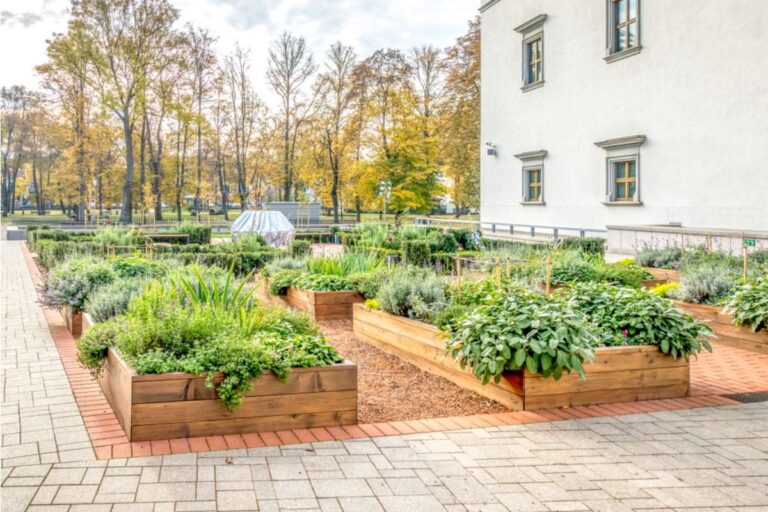
The garden slowly became the centerpiece of Elaine’s property. The roses climbed over the arbor, the shrubs became rounded and dense, and the brick path disappeared beneath a canopy of flowers during part of the summer.
Neighbors began stopping during walks to compliment her. One woman even asked whether Elaine had hired a professional designer, and Elaine proudly explained that the design came from a family photograph.
She never mentioned that she was still unsure exactly where the original garden had been.
The Photograph Went on Display
Elaine eventually had the photograph professionally restored and enlarged. She placed it in a frame near the back door so visitors could compare the old garden with the one outside.
The resemblance was remarkable. Even Mark admitted that the two gardens looked strangely similar when viewed from the same angle.
“You actually did it,” he told her one afternoon.
Elaine looked through the glass door toward the garden and smiled. “I told you I would.”
A Neighbor Came Over With an Unexpected Question
The discovery began with an ordinary neighborhood conversation. Elaine was trimming roses when an elderly man from two houses down stopped at the fence and stared at the framed photograph visible through the kitchen window.
His name was Walter Brooks, and he had lived in the neighborhood longer than almost anyone else. He asked Elaine where the photograph had been taken.
“My grandmother’s house,” Elaine replied. “At least, that’s what everyone always told me.”
Walter frowned.
“That’s strange,” he said. “I know that garden.”
Elaine Thought He Was Confused
Elaine laughed because she assumed Walter meant that he recognized the style. Instead, he pointed toward the photograph and identified the brick path, the arbor, and the tree behind the flowerbed.
“That isn’t your grandmother’s house,” he said. “That’s the old Carson place.”
Elaine stopped trimming the rose.
“The Carson place?”
Walter nodded slowly. “Three doors down from where I grew up.”
The Name Changed Everything
Elaine went inside and pulled the photograph from its frame. She stared at the faded handwriting on the back and then asked Walter whether he was certain.
He told her he had played in the Carson family’s yard as a child. He remembered the arbor because the family had painted it white every few years, and he remembered the large tree because children used to climb it.
Elaine felt a strange pressure in her chest.
“Are you saying my grandmother never lived there?”
Walter shook his head.
“Not that I remember.”
Elaine Called Her Mother
Elaine immediately phoned her mother. She explained what Walter had said, expecting her mother to dismiss it.
Instead, there was a long silence.
Finally, her mother said, “I don’t know where that picture was taken.”
Elaine was stunned. “But you always said it was Grandma’s garden.”
Her mother sighed and admitted that she had assumed it was because Ruth kept the photograph with other family pictures and often talked about spending summers in that neighborhood.
An Old Box Revealed Another Clue
That evening, Elaine searched through the remaining boxes from Ruth’s house. Beneath old greeting cards and family recipes, she found a stack of envelopes held together with a rubber band.
One envelope contained a letter written by Ruth to her sister in the 1960s. Elaine read it twice because one sentence stood out: “The Carsons let us use their backyard for the family pictures again.”
Elaine sat down on the floor.
The word “again” made her hands tremble.
The Family Had Used the Garden for Photos
Elaine began piecing together the story. Ruth’s family had not owned the garden. They had apparently been friends with the Carson family and occasionally gathered at their property for photographs because the garden was unusually beautiful.
The photograph that Elaine had treated as proof of her family’s home was actually taken in someone else’s backyard.
She had spent twelve years recreating a place her family had simply visited.
She Finally Found the Original Location
Walter helped Elaine identify the old Carson property. The house had been renovated, but the backyard still contained remnants of the original landscape.
Elaine stood at the fence with her photograph in hand.
The brick path was gone, but the old tree remained.
So did a section of the original stone border.
She felt almost dizzy.
The Carson Family Had a Story Too
Through a local historical group, Elaine eventually located Margaret Carson, who was in her eighties and living in another state. Elaine sent her a copy of the photograph.
Margaret called her the next evening.
“Where did you get that?” she asked.
Elaine explained everything.
Margaret laughed softly and said, “That’s our garden. My mother planted those roses.”
Then she added something Elaine never expected.
“Your grandmother used to bring everyone over because she loved it so much.”
Elaine Asked the Question She Had Avoided
Elaine asked whether Ruth had ever intended to recreate the garden herself.
Margaret paused.
“She talked about it,” she said. “But she always said she could never make it look right.”
That sentence stayed with Elaine.
For twelve years, she had been chasing an image that her grandmother herself had apparently never tried to reproduce. Elaine suddenly wondered whether she had misunderstood what the photograph meant.
The Garden Did Not Feel Like a Mistake Anymore
Elaine walked through her backyard the next morning and saw it differently. The roses were still beautiful, the arbor still stood, and the brick path still led through the flowerbeds exactly as she had planned.
But now she knew it was not her grandmother’s lost garden.
It was something else entirely.
It was the garden Elaine had built because a photograph had made her curious about a piece of family history that nobody had properly explained.
Margaret Sent Her One More Photograph
A few weeks later, Margaret mailed Elaine a small envelope. Inside was another photograph from the same day.
Elaine had never seen it.
This photograph showed Ruth laughing beside the arbor while several children crowded around her. Behind them, almost hidden by the roses, stood Margaret’s mother holding a tray of lemonade.
On the back was a handwritten note: “The day everyone came to Carson’s garden.”
Elaine stared at it for a long time.
The Two Families Finally Met
Margaret eventually visited Elaine’s house. When she stepped into the backyard, she immediately recognized the layout and laughed at how carefully Elaine had reconstructed details that had disappeared decades earlier.
“You even got the path right,” she said.
Elaine smiled and told her she had spent twelve years trying to do exactly that.
Margaret touched one of the roses and replied, “Then I suppose our families have been sharing this garden for a very long time.”
Elaine Stopped Calling It Her Grandmother’s Garden
Elaine never tore the garden apart. She did not remove the plants or abandon the design, but she stopped referring to it as Ruth’s garden.
From then on, she called it the Carson garden.
The change seemed small, but it mattered. The garden was no longer an attempt to recreate something she had misunderstood. It had become a tribute to the unexpected friendship between two families whose lives had briefly overlapped in a backyard that almost disappeared from memory.
The Photograph Found Its New Place
Elaine eventually moved the restored photograph from the kitchen into the garden room. Beside it, she placed the newer photograph Margaret had sent.
Visitors could now see both images together.
One showed the garden as it had looked decades ago. The other showed the garden Elaine had spent twelve years rebuilding without knowing the truth.
Whenever someone asked why she had gone to such lengths, Elaine gave the same answer.
“I thought I was rebuilding my family’s past,” she would say. “It turns out I was preserving someone else’s.”