First-Time Homebuyer Discovers the Previous Owners Built a Garden Shed Without Permission, Then a £90 Insurance Dispute Threatens to Complicate the Entire House Purchase
Buying a first home is supposed to be an exciting adventure, filled with dreams of decorating rooms, planting flowers, and turning an empty backyard into a personal paradise. For one first-time buyer in England, however, the excitement came with an unexpected complication involving a garden shed that had quietly stood in place for years. What seemed like an ordinary outdoor structure suddenly became a legal concern just as the house purchase was progressing. The buyer soon discovered that even a modest garden improvement could create a surprisingly expensive headache.
A person shared his story about purchasing a freehold end-of-terrace house on an estate managed by a housing association. Although the property was privately owned, certain exterior changes still required the association’s permission. The buyer had not expected an old garden shed to become a major talking point during the transaction. Yet that little structure was about to turn a straightforward purchase into a debate over paperwork, insurance, and who should pay.
The Shed Had Been Standing Since 2012
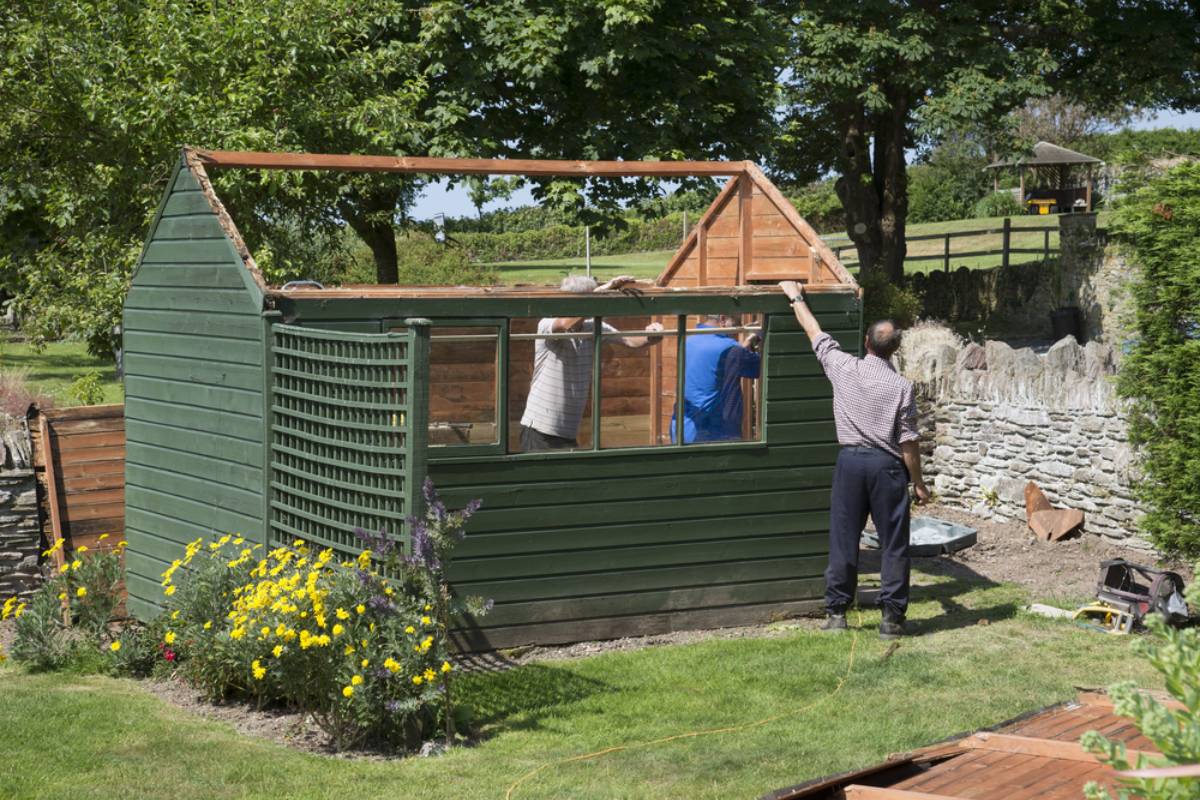
The garden shed was not a brand-new addition that had appeared overnight or a questionable structure built during a frantic weekend renovation. According to the buyer, the sellers had constructed it back in 2012 without first obtaining permission from the housing association. For years, the shed had apparently remained in place without attracting any objections. It had become such an ordinary feature of the garden that its existence seemed unlikely to cause trouble.
The problem emerged only when the buyer’s solicitor examined the property’s circumstances during the purchase process. The solicitor explained that the housing association could potentially take action over the unauthorized modification in the future. Suddenly, a shed that had survived more than a decade without controversy became something that needed to be addressed before the sale could move forward comfortably. The buyer was left wondering how a structure that had caused no apparent trouble for years could become such a big issue now.
The Housing Association Had Rules for Garden Changes
The buyer explained that the estate’s arrangements with the housing association were already somewhat confusing. Even though the properties were reportedly no longer social housing, the association still had rules concerning exterior modifications. Those rules covered changes such as loft conversions and garden renovations, meaning homeowners could not necessarily alter their properties as freely as they might expect. A simple shed could therefore raise questions that extended beyond its appearance or usefulness.
For gardeners, the situation offered an important reminder that a backyard is not always a completely unrestricted space. Building a shed, adding a greenhouse, or making substantial landscaping changes can sometimes involve permissions beyond ordinary planning requirements. The buyer had not personally constructed the shed, but the unresolved paperwork was now attached to the house he hoped to purchase. What the previous owners had treated as an old garden feature had become a potential complication for the next owner.
The Solicitor Suggested Indemnity Insurance
Rather than immediately demanding that the shed disappear, the buyer’s solicitor proposed a solution involving indemnity insurance. The policy would provide protection against certain financial consequences if the housing association decided to pursue the matter in the future. The solicitor asked whether the sellers would be willing to pay for the insurance, since the issue originated with their decision to build without permission. That request seemed like a relatively straightforward way to address the concern without disturbing the garden.
Unfortunately, the sellers reportedly refused to pay for the policy. Their reasoning was that the shed had been standing since 2012 and the housing association had not objected during that time. From their perspective, purchasing insurance for an old structure that had attracted no complaints seemed unnecessary. The buyer admitted that he understood their position, creating an awkward situation in which neither side appeared eager to spend money on a problem that had remained quiet for years.
A Tiny Shed Created a Surprisingly Expensive Decision
The solicitor presented the buyer with two main options, neither of which was particularly appealing. He could purchase the indemnity insurance himself for a one-off payment of £90, or he could ask the sellers to remove the shed altogether. Paying for a policy he had not expected to need was frustrating, while removing a perfectly usable garden structure seemed unnecessarily drastic. The buyer wanted to complete the purchase without turning a minor outdoor feature into an expensive obstacle.
The decision became more irritating because the housing association was also expected to charge approximately £300 in administrative fees, according to the buyer. He already had concerns about those charges and intended to discuss them further with his solicitor. Adding another expense to the transaction was the last thing he wanted while trying to keep his first home purchase within budget. Suddenly, the humble shed seemed to have developed a much larger financial footprint than its modest place in the garden suggested.
The Buyer Wondered Whether Doing Nothing Was an Option
With the sellers refusing to pay, the buyer began considering a third possibility: simply proceeding without taking any action. He wondered whether he could instruct his solicitor to continue with the purchase despite the unresolved issue. After all, the housing association had apparently allowed the shed to remain for years without raising an objection. From his perspective, paying extra money to address a problem that might never arise seemed difficult to justify.
However, the buyer was also aware that his solicitor had raised the matter for a reason. The solicitor was carrying out due diligence, and the buyer did not accuse the professional of acting improperly. Instead, he was trying to understand whether the potential risk was significant enough to justify the additional cost. As a first-time buyer, he admitted that he was still finding his way through the complicated process of purchasing a property.
A Response From a Person Raised the Mortgage Question
A response from a person highlighted a detail that could make a substantial difference: whether the buyer was purchasing the property with a mortgage or paying entirely in cash. The distinction mattered because a solicitor’s responsibilities may extend beyond the buyer’s personal preferences when a mortgage lender is involved. Even if the buyer was comfortable accepting a risk, the lender might have requirements that prevented the transaction from proceeding without an appropriate resolution. That meant the buyer could not necessarily settle the matter simply by saying he was happy to take his chances.
The response also questioned the sellers’ confidence that the passage of time had made the issue irrelevant. The person explained that restrictions of this kind can raise enforcement questions that are not necessarily resolved just because a structure has existed for several years. The practical suggestion was to consider paying the £90 rather than allowing a relatively small expense to complicate the entire purchase. For the buyer, that advice introduced a new possibility: the cheapest option might be the one that allowed the sale to proceed with the least disruption.
Another Person Thought the Sellers Should Pay
Another response from a person focused on responsibility rather than the size of the insurance bill. Since the sellers had built the shed without obtaining the required permission, the person questioned why the buyer should have to cover the cost of resolving the situation. From that perspective, asking the sellers to pay £90 for the policy seemed like the logical solution. After all, the buyer had not created the original problem and had only discovered it because the property was being sold.
Yet the sellers had already made their position clear, leaving the buyer to decide how much time and energy he wanted to spend negotiating. Even a relatively small dispute can become frustrating when it involves several people, legal advice, and a property transaction with deadlines. The buyer faced the possibility of pushing back against the sellers or accepting the expense himself. Neither choice was particularly satisfying, especially when the garden structure had been sitting quietly in the same place for years.
Removing the Shed Seemed Like an Overreaction
One of the solicitor’s suggested options was to have the sellers remove the shed, eliminating the issue associated with the unauthorized structure. In theory, this would deal with the immediate concern rather than relying on an insurance policy. In practice, however, dismantling an existing shed and clearing the space could create unnecessary work. The buyer did not particularly want to lose a useful garden feature just because its paperwork had not been handled correctly.
For someone planning to enjoy the outdoor space, the removal option felt especially frustrating. Garden sheds can provide valuable storage for tools, pots, compost supplies, and equipment that would otherwise clutter a garage or patio. Removing one would not necessarily ruin the garden, but it would mean giving up something useful because of a decision made by someone else. The buyer was therefore caught between paying for insurance and potentially losing a feature he had never asked to become part of a legal dispute.
The Insurance Might Not Prevent the Shed From Being Removed
A further response from a person questioned exactly what the indemnity policy would cover. If the housing association eventually demanded that the shed be removed, insurance would not necessarily stop that demand from happening. Instead, the policy might provide financial compensation for covered losses associated with the situation, depending on its terms. That distinction mattered because the buyer needed to understand what he would actually receive in exchange for paying the premium.
The question turned the discussion toward the practical value of the insurance rather than simply its price. If the buyer could tolerate the possibility of dismantling the shed himself in the future, he might view the financial risk differently from someone who wanted maximum protection. However, the policy’s precise coverage and exclusions would need to be checked rather than assumed. The little garden building had now become a lesson in why reading the details of an insurance policy can matter just as much as knowing its cost.
The Sellers’ Long Wait Did Not Automatically Settle Everything
The sellers’ main argument rested on the fact that the shed had remained in place since 2012 without an objection from the housing association. It was understandable that they viewed more than a decade of apparent silence as reassuring. To them, the lack of complaints suggested that the association was unlikely to suddenly become concerned about the structure. The difficulty was that an absence of past objections does not automatically prove that every legal concern has disappeared.
A response from a person pointed out that the timing of enforcement can depend on the relevant legal restrictions and circumstances. That made it risky to assume the shed was completely protected simply because it had survived several years. The buyer needed advice tailored to the property’s documents and the specific obligations attached to the estate. What initially looked like an argument over an old garden building had become a question about how much certainty a buyer should seek before signing the final paperwork.
The Buyer Was Trying to Protect His First Home Budget
First-time buyers often discover that the advertised property price is only one part of the financial picture. Solicitor fees, surveys, moving expenses, administrative charges, and unexpected issues can gradually add pressure to an already carefully planned budget. In this case, the buyer was trying to avoid additional costs while also navigating unfamiliar legal arrangements involving the housing association. The £90 insurance premium was not enormous in isolation, but it arrived alongside other expenses that had already become a source of frustration.
The situation also showed how difficult it can be to decide whether a small risk deserves an immediate financial solution. Spending money on insurance might feel wasteful when nothing has gone wrong, yet leaving the issue unresolved could create uncertainty later. The buyer was not simply choosing between paying and saving £90. He was weighing the cost of peace of mind against the possibility of future complications, all while trying to keep his first property purchase on track.
The Discussion Offered Several Possible Ways Forward
The responses suggested that the buyer should first establish whether his mortgage lender required the issue to be resolved before completion. If the lender imposed conditions that made indemnity insurance or retrospective consent necessary, the buyer might have little room to proceed without addressing them. He could also push back against the sellers and ask them to reconsider paying for the policy, since the problem originated before the sale. These options offered a more structured approach than simply ignoring the solicitor’s warning.
Another possibility was to examine the policy carefully and compare its coverage with the realistic consequences of leaving the shed in place. The buyer could ask his solicitor to explain the precise risk, what the insurance would cover, and whether retrospective permission was a practical alternative. Any decision would need to take account of the property’s legal documents and the lender’s requirements, rather than relying solely on informal opinions. That way, the buyer could make an informed choice instead of allowing frustration over a small expense to drive the entire decision.
A Garden Shed Became the Unexpected Test of a House Purchase
The story began with a first-time buyer hoping to purchase a home and enjoy the ordinary pleasures of having a garden. Instead, he found himself dealing with an old shed, missing permission, an unwilling seller, and an insurance decision that he had never anticipated. The structure had apparently stood without objection for years, yet its history suddenly mattered when ownership was about to change. It was an unexpected reminder that the smallest corner of a property can sometimes contain the most complicated paperwork.
Ultimately, the buyer’s dilemma was not simply about whether a shed was worth £90. It was about understanding the difference between a risk he personally felt comfortable accepting and a legal issue that could affect the purchase or a mortgage lender’s requirements. A response from a person might favor paying the premium for convenience, while another might argue that the sellers should take responsibility. Whatever the eventual outcome, the story showed why anyone planning garden renovations should check permission requirements before building, because an apparently harmless shed can become a surprisingly big issue when the house changes hands.