A Young Homeowner Says Neighborhood Kids Turned His Flower Bed Into a Shortcut, Then One Spring Visit Revealed What Had Happened to a Bird’s Nest
A person shared his story about living in a ground-floor apartment with a small porch and a flower bed he had worked hard to maintain. He enjoyed adding flowers and little decorations to the space, hoping it would make the entrance feel more welcoming. Instead, a group of neighborhood kids began treating the porch like a public walkway.
There were around twenty children in the area, and they repeatedly cut across the porch and straight through the flower bed. Every time he planted something new, another stem was crushed or another decoration ended up broken. What should have been a cheerful little garden quickly became the most frustrating part of coming home.
The Shortcut Nobody Asked For
The layout of the property made the problem especially irritating. There was a perfectly usable path nearby that led toward the parking lot, but the children apparently preferred a shortcut through the gap beside his porch. That shortcut saved them only a couple of feet while costing the homeowner plenty of damaged flowers.
He tried to understand why they kept doing it. Maybe one child had discovered the route and everyone else simply copied it, turning the flower bed into an unofficial neighborhood trail. Unfortunately, every pair of running shoes seemed to leave another reminder that nobody had bothered to ask permission.
Flowers Became Collateral Damage
The homeowner kept trying to decorate despite everything. He planted flowers, arranged small garden ornaments, and placed solar lights around the porch to give the area some personality. Unfortunately, the more effort he put into making the space attractive, the more obvious the damage became when someone ran through it.
A flower bed is not exactly designed to survive a stampede. Stems snapped, plants were trampled, and decorations were knocked over with enough regularity that the homeowner eventually stopped replacing things. He was beginning to realize that maintaining the garden was pointless if it could be destroyed before he even got home.
The Parents Had a Different Story
Eventually, the homeowner spoke to several parents about what was happening. He expected that explaining the situation might be enough for the adults to tell their children to use the actual walkway. Instead, the parents denied that their children were responsible.
That answer left him in an awkward position. He knew the kids were coming through the porch, but he could not point to one specific child every time something broke. Without direct proof, the conversations turned into a frustrating cycle of denial and damaged flower beds.
Then the Property Manager Got Involved
The homeowner also approached the property manager, hoping someone responsible for the complex would be able to intervene. Unfortunately, she told him that there was little she could do about the children’s behavior. That left him feeling as though his porch was private when convenient but strangely public whenever someone wanted to use it.
He had now tried the polite route with parents and the official route with management. Neither solution changed anything. The shortcut remained open, and the children continued treating the flower bed as though it were simply another patch of grass between destinations.
Furniture Failed as a Barrier
Desperate for a simple solution, the homeowner tried blocking the route with furniture. He positioned items so that the gap would no longer be an easy path through the porch. For a little while, he thought he might finally have found a solution that did not involve confrontation.
Then he came home and discovered the furniture had been shoved out of the way. Someone had clearly decided that the obstacle was inconvenient and simply moved it. The homeowner’s porch had apparently become a place where even the furniture needed to defend its territory.
Spring Brought Something Special
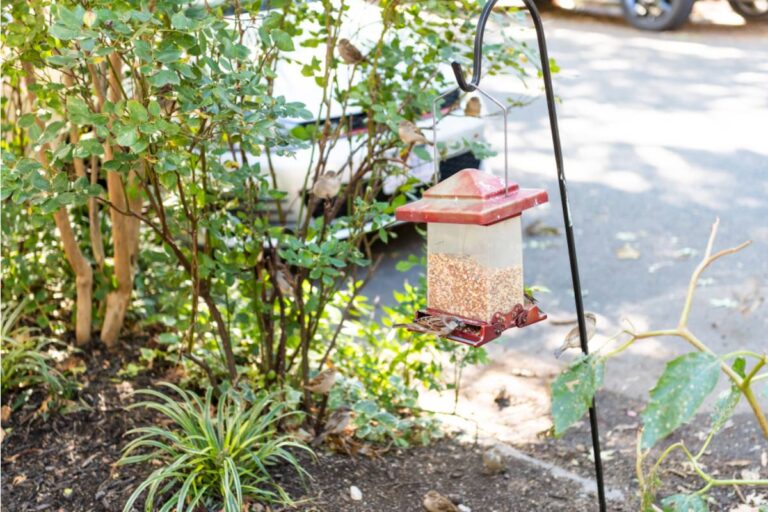
The breaking point came in the spring when a bird decided to build a nest on one of the porch pillars. The homeowner noticed that the bird had laid several eggs and was quietly using the corner as a safe little nursery. For once, something had chosen his porch without destroying anything.
He was actually pleased to have the unexpected visitors. He did not interfere with the nest and simply gave the birds some space. After everything that had happened to his flowers, watching a family of birds settle into the garden seemed like a small piece of good luck.
Then He Left Town
Unfortunately, the homeowner had to leave town for a while. He had no reason to think anything unusual would happen during his absence. The nest appeared safely positioned on the pillar, protected from the ordinary activity around the porch.
When he returned, however, the peaceful scene had disappeared. Instead of finding the nest and its eggs, he discovered something completely unexpected occupying the same spot.
The Football Was Wedged Where the Nest Had Been
A football had somehow become lodged near the location where the bird’s nest had been. The nest itself was gone, and so were the birds and eggs. The homeowner immediately connected the discovery to the same group of children who had been repeatedly running across the porch.
He could not prove exactly which child had caused the damage. That was perhaps the most infuriating part of the entire incident because the absence of direct evidence meant there was nobody specific to confront. The football, however, felt like a cruel little clue sitting exactly where a nest had once been.
The Garden Was No Longer Fun
At that point, the homeowner gave up on decorating. He could replace flowers, buy another solar light, and rearrange furniture, but none of those things solved the underlying problem. The porch had become a place where anything delicate or meaningful seemed destined to get destroyed.
He was no longer asking how to create the prettiest flower bed. He simply wanted the children to stop using his porch as a shortcut. That was a surprisingly modest request considering how many times he had already cleaned up after their visits.
People Suggested Protecting the Flower Bed
A response from a person suggested using plants that naturally made people less interested in walking through the area. Others mentioned thorny or prickly garden varieties that could make a shortcut inconvenient. The general idea was simple: redesign the flower bed so that walking directly through it became less appealing.
The homeowner would still need to choose plants appropriate for the area and safe around people and pets. He was clearly not interested in injuring anyone, especially children, and he did not want another neighborhood argument. What he wanted was a garden that quietly communicated, “This is not a walkway.”
Others Suggested Better Documentation
Another response from a person recommended a visible no-trespassing sign and some form of recording from inside the apartment. Since the homeowner had already explained that expensive security equipment was not appealing, a simple indoor camera pointed toward the porch was suggested as a practical compromise.
The purpose would not be revenge. It would simply provide evidence if something was damaged again and make it easier to have a productive conversation with management or the parents. Without knowing exactly who was responsible, every broken flower and shattered light could otherwise become another argument about whose kids were involved.
The Homeowner Refused to Hurt Anyone
One thing the homeowner made particularly clear was that he did not want to hurt the children. Although some suggestions involved unpleasant traps or aggressive deterrents, he wanted nothing to do with anything that could cause an injury. He knew that turning a frustrating garden problem into a serious confrontation would only create more trouble.
That decision actually made his position more understandable. He was not trying to punish the entire neighborhood or start a feud with parents. He simply wanted the children to stop cutting through a private porch and destroying things that did not belong to them.
The Layout Explained Everything
The homeowner later explained exactly how the porch was arranged. To one side was a shared flower bed containing a beautiful rose bush maintained by his neighbor, while straight ahead was a normal pathway toward the parking area. The problem began on the opposite side, where a gap beside the porch connected directly to a grassy area behind the property.
Instead of walking the extra two feet around the porch, the children used that narrow opening as their shortcut. They would run through the gap and across the flower bed, apparently viewing the landscaped area as the fastest possible route. Suddenly, the pattern made perfect sense: the garden was not being targeted because of the flowers, but because someone had decided it was easier to walk through than around.
The Solar Light Became the Final Clue
On another occasion, the homeowner actually saw the children running across his porch. He went outside and discovered that one of his solar lights had been shattered, but the group was already moving too quickly for him to identify exactly who had done it. He was understandably unwilling to chase a crowd of children around the property.
That moment confirmed what he had suspected all along. The flower beds were not mysteriously collapsing, and the decorations were not simply breaking on their own. There was a very real traffic problem happening right in front of his door, and the garden was sitting directly in the middle of it.
The Twist Was the Shortcut Itself
The strangest part of the story was that the entire conflict could be traced back to a shortcut that saved almost no time. The children were repeatedly risking the homeowner’s flowers, decorations, and porch simply to avoid walking around the edge. A few extra steps could have prevented months of frustration.
The homeowner’s problem therefore was not really about gardening at all. It was about a small piece of private space that had quietly been reclassified by neighborhood kids as public territory. The flower bed became the unwilling casualty of convenience.
His Garden Still Had a Chance
Despite everything, the homeowner had not completely abandoned the idea of enjoying his porch. He had simply stopped decorating because watching new plants get destroyed was too discouraging. With clearer boundaries, better documentation, and a garden layout that discouraged shortcuts without putting anyone in danger, he could eventually reclaim the space.
The bird nest may have been the moment that finally broke his patience, but it also revealed why the porch mattered to him. He wanted a small corner where flowers could grow, birds could visit, and he could step outside without wondering what would be broken next. After all, a flower bed should be a place where things take root, not the fastest route to the parking lot.