Homeowner Rebuilt a Rotting Fence 18 Inches Inside His Property After Years of Neglect, Then His Neighbor Realized the New Gate Let Him Reach the Overgrown Garden Side
A person shared his story about buying a house with one particularly troublesome feature: a fence so badly deteriorated that replacing it seemed inevitable. He was the kind of homeowner who preferred doing repairs himself, partly to save money and partly because he wanted the finished work done properly. When the neighboring homeowner also complained about the condition of the fence, the two agreed they would eventually rebuild it together.
The Fence Had Already Become a Problem
The old fence was in terrible shape when the homeowner moved in four years earlier. It was rotting, damaged, and apparently nearing the point where it would need more than a little attention to keep standing. Since both yards depended on it as a boundary, replacing it seemed like the obvious long-term solution.
At first, the plan sounded simple enough. Both homeowners would split the cost, wait for better weather, and tackle the project together when the timing worked. Nobody expected a basic fence replacement to eventually turn into a dispute involving garden vines, privacy, and a strangely convenient gate.
The First Delay Turned Into Another Year
The homeowner reached out in November to get the project moving, but the neighbor said money was tight and the economy was making things difficult. The homeowner decided not to push the issue and agreed they could simply wait. After all, there was still a fence standing, even if it was barely deserving of the name.
A full year later, he brought up the project again and received essentially the same explanation. This time, however, the delay was harder for him to understand because the neighbor’s family had somehow found room in the budget for expensive replacement vehicles. The fence remained rotten while the driveway seemed to tell a very different financial story.
Meanwhile, One Yard Became a Wild Garden
While waiting for the fence to be replaced, the homeowner began noticing more about the neighboring yard. His neighbor preferred what he described as an “all natural” approach, which meant doing very little maintenance. Old fence panels were left leaning against the deteriorating structure, and vines regularly crawled over from that side.
The garden added another layer to the problem. Green beans and other climbing plants would repeatedly wander toward the fence, while a compost pile used one side of the structure as a convenient wall. What might have looked charmingly rustic from a distance began to look like a maintenance nightmare from the other side.
The New Fence Suddenly Looked Less Appealing
The homeowner did not object to how his neighbor used his own yard. He accepted that gardens, compost piles, climbing vegetables, and a less manicured landscape were all personal choices. His concern was what would happen when he spent his own money building a brand-new fence beside all of it.
He worried that the new structure would immediately become covered in vines, difficult to maintain, and vulnerable to the same neglect that had ruined the old fence. After waiting more than a year for the shared project to happen, he decided he was better off controlling the project himself. That decision changed the entire relationship between the two yards.
He Finally Got Permission to Replace It
The homeowner eventually received permission to tear out the old fence and explained that he would build the replacement on his own property instead of directly on the boundary. He also promised to maintain the opposite side of the fence because the entire structure would now belong to him. Since he was taking responsibility for both the work and the upkeep, he considered that a reasonable compromise.
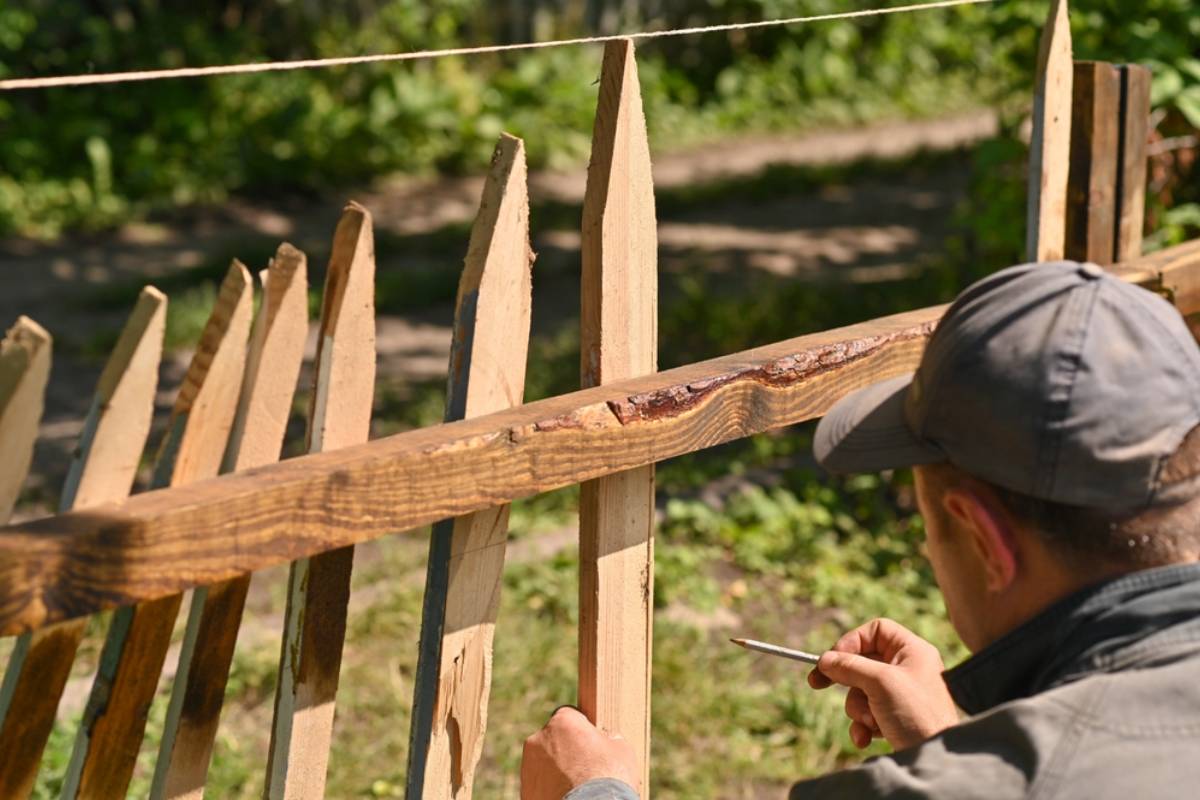
Then came the part that changed the geometry of the whole project. Rather than placing the new fence directly on the property line, he moved it 18 inches inside his own yard. He paid for all the materials and performed all of the labor himself, creating a narrow strip of land between his new fence and the neighboring property.
The Garden Now Had an 18-Inch Maintenance Lane
The unusual gap was deliberate. The homeowner said he was a small person and could squeeze into the narrow space, giving him enough room to clear vines, weeds, debris, and anything else trying to invade his side of the boundary. From his perspective, those 18 inches were not wasted space at all.
They were essentially a permanent maintenance corridor. Instead of waiting for vegetation from the neighboring garden to overwhelm his fence, he could reach it whenever necessary. It also gave him direct control over the condition of the new structure, something he had not felt he could count on with the old arrangement.
Then He Added a Gate
There was one more feature that would become the center of the argument. The homeowner installed a small gate at the back of the new fence so he could reach that narrow maintenance strip. According to him, the gate opened toward his own property, not into the neighbor’s yard.
The problem was that the area beyond the gate bordered the neighbor’s yard so closely that the arrangement looked very different from the other side of the fence. The neighbor suddenly realized that the old boundary arrangement had disappeared and been replaced by a new fence with a point of access nearby. What the homeowner viewed as a practical gardening solution looked, to his neighbor, like a new form of access to his private space.
Privacy Became the Unexpected Issue
The neighbor’s biggest complaint centered on privacy, especially because he had daughters and wanted the backyard to remain private. The homeowner understood why the neighbor might feel uncomfortable, but he believed the privacy concern was being exaggerated. After all, the previous fence was full of gaps and rotting sections that already allowed plenty of visibility.
There was another complication that made the argument even stranger. The homeowner said his kitchen window already looked directly over the six-foot fence because the houses sat higher than the surrounding grade. A security camera also captured part of the backyard, although he said it was positioned to monitor the length of his own house.
The New Fence Actually Blocked More Than the Old One
From the homeowner’s perspective, the new fence should have improved the neighbor’s privacy rather than reduced it. The old barrier was deteriorated and easy to see through, while the replacement was solid and much more substantial. The only obvious difference was that the homeowner could now access the narrow strip beside it without asking for permission.
That distinction became the heart of the dispute. The neighbor apparently expected the homeowner to ask every time he needed to enter the space near the fence for maintenance. The homeowner, meanwhile, believed that asking permission to maintain his own property would defeat the entire reason he had moved the fence inward in the first place.
Then the Question of the Old Fence Came Up
Several people reviewing the situation focused on one decision they believed had created most of the trouble. Since the old fence had been sitting on the property boundary, they argued that it might have been better to leave it standing even after the new fence was built. That would have created a narrow passage between the two structures.
Such an arrangement would have looked awkward, but it could have preserved a clearer physical barrier between the properties. The homeowner would have had access to his side for maintenance without creating the impression that the neighbor’s backyard had suddenly become easier to reach. In a dispute this complicated, an ugly strip of weeds and two fences might ironically have been the simplest solution.
The Neighbor Could Have Built Another Fence
One response from a person pointed out a rather amusing solution to the privacy concern. If the neighbor believed his backyard was no longer private enough, he could simply install his own fence on his side. That would effectively put another barrier between the properties and eliminate much of the concern about visibility.
Of course, that would also mean having two fences in roughly the same area, which could create its own gardening and maintenance headaches. In some places, local rules may also restrict double fencing, making the supposedly obvious fix less straightforward than it sounds. What started as one rotting fence had somehow evolved into a debate about whether the yards needed one fence, two fences, or an entire miniature fortress.
The Gardening Details Made the Fence Even More Important
For the homeowner, this was never only about appearances. The neighbor’s climbing plants regularly spilled over, and the compost pile had already been pressed against the old structure. If the same habits continued with a new fence, the homeowner feared he would spend years fighting vegetation just to keep his investment intact.
That is why the maintenance gap mattered so much to him. With 18 inches of access, he could trim growth, clear debris, and keep the bottom edge of the fence from disappearing into weeds. It was a gardening decision first, but it eventually became a property-boundary controversy.
He Also Had Another Reason for Building It This Way
The homeowner explained that the orientation of the fence was not an accident either. He deliberately put the nicer side toward the neighbor because that side was harder to climb and easier for him to maintain, particularly when trying to use a weed whacker along the bottom edge.
There was also a more technical concern involving maintaining his property rights and preventing future disputes over the narrow strip. The fence might have been only 18 inches inside his property, but that little gap was important to him. What looked like an unnecessarily precise measurement was actually part of a larger plan to make sure he could continuously access and maintain the land.
In the End, Nobody Got Exactly What They Wanted
The homeowner eventually admitted that there did not seem to be a solution that would make everyone happy. His neighbor wanted privacy and apparently wanted control over when the homeowner could approach the area beside the fence. The homeowner wanted a solid, durable fence that he could inspect and maintain without depending on anyone else’s garden habits.
And that is where the story takes its final turn. The man who waited years for a shared fence project ended up paying for the entire replacement himself, moving it onto his own property, creating a maintenance lane, and installing a gate so he could care for it. A simple gardening upgrade had somehow produced the exact thing nobody expected from a fence project: a brand-new boundary and a brand-new neighborhood disagreement.