Homeowner Says a City Inspector Cited Her for an Unpermitted Garden Structure, Then Admitted the Citation Was Meant for a Different Address Entirely
For nearly a year, Melissa Carter had believed a small garden structure behind her suburban home was completely legitimate because she had followed the instructions given by the city before building it.
Then a city inspector arrived, photographed the structure, and handed her a citation for an unpermitted construction project. The situation became even stranger when the inspector later admitted that the citation had actually been intended for a completely different property.
The Inspector Appeared at the Side Gate
Melissa was pulling weeds from the flowerbed beside her driveway when a man in a city vehicle stopped near the curb. He introduced himself as Daniel Reeves, a municipal property inspector, and asked whether she was the homeowner. Melissa wiped her hands on her gardening gloves and said yes, expecting him to ask about the trash bins that occasionally attracted complaints.
Instead, Daniel told her he needed to inspect a garden structure in her backyard. Melissa immediately thought of the small wooden pavilion she had built with her husband the previous spring. “Is something wrong with it?” she asked. Daniel looked at his clipboard and replied, “There’s no permit attached to the property.”
She Thought There Had Been a Mistake
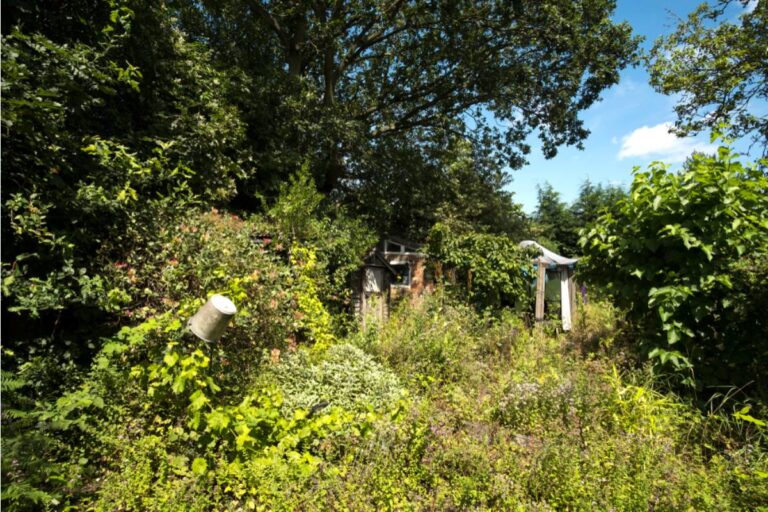
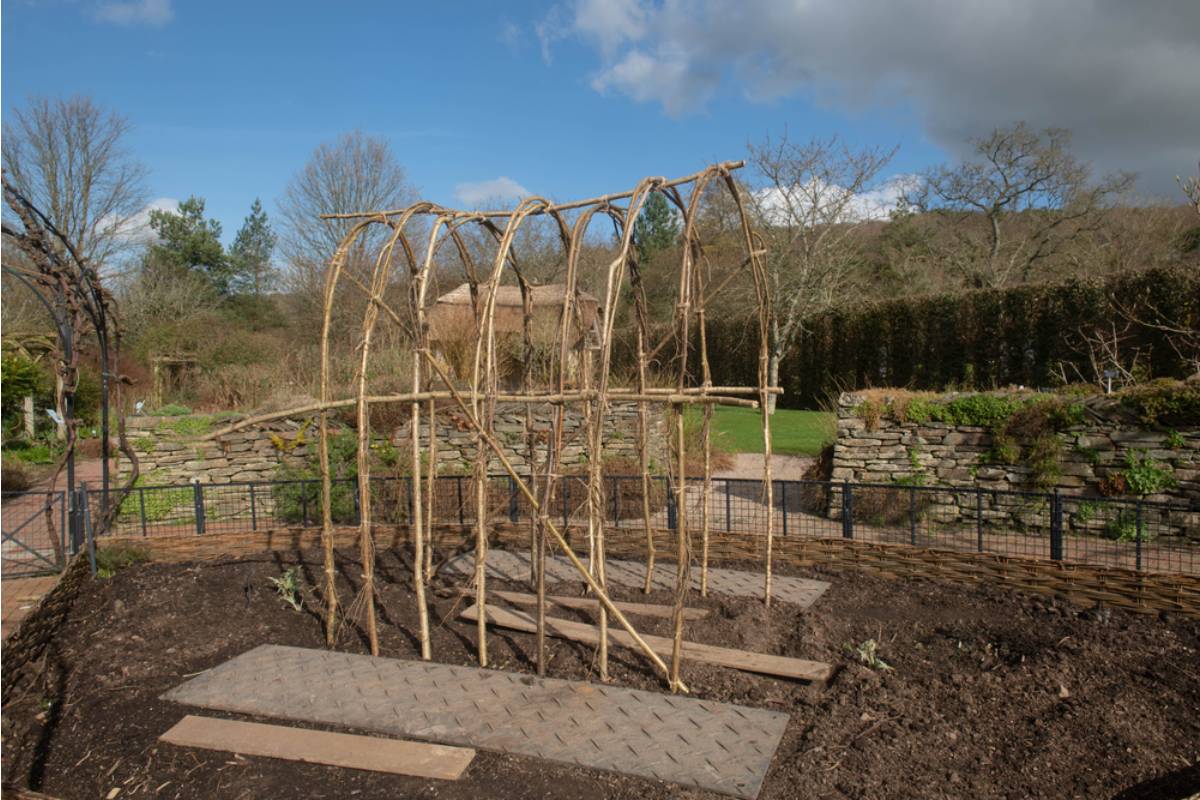
Melissa led him through the gate and showed him the structure, which consisted of a roof, four posts, and a low wooden platform surrounded by climbing roses. It was not enclosed, did not contain plumbing or electrical wiring, and had been designed as a shaded sitting area where Melissa’s mother could spend time outdoors. Daniel walked around it, took several photographs, and measured the distance between the structure and the property line.
“I checked this before we built it,” Melissa said. Daniel continued writing without looking up and told her that the city records showed no permit for the structure. Melissa felt her stomach tighten because she remembered submitting paperwork months earlier and receiving an approval email.
The Citation Came Out of His Folder
Daniel pulled a printed notice from his folder and handed it to her. The document stated that Melissa was in violation of municipal building regulations and required her to either obtain the appropriate authorization or remove the structure. She stared at the page, then looked at Daniel.
This says I built an unpermitted structure,” she said. Daniel nodded and told her that was what the inspection record indicated. Melissa pointed toward the house and replied, “But the city approved this before I built it.”
Melissa Found the Old Email
She hurried inside and opened her laptop while Daniel waited outside. After searching through old emails, she found the message from the city’s permit office confirming that the proposed garden structure met the requirements for a small accessory garden shelter and did not require a conventional building permit under the listed dimensions.
She printed the email and brought it outside. Daniel read it twice, then asked whether she had submitted a site sketch with the application. Melissa said yes and showed him a folder containing the sketch, photographs, measurements, and the city’s confirmation.
Daniel frowned.
“That’s strange,” he said.
The Inspector Checked His Tablet Again
Daniel stepped away from the structure and opened a tablet mounted inside his vehicle. Melissa watched through the window as he scrolled through several screens and entered information into a search field.
After several minutes, he returned with a different expression.
“Can I see your house number again?” he asked.
Melissa pointed toward the number beside her front door.
Daniel looked at it, then looked back at his tablet.
“That’s not the address I was sent to.”
The Number on His Assignment Was Different
Melissa asked him to show her the inspection order.
Daniel hesitated before turning the tablet toward her.
The address on the assignment was almost identical to hers.
The street name was correct, but the house number was different by two digits.
Melissa stared at the screen.
“That’s not my property.”
Daniel rubbed his forehead.
“No,” he said quietly. “It isn’t.”
The Other Property Was Around the Corner
Melissa knew the address immediately.
It belonged to a vacant-looking house around the corner, owned by a man named Howard Benton. The property had been the subject of several neighborhood discussions because a large wooden structure had appeared behind it without explanation.
Melissa had never met Howard personally.
But she had seen construction materials delivered there.
She remembered wondering whether he was building a workshop.
Daniel looked embarrassed.
“I was supposed to inspect that property.”
Melissa held up the citation.
“Then why did you give this to me?”
He had no immediate answer.
The Citation Was Already Entered
Daniel checked the municipal database again.
The violation had already been entered under Melissa’s property identification number, not Howard’s.
That detail made the situation more serious.
Melissa’s hands began shaking.
“So this is actually attached to my house?”
Daniel nodded.
“It appears that way.”
Melissa asked whether the record could simply be deleted.
Daniel explained that he would need to submit a correction because the citation had entered the city’s enforcement system.
“How long does that take?” she asked.
“I don’t know,” he admitted.
Melissa Refused to Leave It There
Melissa had initially been relieved that the inspector had discovered the mistake.
Now she was angry.
She told Daniel that she did not want to spend weeks proving that she had not violated a rule that did not apply to her.
Daniel said he understood.
Melissa replied, “I don’t think you do.”
She pointed at the citation.
“This isn’t a parking ticket. This is attached to my property.”
The City Office Gave Her a Different Answer
The next morning, Melissa called the municipal permitting office.
A clerk named Janice reviewed the citation number.
“I’m seeing a violation here,” Janice said.
Melissa explained what had happened.
Janice sounded confused.
“Who told you the address was wrong?”
“The inspector.”
There was a pause.
Janice asked for the inspector’s name.
Melissa gave it.
Janice then said, “Please hold.”
The Clerk Found the Original Inspection Request
When Janice returned, her voice had changed.
She confirmed that the original complaint had been filed against Howard Benton’s property.
The complaint described a large enclosed backyard structure that appeared to be under construction.
Melissa’s garden pavilion did not match the description.
Janice apologized and said she would forward the issue to the enforcement supervisor.
Melissa asked whether the citation had already affected her property record.
Janice said she needed to check.
A Supervisor Called That Afternoon
A supervisor named Mark Ellison called Melissa later that day.
He apologized for the error but described it as an address-entry problem.
Melissa asked how an address-entry problem had resulted in an inspector photographing her backyard, issuing her a citation, and attaching a violation to her property.
Mark admitted that the sequence should not have happened.
“We are reviewing the inspection process,” he said.
Melissa replied, “That’s not the part I’m worried about.”
She wanted the record corrected.
The Neighbor’s Property Explained the Original Complaint
Two days later, Melissa finally saw Howard outside his house.
He was standing beside the large wooden structure that had apparently triggered the complaint.
Unlike Melissa’s open garden pavilion, Howard’s structure had walls, windows, electrical outlets, and a concrete foundation.
Melissa understood immediately why the city had been interested in it.
Howard noticed her looking.
“City came by yet?” he asked.
Melissa stared at him.
“They came to my house.”
Howard Realized What Had Happened
Howard looked genuinely confused.
“What?”
Melissa explained that the inspector had been sent to his address but had accidentally cited her property.
Howard’s expression changed.
“You’ve got to be kidding.”
Melissa told him the city had already acknowledged the mistake.
Howard sighed.
“I’ve been trying to get them to inspect this thing for months.”
Melissa asked whether he had submitted any permit applications.
Howard admitted that he had submitted paperwork but had never received final approval.
Suddenly, the inspector’s original assignment made complete sense.
The City Corrected the Record
The enforcement office eventually sent Melissa a formal correction.
The citation against her property was withdrawn.
The database was updated to show that no violation had been established against her address.
The city also provided written confirmation that her garden structure was not subject to the cited violation.
Melissa printed everything and placed it in the same folder containing her original approval.
She was not taking another chance.
Daniel Returned With an Apology
Several days later, Daniel returned to Melissa’s home.
This time he did not carry a citation.
He stood beside the garden structure and apologized directly.
“I should have verified the address before issuing anything,” he said.
Melissa accepted the apology but remained serious.
“I understand mistakes happen,” she told him. “But paperwork can follow someone for years.”
Daniel nodded.
“I know.”
Melissa Asked One Final Question
Before he left, Melissa asked Daniel whether the city had determined how the wrong property had been selected.
Daniel explained that a batch of inspection requests had been imported into the system, and one address had been associated with the wrong parcel number.
The error was not obvious because the street name and neighborhood were correct.
Melissa shook her head.
“So if I hadn’t had my approval email?”
Daniel paused.
“You would have had to appeal the citation.”
That answer stayed with her.
The Neighborhood Started Talking
News of the mistake spread quickly.
Several neighbors told Melissa they had experienced confusing municipal notices before.
One homeowner said an inspection request for a vacant lot had briefly appeared under his address.
Another said she had received a letter about a fence that belonged to the house next door.
Melissa realized the incident was not simply about one careless entry.
The system depended heavily on people noticing mistakes before those mistakes became permanent.
Howard Finally Had His Inspection
The city eventually inspected Howard’s property.
Melissa never learned the full details of the resulting enforcement action.
She did hear that the city required additional documentation for the structure.
Howard later joked that he had spent months trying to get someone to look at it, only to accidentally send an inspector to his neighbor instead.
Melissa laughed when he told her.
“At least they eventually found the right house.”
Howard replied, “Your pavilion got more attention than my workshop.”
The Garden Pavilion Stayed
Melissa kept the structure exactly as it was.
She added a small bench beneath the roof and planted jasmine along one side.
Her mother eventually began using it whenever she visited.
One afternoon, Melissa sat beside her mother and mentioned the inspection mistake.
Her mother looked toward the pavilion.
“So they tried to make you tear this down?”
“Technically, they told me to correct a violation that never existed.”
Her mother laughed.
“Only you could end up fighting City Hall over a rose garden.”
Melissa Changed How She Kept Records
After the incident, Melissa created a dedicated property file.
Every permit, approval email, sketch, receipt, photograph, and inspection document went into it.
She also kept digital copies in two separate locations.
Her husband teased her about becoming overly cautious.
Melissa shrugged.
“I’d rather be overly cautious than prove my own address again.”
The joke became a family phrase.
Whenever someone misplaced an important document, Melissa would say, “Check the property file.”
The Inspector’s Mistake Changed Her View
Before the incident, Melissa assumed city records were accurate unless someone gave her a reason to believe otherwise.
Now she understood that government databases were maintained by people, and people could enter the wrong number, select the wrong parcel, or attach the wrong document.
The frightening part had not been the inspector standing in her yard.
It had been how quickly an error became an official record.
She never forgot that distinction.
The Final Letter Arrived Months Later
Months after the original incident, Melissa received a letter from the city confirming that the enforcement record had been permanently closed.
She read it at the kitchen table.
Her husband asked whether everything was finally over.
Melissa nodded.
Then she placed the letter inside her property file.
“Now it is.”
Outside, the garden pavilion stood exactly where it had always been.
The roses had grown around the posts, and her mother’s chair sat beneath the roof.
Nobody looking at it would have guessed that the little structure had once been at the center of a municipal enforcement mistake.
But Melissa knew.
And every time she walked past it, she checked the house number beside the front door almost instinctively.