Homeowner Says a Neighbor’s Giant Tree Crushed 18 Feet of His Garden Fence, Then Five Months of Apologies Left Him Spending His Own Money to Keep His Dog Safe
A fallen tree branch can turn a peaceful backyard into a frustrating mess, especially when the damage sits between two neighbors who would rather avoid a fight. For one homeowner, a storm in May brought down a massive branch from the neighbor’s tree, taking approximately 18 feet of privacy fencing with it. What began with sincere apologies and promises to get repair estimates slowly became a months-long headache involving temporary fencing, an energetic dog, and a difficult question about when patience finally runs out.
A person shared his story about trying to maintain a friendly relationship with the people next door while dealing with damage that had left his backyard exposed. By September, the fence was still down, and he had already spent hundreds of dollars trying to keep his dog safely contained. The surprising part was that he did not describe his neighbors as openly hostile or deliberately cruel, making the situation much harder to navigate than a straightforward dispute.
A Spring Storm Turned a Peaceful Backyard Into a Fencing Disaster
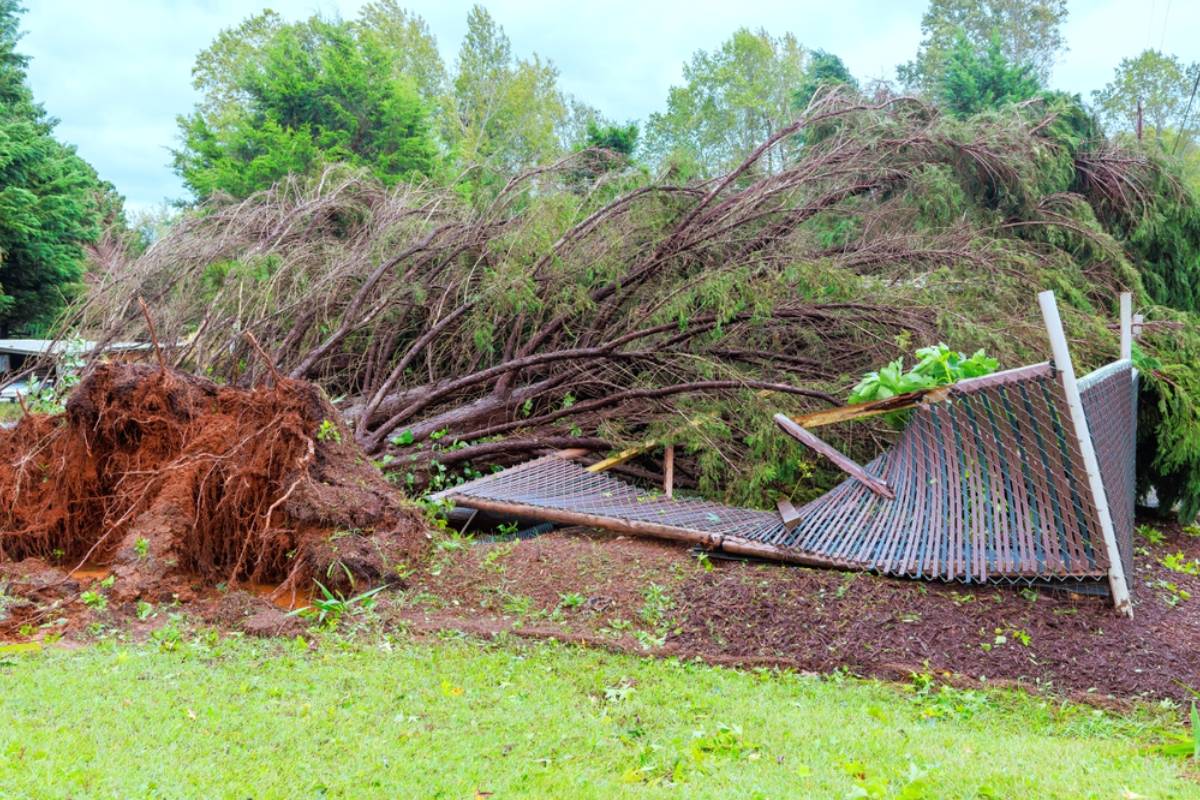
The trouble began in May when a storm sent a large tree limb crashing down onto a section of privacy fence. The impact destroyed roughly 18 feet of fencing, leaving an obvious gap where the homeowner had previously enjoyed a more enclosed backyard. What should have been a simple outdoor retreat suddenly became a place requiring constant attention.
The fallen branch belonged to the neighbors’ enormous tree, which stood approximately four feet inside their property line. According to the homeowner, the trunk was practically the size of a car, making the whole incident feel like an unfortunate collision between nature and an ordinary suburban garden. Unfortunately, the damage was not something he could fix with a quick afternoon of trimming and a few replacement boards.
The Neighbors Apologized, So He Expected the Problem to Be Temporary
At first, the neighbors responded in a way that gave the homeowner reason to remain optimistic. They apologized, and he believed their regret was genuine rather than a performance designed to make the problem disappear. One neighbor said he would obtain quotes for repairing the damaged fence, suggesting that a solution was already in motion.
That promise mattered because the homeowner did not want a property-line disagreement to poison a relationship that could last for decades. Friendly neighbors can make a home feel welcoming, while a lingering dispute can make even stepping outside to water the plants uncomfortable. He decided to give them time, expecting the repair process to take a little while rather than stretch across an entire season.
May Turned Into June, and the Fence Was Still a Memory
As May gave way to June, the homeowner waited for the promised estimates to turn into an actual repair date. Each time he checked in, the neighbors had an explanation, and none sounded completely unreasonable on its own. The tree service had failed to call back, and the insurance company apparently needed something before the process could move forward.
The problem was that a collection of understandable delays can become an exhausting situation when they keep piling up. The broken fence remained exactly where it had fallen, while the homeowner was left dealing with the consequences every single day. His patience was still intact, but the backyard was becoming a reminder that good intentions do not necessarily produce results.
His Dog Became the Unwilling Victim of the Fence Dispute
For this homeowner, the damaged fence was about more than appearances or the inconvenience of an unfinished garden boundary. He had a dog who needed a safe, enclosed space, and the opening made letting her roam freely in the backyard impossible. Instead of enjoying the freedom of their own outdoor space, he had to walk her on a lead in the garden.
That arrangement continued for months, turning an ordinary part of pet ownership into an ongoing chore. A backyard is supposed to offer room for dogs to explore, sniff around flower beds, and enjoy a little sunshine without their owners constantly worrying about escape routes. With the fence down, even a simple trip outdoors required more supervision than it should have.
By July, He Had Spent $340 Fixing Someone Else’s Mess
Eventually, the homeowner decided he could not keep waiting for the repair to happen before taking action. In July, he paid $340 out of his own pocket to install temporary fencing, creating a barrier that would keep his dog safely contained. It was a practical solution, but it also meant he was spending his own money to deal with damage caused by a fallen branch from the neighboring property.
He did not make a dramatic announcement or turn the installation into a confrontation. Instead, he quietly arranged the temporary fix because he needed the problem solved and wanted to avoid an unnecessary feud. The decision kept his dog safer, but it also left him wondering how long he should be expected to carry the burden while waiting for his neighbors to follow through.
August Arrived With Another Explanation Instead of a Repair Date
By August, the situation had become a test of patience that the homeowner had never signed up for. The neighbors continued to offer explanations for why the work had not been completed, including the difficulties with arranging contractors and dealing with insurance. There was also a serious family matter involving the neighbor’s mother, who had been ill.
The homeowner had even seen an ambulance at the neighbors’ property twice, which made it harder to dismiss their circumstances as simple excuses. He understood that people sometimes face genuine emergencies that push household repairs to the bottom of the list. Still, understanding their situation did not magically restore the missing fence or eliminate the extra work involved in keeping his dog secure.
September Arrived, and the Original Fence Was Still on the Ground
By September, approximately five months had passed since the storm damaged the fence. The homeowner had asked about the repair four times, and each conversation produced an answer without producing a finished fence. His temporary barrier remained in place, while the original damage continued to shape how he used his own backyard.
The original account of the dispute describes a homeowner caught between wanting to be considerate and needing a practical resolution. He was not claiming that every delay was invented, nor was he suggesting that his neighbors had deliberately caused the storm damage. The frustration came from the growing gap between repeated assurances and any visible progress toward restoring the property.
His Wife Thought It Was Time to Put Everything in Writing
At home, the homeowner and his wife began to disagree about the best way forward. She believed he should put the situation in writing, creating a clear record of the damage, the conversations, and the money already spent on temporary fencing. From her perspective, another friendly conversation might simply lead to another promise followed by another month of waiting.
Her suggestion was not necessarily about starting a legal battle or demanding an immediate confrontation. A written message could simply establish what had happened and ask for a concrete update about the next steps. After months of informal discussions, it was understandable that she wanted something more reliable than a verbal assurance.
He Worried That One Letter Could Change the Relationship Forever
The homeowner’s hesitation came from a different concern: he feared that a formal letter would transform an everyday neighborly disagreement into a legal dispute. He had to live beside these people, potentially for another twenty years, and did not want every future interaction to become awkward or suspicious. What if a letter intended to solve one problem made every future problem harder to discuss?
That fear explains why the situation was so difficult for him to resolve. He was not simply choosing between being polite and being assertive; he was trying to protect both his backyard and a relationship he still valued. In his mind, once the dispute became formal, there might be no easy way to return to the friendly atmosphere that existed before the storm.
A Response From a Person Raised an Uncomfortable Question
A response from a person challenged the homeowner’s approach by asking why he had not simply repaired his own fence already. The response suggested that responsibility for a fallen tree and the resulting damage might not automatically belong to the person who owns the tree. That perspective introduced a complication the homeowner had not necessarily wanted to confront while trying to keep things friendly.
Other responses raised similar questions about property boundaries, liability, and whether the neighbors were legally obligated to pay for the damage. Some people suggested that the homeowner might have to bear the cost himself, depending on the circumstances and applicable local law. Suddenly, the conversation was no longer just about how long it was reasonable to wait for a neighbor to arrange a repair.
The Giant Tree Was Not Necessarily the End of the Legal Story
One important distinction emerged from the discussion: a tree’s ownership does not automatically determine who must pay for every piece of property it damages. In some jurisdictions, responsibility can depend on whether the tree was healthy, whether a dangerous condition was known beforehand, and whether negligence contributed to the damage. A storm that unexpectedly breaks a healthy branch may be treated differently from a situation involving a neglected, visibly hazardous tree.
That distinction matters for gardeners because large trees often stand near fences, sheds, patios, and vegetable beds. A homeowner might understandably assume that the neighbor whose tree caused the damage must pay for everything, only to discover that local rules are more complicated. Before sending a demand for payment, it can be wise to check local law, review insurance coverage, and establish exactly where the damaged structure stood.
The Property Line Added Another Twist to the Fence Dispute
The homeowner emphasized that the tree stood four feet inside the neighbors’ property line, but the precise location of the damaged fence also matters when determining ownership and responsibility. A fence can sit entirely on one property, along a shared boundary, or under an arrangement governed by local rules or an agreement between neighbors. Those details can change the practical and legal options available to the people involved.
For anyone dealing with a similar gardening disaster, photographs of the fallen branch, the damaged fence, and the property boundary can help establish what happened. Keeping receipts for emergency repairs and saving messages about the incident can also make later discussions more straightforward. Even when everyone starts out on friendly terms, a clear record can prevent memories and assumptions from becoming another source of conflict.
The Homeowner Was Trying to Avoid a Fight, Not Avoid the Problem
It would be easy to interpret the homeowner’s reluctance to send a letter as an unwillingness to stand up for himself. However, his account suggests that he was genuinely trying to balance fairness, patience, and the realities of living next door to someone. He had already spent money to protect his dog, and he had repeatedly asked about the repairs without immediately escalating the matter.
At the same time, avoiding conflict indefinitely can create its own kind of resentment. Every additional week without a repair risks making the homeowner feel that his patience is being taken for granted, even if the neighbors never intended that outcome. A calm, factual written message could provide a middle ground between silently accepting the situation and launching into an aggressive dispute.
A Clear Deadline Could Be More Useful Than Another Apology
One reasonable next step would be to send a polite message summarizing the storm damage, the months of delays, and the temporary fencing expenses. Rather than making assumptions about legal liability, the homeowner could ask for a concrete update and propose a date by which both sides should discuss the remaining work. That approach would turn an open-ended promise into a conversation with a specific purpose.
If the neighbors still could not provide a plan, the homeowner could then investigate his insurance options and seek advice about local property rules. He would not have to threaten anyone or make accusations to protect his interests. The goal would simply be to establish what can realistically happen next, instead of allowing the broken fence to remain a permanent feature of the garden.
Five Months Later, the Real Problem Was Bigger Than a Fallen Branch
The storm may have started the whole ordeal, but the months of uncertainty turned a damaged fence into a much larger neighborhood dilemma. The homeowner had lost part of his privacy barrier, spent $340 on a temporary solution, and been forced to change how he managed his dog in the backyard. Meanwhile, his neighbors’ apologies and explanations had not yet delivered the permanent repair he had been hoping for.
His story illustrates a familiar challenge for gardeners and homeowners: outdoor spaces depend on boundaries, maintenance, and cooperation, especially when mature trees stand close to neighboring properties. A good relationship deserves patience, but patience does not mean someone must accept an unresolved problem forever. Sometimes the kindest way to preserve a neighborly relationship is to communicate clearly, establish reasonable expectations, and deal with the practical details before frustration takes root.