Homeowner Says a Tree Company Added a $500 “Police Detail” Charge After No Officer Showed Up, Then the Traffic-Control Twist Sparked a Heated Debate
A homeowner in central Massachusetts hired a tree service to handle work on his property, expecting the usual combination of chainsaws, climbing equipment, and workers carefully bringing branches down to the ground. Everything seemed straightforward until the paperwork revealed one unusual detail that would later become the biggest headache of the entire job. His signed estimate included a line labeled “Police Detail,” with the cost listed as $0 because the final amount was still to be determined.
At first, the homeowner had no particular reason to worry about that line, since additional traffic arrangements can be necessary when tree work takes place near a road. He understood that keeping passing vehicles safe was important, especially when workers were handling large branches and potentially dangerous equipment. What he did not expect was that a small detail on the estimate would turn into a $500 argument after the crew packed up.
The Mysterious Police Detail on the Estimate
The wording on the estimate seemed clear enough to the homeowner, even if the price was not. It specifically identified the extra service as a police detail, suggesting that an officer might be needed to help manage traffic while the tree company worked. Because the cost was marked as undetermined, however, he did not know exactly what the final bill would look like.
The homeowner proceeded with the job, trusting that the company would account for any necessary arrangements and explain the additional expenses. That was a reasonable expectation for someone paying professionals to handle potentially hazardous work around trees and roads. Still, the distinction between a police detail and ordinary traffic control would become increasingly important once the invoice arrived.
The Day Arrived, but the Police Never Did
When the scheduled workday finally came, the tree company arrived and got to work as planned. Chainsaws were running, branches were being handled, and someone needed to direct vehicles safely around the working area. But there was one conspicuous absence: no police officer showed up to perform the traffic-control duty mentioned on the estimate.
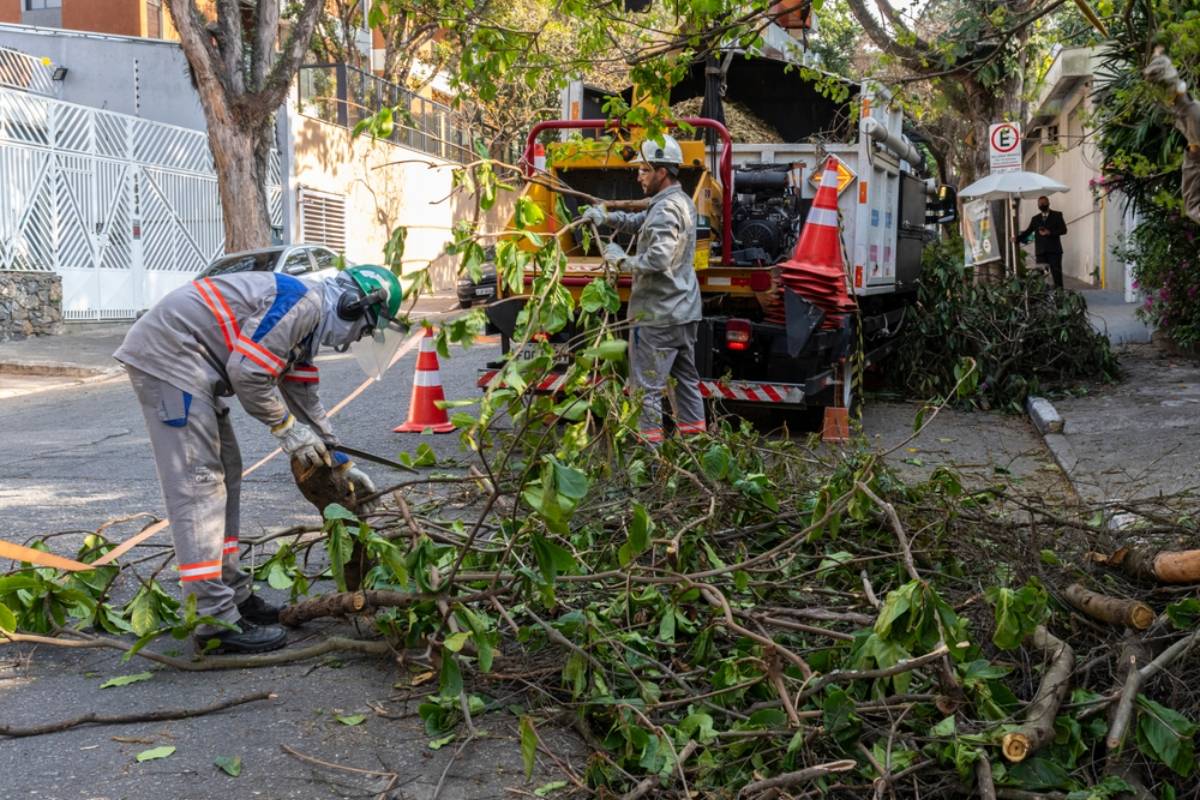
Instead, one of the tree company’s own crew members spent most, if not all, of the day directing traffic. The worksite was therefore not left entirely unmanaged, and the company still had someone handling an important safety task. From the homeowner’s perspective, though, the service he thought he was paying for had not been delivered by the people identified in the paperwork.
Then the Final Invoice Revealed a $500 Surprise
After the tree work was completed, the homeowner received the final invoice and noticed that the supposedly undetermined police detail had become a $500 charge. The figure immediately raised questions because he had not seen a police officer anywhere near the job. What made the charge particularly confusing was that the company’s own employee had apparently taken over the traffic-control duties.
The homeowner understood that assigning a worker to traffic control was not necessarily free, especially if that person could otherwise have been performing tree work. His concern was whether the company could bill that service under a label that specifically referred to police. A charge for traffic control might have made sense to him, but a charge for a police detail seemed like an entirely different matter.
Was This a Legitimate Charge or a Billing Mistake?
A person shared his story because he wanted to know whether he should challenge the charge or accept it as a normal part of hiring a tree service. He was not arguing that traffic control had no value, nor was he suggesting that the company should ignore safety requirements. Instead, he wanted to understand why he was being billed for a police detail when no officer had appeared.
The situation raised two separate questions that could easily get tangled together. One concerned whether the company had a legitimate reason to charge for the extra labor, while the other concerned whether the invoice accurately described the work performed. Even if the company had a good reason to charge $500, the homeowner wondered whether the wording should still be corrected.
One Response From a Person Focused on the Missing Officer
A response from a person took a firm position that the homeowner should not have to pay for a police detail if the police never showed up. From that perspective, the company should have listed the actual service as traffic control and identified its cost separately. Otherwise, the customer could reasonably believe that money was being collected for a service that had never taken place.
That argument struck at the heart of the homeowner’s complaint because invoices are supposed to communicate what customers are paying for. A business might have a perfectly reasonable explanation for an unexpected expense, but the explanation should match the work that was actually done. If the invoice continued to say “Police Detail,” the homeowner felt he had every reason to request clarification before paying.
Then Someone Pointed Out the Cost of a Dedicated Traffic Worker
Other responses took a more practical view of the situation, pointing out that directing traffic around tree work can be a demanding and potentially dangerous responsibility. A worker assigned to that task may need specialized training, certification, or equipment, depending on local requirements. The fact that the person wearing the high-visibility gear worked for the tree company rather than the police did not automatically make the service worthless.
One person familiar with arborist work suggested that $500 for a full day of traffic control could be reasonable. A company cannot necessarily pull an employee away from other duties without absorbing the costs associated with wages, insurance, equipment, and lost productivity elsewhere on the job. That explanation introduced an important complication: the missing officer might have changed who performed the work without eliminating the need for the service itself.
The Price Was Not the Only Thing That Mattered
The discussion then shifted toward the difference between charging for a service and labeling that service correctly. A police detail may involve an officer whose work is arranged through a local department, whereas temporary traffic control may be performed by a trained flagger employed by a contractor. Although both arrangements can help keep a worksite safe, they are not necessarily interchangeable in terms of qualifications, procedures, or costs.
That distinction made the $500 figure harder to judge without additional information. Some participants thought the amount could be reasonable for a full day of traffic control, while others questioned whether it should be charged at the rate associated with a police detail. The more closely people examined the invoice, the clearer it became that the name attached to the fee mattered almost as much as the amount.
The Homeowner Added One Important Detail
The homeowner eventually clarified that the $500 figure corresponded to what it cost to hire a police detail in his town. That information gave the dispute another layer because the company had apparently charged the same amount for its own employee to direct traffic. It was no longer simply a question of whether the fee sounded reasonable for a day’s work.
A matching price did not automatically prove that the company had overcharged him, but it also did not settle the matter. The worker might have required substantial time and training, and the company might have had legitimate expenses associated with that assignment. Nevertheless, the homeowner wanted to know why the final bill used a police-specific label when the service had apparently been handled internally.
A $500 Fee Could Still Be Reasonable
Some participants argued that customers should not assume a traffic-control service is inexpensive simply because the person doing it works for the contractor. A trained worker assigned to the roadside may be exposed to considerable risk and may need to remain focused on passing vehicles throughout the job. Depending on the circumstances, dedicating someone to that responsibility could affect labor costs and the schedule for the entire crew.
One response also pointed out that a police officer can cost considerably more than a contractor’s traffic-control worker. In some locations, police details involve hourly rates, minimum booking periods, and requirements for multiple officers, making the expense significantly higher than $500. However, these examples were not proof of the exact rules or rates in central Massachusetts, where the homeowner’s job took place.
Local Rules Might Explain Why Traffic Control Was Necessary
Another possibility raised during the discussion was that local rules required a traffic-control plan or some form of oversight before work could proceed near a road. Depending on the municipality and the location, contractors may need to notify the police department, obtain approval for their arrangements, or follow specific requirements for managing traffic. An officer might not necessarily be available or required to stand at the worksite for the entire day.
That possibility could explain why the company assigned its own worker instead of waiting for a police officer to arrive. However, nobody in the discussion established the exact local requirements that applied to this particular job. Without confirming those rules, it would be premature to conclude that the company had either violated its obligations or handled everything correctly.
Some People Suspected an Ordinary Paperwork Error
As the discussion continued, another explanation began to emerge: the company might have reused the original estimate’s wording when preparing the final invoice. If “Police Detail” was already entered as a line item, someone processing the paperwork might have added the traffic-control expense there without changing the description. That would make the invoice misleading without necessarily proving that anyone had deliberately tried to deceive the customer.
This theory explained how a company could perform a legitimate service and still send an invoice that described it inaccurately. A simple administrative shortcut might have created the entire dispute, particularly if the company routinely used the same estimate template for different traffic-control arrangements. Even so, a paperwork mistake would not make the customer’s questions unreasonable, especially when the charge amounted to several hundred dollars.
The Words “Cost Is TBD” Complicated the Argument
The estimate contained another detail that some people considered decisive: the police detail had been marked as “cost is TBD.” In other words, the customer had been told that the final price for that line item had not yet been determined. Some participants compared it to ordering something priced at the current market rate, where the final amount may not be known until later.
From that perspective, the homeowner had agreed to a job that included an additional traffic-related expense, even though the price remained uncertain. Others countered that an undetermined amount did not necessarily authorize the company to bill for an inaccurately described service. The disagreement highlighted why the complete estimate, any discussions before the job, and the company’s explanation of the final charge all mattered.
The Best Next Step Was to Ask for a Clear Explanation
Several responses recommended contacting the tree company directly rather than immediately accusing it of dishonesty or refusing to pay. The homeowner could ask why the invoice listed a police detail, whether a police service had actually been arranged, and how the $500 figure had been calculated. He could also request that the company correct the description if the charge was really for traffic control performed by its own worker.
That approach would give the company an opportunity to explain whether the fee reflected actual labor costs, a required traffic-control arrangement, or an administrative mistake. It would also create a clearer record of what the parties understood the original estimate to cover. If the explanation did not match the written agreement, the homeowner could then decide whether to dispute the charge and seek advice appropriate to his location.
The Real Twist Was That Both Sides Had a Point
By the end of the discussion, the dispute was not as simple as whether a police officer had shown up. The homeowner had a legitimate reason to question an invoice that described a service he had not seen, especially when the charge was $500. At the same time, the tree company may have provided necessary traffic control through its own employee, and that work could reasonably have carried a substantial cost.
The unresolved question was whether the original agreement covered traffic control generally or specifically promised a police detail, and whether the company had explained the change before the work began. The available account did not establish that the invoice was fraudulent, nor did it confirm that the homeowner was legally obligated to pay the full amount. Until the company clarified the charge, the missing officer remained the most visible part of a much bigger disagreement about clear estimates, fair labor costs, and accurate billing.