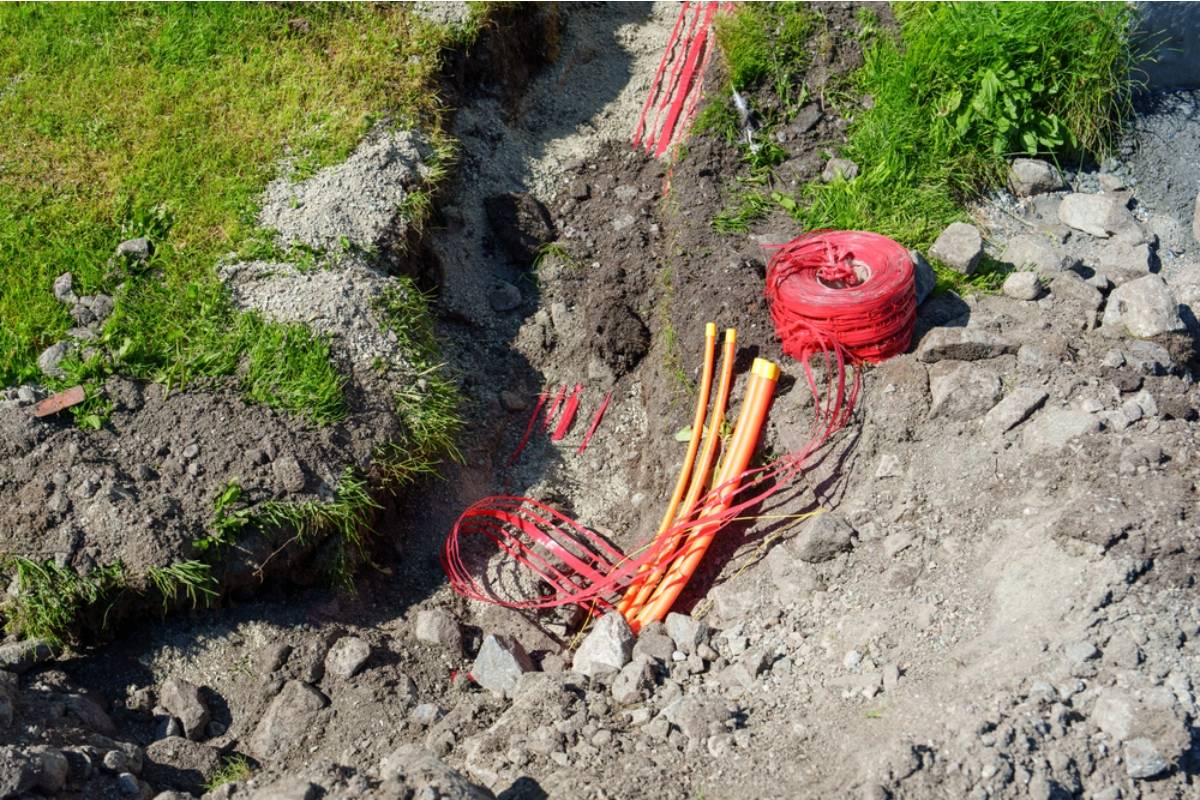
Homeowner Says a Utility Company Marked Her Yard for a “Routine Inspection,” Then Dug Through Her Garden Without Notice to Replace a Line That Wasn’t Actually Broken
When Nora Bennett saw orange paint appear across her front yard, she assumed the utility company was preparing for a routine inspection. She had no idea the markings would lead to workers tearing through her carefully maintained garden, cutting into established flower beds, and replacing a buried line that neighbors later learned had never been reported as broken. What happened afterward left Nora questioning how a company could alter private property without anyone first asking her permission.
The Orange Marks Appeared Overnight
Nora noticed the markings while carrying her trash bins toward the curb before breakfast. Bright orange lines crossed the grass from the sidewalk toward the side of her house, with small painted numbers appearing beside several of the garden beds. She immediately assumed the utility company was planning some kind of routine inspection because there had been no outage, leak, or service problem at her home.
Her husband, Eric, came outside and looked at the markings with her. He walked along the painted route and stopped beside the vegetable garden, where the line passed directly through a row of tomato plants Nora had spent months cultivating. “They’ve marked right through your garden,” he said, and Nora replied, “Then someone needs to tell me why.”
The Doorbell Brought a Vague Explanation
Later that morning, a man wearing a utility company vest knocked on Nora’s door. He introduced himself as Kevin and said his crew would be performing a routine inspection of an underground service line somewhere along the property. Nora immediately asked whether they needed to enter her yard, and Kevin said they would probably need access to the marked area.
“Probably?” Nora repeated, looking at the orange paint. Kevin checked his clipboard and said the work order was simply listed as an inspection, so he did not have many details. Nora told him she had no objection to an inspection but wanted advance notice before anyone dug through her garden.
Kevin nodded and said someone from the office would contact her if excavation became necessary. Satisfied for the moment, Nora returned to her work, assuming the matter would involve little more than locating a line and checking a connection.
The Crew Arrived With Heavy Equipment
Two days later, Nora heard the unmistakable sound of a truck backing into her driveway. She stepped outside and found three workers unloading shovels, safety barriers, and a compact excavator beside the sidewalk.
Nora walked toward them and asked what they were doing. The crew leader, a woman named Denise, pointed toward the orange markings and said, “We’re replacing the line.”
Nora stared at her. “Replacing what line?”
Denise looked at her paperwork and said it was an underground service line that had supposedly failed inspection. Nora immediately told her that nobody had contacted her about a replacement, and Denise responded, “We have an approved work order.”
The First Shovel Went Through Her Flowers
Before Nora could fully process the explanation, one of the workers drove a shovel into the edge of her flower bed. The blade sliced through a cluster of lavender plants and exposed dark soil beneath the mulch.
Nora stepped forward and raised her voice. “Stop for a second.” The worker froze and looked toward Denise, who walked over and explained that they needed to expose the line before determining the exact condition.
Nora pointed toward the damaged flowers and said, “You told me this was an inspection.” Denise replied that the inspection had determined replacement was necessary, but Nora immediately asked when anyone had performed that inspection.
Denise did not have an answer.
The Garden Became a Work Zone
Orange safety barriers appeared around the section of Nora’s yard within minutes. Workers dug a narrow trench through the flower bed, removed several plants, and piled the soil onto a tarp that covered part of the lawn.
Nora stood beside Eric, watching the garden disappear beneath construction equipment. The vegetable patch contained peppers, tomatoes, herbs, and a row of strawberries that Nora had grown from plants her late mother had given her.
“I told them nobody had permission to do this,” Nora said. Eric pulled out his phone and began taking photographs. He told her, “Don’t argue with the crew anymore. Document everything.”
The Neighbor Had Seen Something Strange
Nora’s next-door neighbor, Walter, walked over after hearing the machinery. He leaned against the fence and asked whether Nora had requested the utility work.
She shook her head. Walter frowned and said something that immediately caught her attention. “They were here last week,” he said.
Nora asked what he meant, and Walter explained that two utility employees had inspected a junction box near the sidewalk several days earlier. He had watched them leave after less than twenty minutes, and nobody had dug anything.
“Did they look like they found a problem?” Nora asked. Walter laughed. “They were joking about lunch when they left.”
The Worker’s Question Raised a Red Flag
Nora returned to the crew and asked Denise whether the original inspection had actually found a failed line. Denise said the paperwork indicated that the line had been classified as defective.
Nora asked whether the company had tested it. Denise paused and said, “I wasn’t involved in the original inspection.”
Then one of the younger workers approached Denise and quietly asked, “Is this the address from the emergency list?”
Denise looked at him sharply and said, “Not now.”
Nora heard every word.
She immediately asked what an emergency list had to do with her garden. Denise refused to discuss internal paperwork and told her the crew was following its instructions.
Eric Called the Utility Office
Eric stepped away and called the customer service number printed on their utility bill. He explained that workers were excavating the property without prior notice and asked whether the company had a replacement order associated with their account.
The representative asked for the account information and placed him on hold. When she returned, her answer was confusing.
“There is no outage associated with your address,” she said.
Eric looked at Nora and asked whether the representative could see a construction order. After another pause, she said there was a field work order but it was not classified as an emergency.
Eric asked why workers were digging through their garden without notifying them. The representative said she could not see the reason for the excavation.
A Different Address Appeared on the Paperwork
Nora approached Denise again and asked to see the work order. Denise hesitated before holding the clipboard close to her body.
Nora could not read the entire page, but she noticed the street number at the top. It was not hers.
She pointed toward it and said, “That’s not my address.”
Denise looked down at the document and frowned. She checked the property marker, then looked toward the sidewalk.
For the first time that morning, the machinery stopped.
The Crew Realized Something Was Wrong
Denise called her supervisor and explained that the address on the work order did not match the property where the crew had been sent. The supervisor apparently told her to check the service map before doing anything else.
One worker walked toward the street and examined the utility marker. Another pulled out a tablet and compared the map with the physical location.
Nora watched them exchange increasingly uncomfortable looks.
Finally, Denise approached her and said, “There may have been a location error.”
Nora stared at the trench running through her garden. “You think?”
The Real Line Was Across the Street
The crew eventually discovered that the intended service line belonged to a property across the street. The numbering on the digital map had apparently been shifted during a recent mapping update, causing Nora’s property to appear as the work location.
The situation became even more frustrating when Denise admitted that the original inspection had not found a broken line at Nora’s house. The crew had simply arrived with instructions to replace a line associated with the wrong property.
Nora asked why nobody had checked the address before digging. Denise lowered her eyes and said, “We should have.”
The Excavator Had Already Done the Damage
By the time the mistake was confirmed, several feet of Nora’s garden had been destroyed. The excavator had crushed the edge of a raised bed, broken irrigation tubing, and torn through roots beneath the soil.
Nora walked along the trench without speaking. She stopped beside a damaged rosemary plant and carefully picked up a broken branch.
“This took me years,” she said.
Denise apologized, but Nora told her that an apology from the person operating the excavator was not enough. She wanted the company to document every damaged plant, every section of the garden, and every part of the lawn that had been disturbed.
Denise agreed.
The Company Tried to Call It Minor
The following afternoon, a company representative named Mark arrived at Nora’s home. He examined the garden and told her the damage appeared limited to a small section of landscaping.
Nora stared at him. “A small section?”
She walked him around the property and showed him the irrigation lines, the crushed vegetable bed, the damaged lavender, and the strawberry plants that had been ripped from the soil. Then she showed him photographs she had taken before the crew arrived.
Mark became noticeably more careful with his words.
He said the company would conduct an internal review.
Nora Asked for the Original Inspection
Nora did not accept the vague promise. She asked Mark for a copy of the inspection record that supposedly justified the replacement.
Mark initially said he could not provide internal documents. Nora reminded him that the excavation had occurred on her property and that the company had already acknowledged a location error.
After a long pause, Mark agreed to request the record.
Two days later, Nora received a copy.
The inspection record showed something startling.
The original technician had marked the line as functioning normally.
The Replacement Had Never Been Necessary
The document contained no recommendation for emergency replacement. Instead, it indicated that the line had been inspected and left in service.
Nora read the report at her kitchen table while Eric stood behind her.
“So they weren’t replacing a broken line,” he said.
Nora shook her head.
“They were replacing a line that wasn’t even supposed to be here.”
The company later explained that a scheduling system had incorrectly linked an unrelated replacement order to Nora’s address after a database update. The crew had trusted the work order and digital map without physically verifying the service location.
That explanation did little to comfort Nora.
The Neighborhood Started Asking Questions
Walter told several neighbors what had happened, and soon other homeowners began checking their own utility records. One resident discovered that an old work order still listed a previous owner of her house, while another found that a service map showed a utility box in a location where no box existed.
Nora realized her experience might not have been an isolated mistake.
She organized a small neighborhood meeting and invited the utility company to attend. Mark agreed to come, expecting perhaps a handful of residents.
Instead, nearly thirty homeowners showed up.
The Company Finally Admitted the Error
Mark stood at the front of the room and explained how the mapping error had occurred. He admitted that the crew should have verified the address before beginning excavation and that the company should have notified Nora before entering the property.
A homeowner named Linda asked whether the company routinely relied on digital maps without confirming locations.
Mark answered carefully, saying field crews were expected to verify their work areas.
Nora raised her hand.
“Then why didn’t mine?”
Mark had no satisfying answer.
The room went silent.
The Garden Was Rebuilt
The utility company eventually paid for professional landscaping repairs and replaced the damaged irrigation system. Nora insisted that the replacement plants be similar in age and size to the ones that had been destroyed, rather than accepting a generic landscaping package.
She also kept the original photographs, the inspection report, the work order, and every email exchanged with the company.
The garden took months to recover.
Some plants never returned.
The rosemary survived, but only after Nora carefully replanted it in another section of the yard.
The Utility Company Changed Its Procedure
Several months later, Mark contacted Nora with an update. The company had changed its procedure so field crews were required to verify the physical address and service marker before excavation on residential property.
Nora asked whether the change had anything to do with her complaint.
Mark replied, “Your case was part of the review.”
Nora did not feel victorious.
She simply wished the procedure had existed before the excavator reached her garden.
Nora Kept One Orange Mark
Long after the garden was repaired, a faint orange stain remained on one section of the concrete near the sidewalk. Nora tried scrubbing it away several times, but a pale trace remained.
Eric eventually suggested leaving it.
“Why?” Nora asked.
Because you’ll remember what happened every time you see it.
Nora considered that and nodded.
She began using the story whenever neighbors asked why she photographed utility workers before allowing them onto the property.
Her advice was always the same.
“Ask what they’re doing. Ask who authorized it. And if they say they’re replacing something, make sure someone can tell you what was actually broken.”
The garden eventually returned to the way Nora liked it, but she never again assumed that a painted line on her lawn meant someone had checked where they were digging.
Sometimes the most important thing buried underground was not the utility line at all.
It was the mistake nobody had bothered to verify.