Homeowner Says a Wealthy Neighbor Cut Down a Dozen City Trees to “Stop Dangerous Bamboo,” Then Admitted Better Waterfront Views Were Another Reason
A person shared his story about an 85-year-old homeowner living in a million-dollar mansion in College Point, New York. Between the expensive property and the waterfront was a city park filled with trees planted for an important environmental purpose. Among those trees were small clumps of bamboo that had apparently become a source of irritation.
The mansion owner claimed the bamboo was heading toward his house and could somehow threaten his foundation. He also argued that it created a danger for children and narrowed a city pathway. What sounded like a gardening and safety complaint would soon turn into a much bigger problem for the entire park.
The Bamboo Became the Villain
According to the homeowner’s explanation, the bamboo was spreading dangerously close to his property. Bamboo already has a reputation for being difficult to control in some varieties, so the complaint initially sounded at least somewhat plausible. If invasive plants were genuinely threatening a structure, removing them could be a legitimate concern.
But there was an obvious problem with his solution. Instead of asking the city to inspect and manage the vegetation, he apparently took matters into his own hands. The bamboo was not the only thing that disappeared once he started cutting.
Then the Trees Started Falling
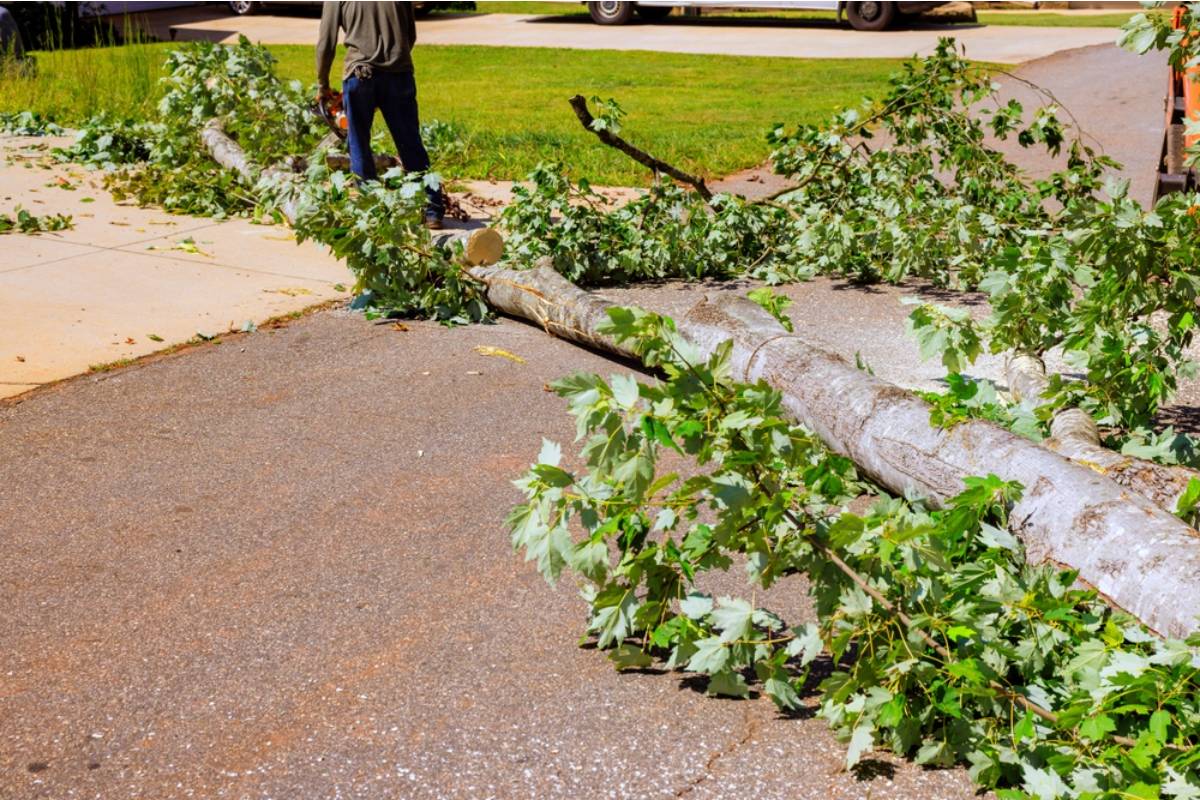
A person shared the account that the homeowner removed the bamboo along with roughly a dozen mature trees surrounding it. The explanation was almost comical: his hacksaw supposedly got away from him. Somehow, a campaign against a collection of bamboo ended with an entire group of city trees becoming collateral damage.
The scale of the cutting made the situation much harder to dismiss as an accidental gardening mistake. These were not plants growing inside his own flower beds. They were trees located in a public park, standing between his mansion and the waterfront.
The Waterfront Suddenly Looked Better
There was another detail that made everyone suspicious of the homeowner’s motives. When he was asked whether improving his waterfront view had influenced the decision, he admitted that it was a second reason. That tiny admission changed the entire story.
Suddenly, the bamboo sounded less like the central problem and more like a convenient justification. A response from a person summed up the sentiment by suggesting that the “second reason” was probably the real reason. Once the trees were gone, the mansion had a much clearer view toward the water.
The City Was Not Amused
The city reportedly announced that it would take the matter very seriously. That statement was significant because the trees had been planted in the park for more than decorative purposes. They helped form part of a landscape designed to mitigate flood damage near the waterfront.
Removing them therefore created a problem extending beyond one resident’s backyard view. A park exists for the wider community, and mature trees can provide shade, habitat, soil stability, and environmental protection. One homeowner’s preferred view suddenly looked much less important.
Why the Trees Mattered
The homeowner had focused heavily on the bamboo, but the trees were serving a completely different purpose. Their placement near the waterfront was part of an effort to reduce the effects of flooding. Removing a large number of them could potentially undermine that broader landscaping plan.
A response from a person pointed out the irony of someone claiming to protect his foundation while removing trees that helped with environmental protection. The story became a strange example of how a personal property concern could collide with a public landscape project. The more details emerged, the less convincing the original explanation sounded.
Bamboo Wasn’t Quite That Simple
The discussion also raised an important gardening distinction. Not all bamboo behaves in the same way, and some varieties spread aggressively while others remain in clumps. The original account specifically described small clumps, causing several people to question how serious the supposed bamboo invasion actually was.
A response from a person explained that some bamboo varieties are manageable and remain relatively contained. Others noted that truly aggressive bamboo can indeed be difficult to eradicate. The controversy was no longer simply about whether bamboo can be troublesome, but whether the particular bamboo in this park justified destroying everything around it.
Cutting Bamboo Doesn’t Make It Disappear
Several gardening-minded responses also pointed out another problem with the homeowner’s strategy. Bamboo can have extensive underground structures, meaning simply cutting visible stems does not necessarily eliminate the plant. In some cases, the roots and underground rhizomes can continue producing new growth.
That made the tree removal even more absurd. The homeowner may have succeeded in eliminating the trees, but the bamboo could potentially return anyway. The park could be left with fewer trees while the original plant problem remained.
A Better Solution Was Already Available
A response from a person argued that the simplest approach would have been contacting the city. If the bamboo was genuinely threatening public safety, restricting a walkway, or approaching private infrastructure, municipal officials could have inspected it and determined what needed to happen.
That would also have prevented the homeowner from taking responsibility for cutting public trees. Instead, he apparently decided that the fastest solution was to grab his tools and handle the problem himself. His decision turned a garden complaint into an issue involving public property.
Some People Had Bamboo Stories of Their Own
The discussion quickly filled with stories about bamboo taking over gardens. One response from a person described spending years trying to eradicate bamboo that had not even been intentionally planted in their yard. Another person jokingly compared dealing with it to a form of torture.
Those stories helped explain why some people sympathized with the homeowner’s frustration with bamboo. Nobody wants an aggressive plant marching toward a carefully maintained garden. But sympathy for the plant problem did not translate into sympathy for cutting down city-owned trees.
Root Barriers Offered Another Answer
A response from a person suggested using a root barrier as a way to contain spreading bamboo. The concept involved creating an underground barrier that limits how far the plant’s root system can travel. This would address the actual spreading problem instead of simply removing vegetation above the soil.
For a homeowner genuinely concerned about bamboo crossing into private land, that kind of targeted solution made much more sense. It attacked the part of the plant responsible for spreading. The mansion owner, however, seemed to have chosen a solution that conveniently created a better view at the same time.
The Garden Debate Became a View Debate
Once the waterfront view entered the conversation, the public reaction became much sharper. If the homeowner had simply wanted the bamboo managed, people could understand that. But admitting that a better view was also a motive made the cutting look far more self-serving.
A response from a person even joked about replacing the missing trees with something specifically designed to obstruct the mansion’s view. The joke reflected a broader frustration: public landscaping should not disappear simply because one expensive home prefers a clearer horizon.
Then Came the Billboard Idea
Several responses mentioned an unusual approach reportedly used by some Australian councils. In certain cases involving unauthorized tree removal, authorities have responded by restoring the trees and placing a large billboard that blocks the offender’s view while the replacement trees grow.
The idea quickly became one of the most popular suggestions in the discussion. Instead of rewarding the homeowner with the waterfront vista he wanted, the billboard would effectively create a temporary wall where the trees had once stood. The symbolism was almost too perfect.
The Punishment Would Become the View
People imagined the mansion owner looking out his expensive windows only to see an enormous structure where the trees once stood. The homeowner had wanted a clear waterfront view, but his actions could theoretically lead to the opposite result.
A response from a person jokingly suggested that the billboard should remain until replacement trees became tall enough to restore the original landscape. Suddenly, the missing trees were no longer merely an environmental loss. They had become the center of a gardening lesson about consequences.
The Trees Could Be Replaced
Reports discussed in the responses suggested that the homeowner might ultimately face an obligation to replace the trees. Some people hoped the city would make him pay for planting at least as many trees as he removed. Others believed the consequences should be large enough to prevent wealthy property owners from treating public land like an extension of their gardens.
The principle was simple. If someone benefits financially or aesthetically from removing public trees, replacing those trees should not become the taxpayers’ responsibility. The garden restoration should fall on the person who created the damage.
The Mansion Made the Story Even Stranger
The fact that the homeowner lived in a million-dollar property added another layer to the story. He was not dealing with a neglected garden or a collapsing structure where a desperate solution might be understandable. He was looking across a public park from a luxury home toward the waterfront.
That made his decision seem especially unnecessary. He already had a spectacular property, yet a group of city trees apparently stood between him and the exact view he wanted. The trees had survived for the benefit of the wider area, while his desire for a prettier outlook had no similar public purpose.
The City Had to Draw a Line
Allowing residents to remove public landscaping whenever it became inconvenient would create obvious problems. One person might cut down trees for a view, another might remove shrubs to widen a driveway, and someone else might reshape a park because they disliked the plants.
The city therefore had an incentive to make an example of the situation. The issue was no longer simply one homeowner and several trees. It was about whether public land could be altered whenever a nearby resident decided the landscaping was inconvenient.
The Garden Was Supposed to Protect the Community
Ironically, the very trees the homeowner removed were there partly because the area faced environmental risks. Their presence was connected to flood mitigation rather than simply decoration. Removing them for a private view therefore put personal preference ahead of a broader landscaping purpose.
A response from a person noted that cutting mature trees could create consequences that extend far beyond the moment they fall. Trees take years or decades to replace, while a clear view can be created in a single afternoon. That imbalance was at the heart of the outrage.
The Bamboo May Have Been the Least Important Part
By the end of the discussion, the bamboo almost seemed like a side character. Some people genuinely disliked bamboo and understood why anyone would want to control it. Others pointed out that the described clumping variety might not have been nearly as threatening as claimed.
But everyone could agree on one thing: cutting down an entire group of city trees was a dramatically different action. The homeowner had gone looking for a gardening solution and apparently found an opportunity to change the landscape outside his mansion.
Then the Story Took a Final Turn
A response from a person mentioned finding reports suggesting that the homeowner later said he regretted what happened and intended to plant twice the number of trees he had removed. He had apparently also contacted the city multiple times about the overgrowth before taking matters into his own hands.
That detail complicated the story. Perhaps he really had been frustrated by the city’s lack of response. Perhaps he genuinely believed the vegetation had become a problem. But after the trees were gone, his admission about wanting a better view made it impossible to ignore the personal benefit.
The Twist Was the View
The entire incident began with a complaint about dangerous bamboo. It ended with the uncomfortable realization that the homeowner had also been motivated by what he could see from his mansion. The trees were presented as a safety problem, but once they disappeared, the waterfront suddenly became much more visible.
The twist was that the man may have removed the trees to improve his view, only to risk creating a much bigger problem for himself. The bamboo could grow back, the city could replace the trees, and the public could remember exactly why they were removed. In the end, the best view in the neighborhood might belong not to the mansion owner, but to everyone waiting to see what the city planted back.