Homeowner Says Her Neighbor Complained About a New Apple Tree Blocking His Pool, Then She Realized He Expected Her Entire Yard to Cater to His Landscaping
A person shared her story about a neighborhood dispute that started with an ordinary tree and eventually made her question whether she could plant anything in her own yard. When she and her husband bought their house three years earlier, the neighbor immediately mentioned a tree near the property line. He said its flowers and leaves were falling into his pool and creating extra work for him.
Rather than dismissing the complaint, the couple tried to be accommodating. They pruned the tree and even offered to remove it completely, but the neighbor refused and said he wanted to keep it for privacy. That decision seemed reasonable at the time, especially because the couple assumed that maintaining the tree would keep everyone happy.
They Kept Trimming It Anyway
The homeowners continued taking care of the tree over the following years. They pruned it several times, with the most recent trimming taking place in April. According to the person who shared the story, there were no branches hanging over the neighbor’s property after that work was done.
There was another important detail that made the situation feel increasingly one-sided. The homeowners understood that, under the applicable local rules, the neighbor was responsible for dealing with debris that naturally landed on his side of the property. Even so, they had repeatedly gone beyond what they believed was necessary simply to keep the peace.
Privacy Was the Real Problem
While the neighbor was focused on what fell into his pool, the homeowners had a completely different problem. Their own backyard offered almost no privacy, and they had decided that landscaping would finally give them a more comfortable outdoor space. After three years in the house, they were ready to make the yard feel like their own.
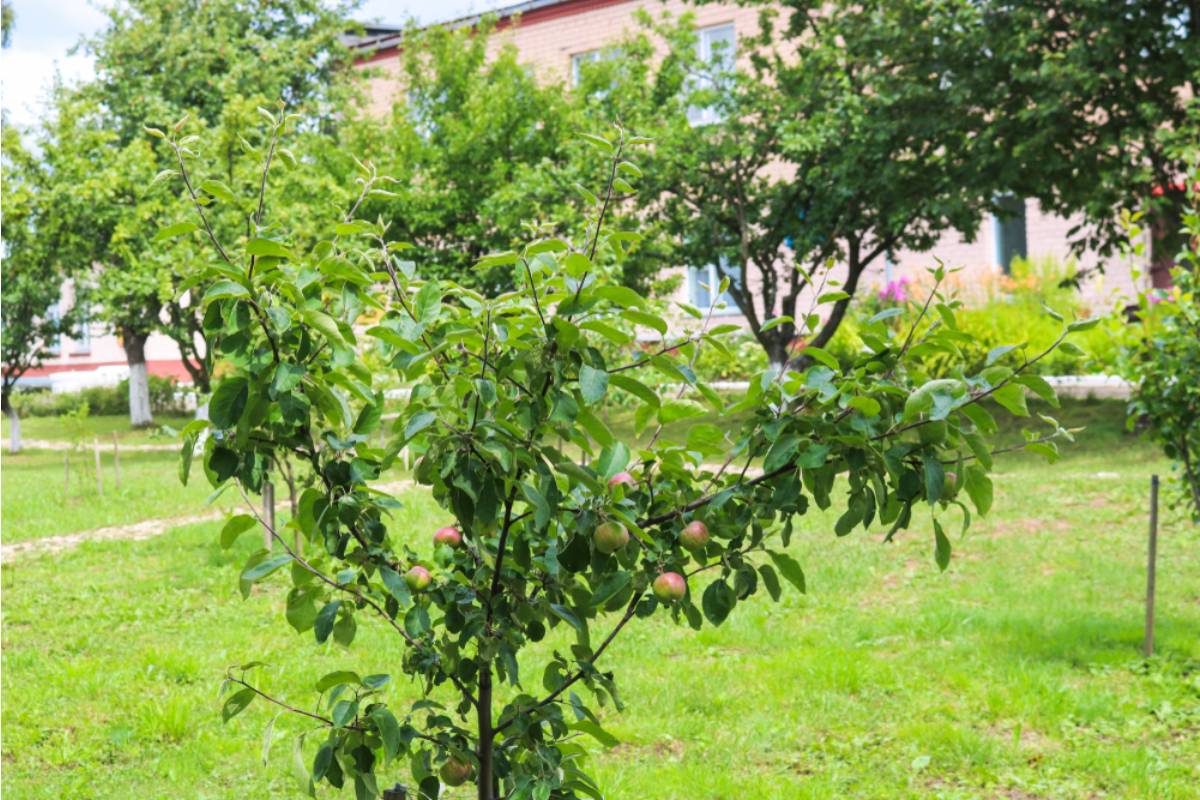
That was why they planted a dwarf apple tree roughly two metres from the fence line. It wasn’t positioned directly against the boundary, and it wasn’t intended as some aggressive attempt to invade the neighboring yard. It was simply one part of a larger landscaping project designed to add greenery and privacy.
Then the Text Arrived
The calm lasted until the neighbor sent the husband a text asking what kind of tree they had planted. At first, the question could have been interpreted as harmless curiosity. But the message quickly revealed that the neighbor was concerned about the tree eventually shading his pool and dropping leaves into it.
The person who shared the story was particularly upset by the complaint because the neighbor brought up the original tree again. He reportedly claimed that its flowers cost him around $1,000 a year in time, chemicals, and maintenance. To the homeowner, this sounded less like a reasonable concern and more like another attempt to make his pool maintenance their responsibility.
The Pool Had Become the Center of the Argument
The homeowner couldn’t understand why her landscaping choices were being measured against the needs of a pool located in someone else’s backyard. She pointed out that the neighbor had two large apple trees of his own right beside the pool. He also had a huge spruce whose branches extended into her yard, along with large roots that were damaging the grass.
There were additional trees and a cedar on his property as well. From her perspective, the situation was almost comical: he had an impressive collection of trees surrounding his own pool, yet he was worried about a single dwarf apple tree growing on the other side of the fence. The more she thought about it, the more she felt that the rules were somehow different for him.
He Didn’t Mind His Trees, Apparently
The neighbor’s long message reportedly made a distinction that bothered the homeowner even more. He explained that he didn’t mind maintaining trees that belonged to him, but he objected to dealing with maintenance caused by someone else’s trees. That statement might have sounded reasonable in isolation, except the homeowner believed she had already been doing everything she reasonably could to maintain hers.
She also noticed the contradiction in his expectations. He wanted the privacy provided by the existing tree when it suited him, but he disliked the flowers and leaves that came with having that tree nearby. Now he appeared to want the homeowners to limit their own landscaping because it might someday create similar inconveniences for him.
Anxiety Changed Her Decision
The homeowner admitted that she struggled with anxiety, and the neighbor’s message hit her harder than it might have affected someone else. Instead of letting the disagreement escalate, she decided to accommodate him yet again. She moved the newly planted apple tree farther back into her own property.
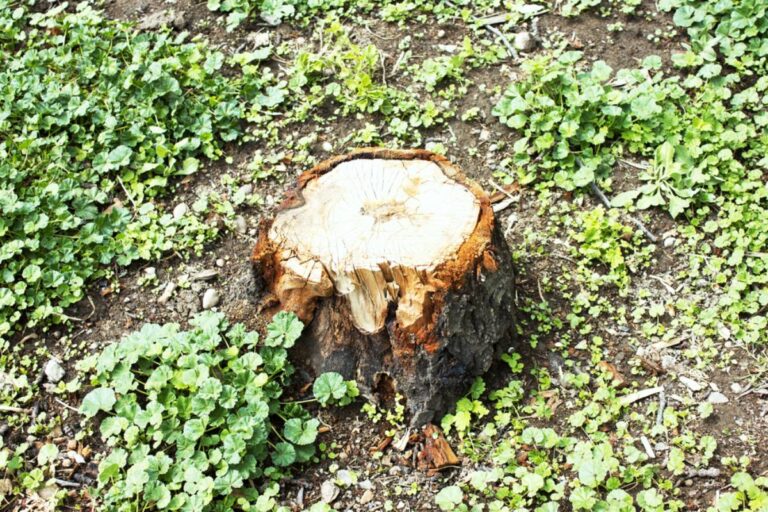
Then she went even further and removed the original tree that had caused years of complaints. It was a major concession, especially because the neighbor had previously refused the offer to have that same tree removed. What had started as an attempt to keep everyone happy had now resulted in the homeowner sacrificing part of the landscaping she wanted for her own yard.
The Decision Left Her With a Bigger Problem
Removing the old tree created an immediate practical issue. The homeowners had wanted privacy, and now one of the natural barriers between the two yards was gone. The new apple tree had also been moved farther away, reducing its usefulness as part of the privacy plan.
The person who shared the story was now trying to figure out what could be planted along the fence that would grow tall and quickly while producing minimal leaves, flowers, and shade. She wanted privacy without giving the neighbor another reason to complain. The problem was that nearly every plant capable of becoming a substantial privacy screen comes with some kind of natural debris or shade.
Responses From People Took Her Side
A response from a person argued that the neighbor sounded extremely entitled and that the homeowners should have simply left the apple tree where they originally planted it. Another response from a person took the idea even further, jokingly suggesting that the homeowners should plant a dozen more trees purely out of spite.
Other responses from people turned the situation into a running joke about “spite trees.” Suggestions ranged from cottonwood to cypress and other trees notorious for producing leaves, flowers, seeds, or other debris. The humor was obvious, but beneath it was a recurring point: the homeowners had already accommodated the neighbor repeatedly, and he still wasn’t satisfied.
Then People Noticed His Pool Cover
Several responses from people focused on a detail that made the neighbor’s complaint sound even stranger. The neighbor reportedly didn’t use a pool cover during the warmer months, despite complaining about leaves and flowers entering the pool. He apparently used one during winter but left the pool uncovered for the rest of the year.
That led to a particularly simple suggestion: get a pool cover. Other people pointed out that a suitable cover could reduce debris, evaporation, and some maintenance while also addressing the very issue the neighbor was blaming on the homeowners. The homeowners couldn’t control every leaf carried by wind, but the neighbor could control how he managed his own pool.
His Own Trees Raised More Questions
One response from a person pointed out that the neighbor’s own trees were arguably much closer to his pool than the new dwarf apple tree was. The observation shifted attention back toward the physical layout of the two properties. If his own apple trees were standing beside the pool, it seemed difficult to argue that every leaf entering the water was somehow caused by the neighbor’s landscaping.
Another response from a person suggested that the homeowner should simply point out the giant spruce extending into her yard. That tree was creating roots and grass problems on her property, yet she apparently wasn’t demanding that her neighbor remove it or redesign his yard around her preferences. The contrast made the dispute feel increasingly like a one-way arrangement.
The Privacy Problem Became More Urgent
The homeowners weren’t trying to build an enormous wall of vegetation just to annoy someone. They wanted a backyard where they could relax without feeling exposed to the neighboring property. With the original tree gone and the apple tree moved, the privacy problem was now worse than when the landscaping project began.
That was why people began suggesting fast-growing privacy plants such as arborvitae and other suitable screening shrubs. Some responses emphasized checking local growing conditions and selecting species appropriate for the climate rather than choosing something solely because it grows quickly. The homeowner’s challenge was finding something that could provide the privacy she wanted without creating another round of complaints.
Some Responses Warned Against More Accommodation
A response from a person identified what they considered the biggest problem in the situation: the homeowner was becoming too accommodating. By moving the apple tree and removing the other tree after receiving another complaint, she had effectively shown the neighbor that his objections could influence what happened inside her property lines.
Other responses made a similar point in less gentle terms. They suggested that repeatedly changing the yard to avoid conflict might not actually reduce the homeowner’s anxiety in the long run. Instead, it could establish a pattern where every new planting, landscaping project, or change to the yard became another opportunity for the neighbor to object.
The Neighbor Seemed to Have a Different Definition of Privacy
The irony wasn’t lost on people reading the story. The neighbor had previously insisted that the original tree remain because he wanted privacy, even though he had complained about the debris it created. Now the homeowners were trying to create privacy of their own, and suddenly the possibility of shade and falling leaves had become unacceptable.
A response from a person essentially described the situation as a case of someone wanting to control what happened beyond his own property. The neighbor could choose which trees to plant, where to put his pool, and whether to cover it, but he couldn’t realistically control every plant growing on the other side of a fence. Nature doesn’t stop at property lines simply because someone owns a swimming pool.
Then the Spite Landscaping Suggestions Arrived
The more dramatic responses from people embraced the situation as an opportunity for playful revenge. Some jokingly recommended planting trees famous for producing enormous leaves, flowers, seed pods, or other forms of yard debris. One person suggested a line of trees specifically because the neighbor’s uncovered pool would have to deal with whatever eventually fell from them.
The suggestions were clearly meant as jokes rather than serious landscaping instructions. Still, they illustrated how strongly people reacted to the idea of someone complaining about a tree while maintaining several large trees of his own. The homeowner, however, didn’t appear interested in starting a botanical war and was primarily looking for a practical way to regain privacy.
Others Recommended Setting a Boundary
Several responses from people suggested a much less dramatic solution. Instead of trying to find the one magical tree that could grow tall without producing leaves, flowers, seeds, roots, shade, or any other natural consequence, they encouraged the homeowner to stop treating the neighbor’s preferences as instructions.
The basic message was that the homeowners could maintain their own trees and respect the property boundary while allowing the neighbor to manage his own yard and pool. If a branch eventually crossed the property line, the appropriate rules could be followed. But the neighbor’s desire to keep his pool perfectly free of debris did not automatically give him authority over landscaping choices several feet away.
One Suggestion Was to Stop the Conversation Entirely
A response from a person recommended ending the repeated discussions rather than trying to convince the neighbor that the homeowners were being reasonable. The homeowner didn’t necessarily need to argue with him, explain every planting decision, or defend every tree. A simple boundary could make it clear that landscaping decisions on her property weren’t an ongoing negotiation.
Other responses suggested keeping future communication brief and documenting interactions if the dispute continued. Some also recommended cameras because of concerns that an unhappy neighbor might interfere with newly planted trees. There was no evidence that he would actually damage anything, but the suggestion reflected how quickly a simple landscaping disagreement had begun to feel more serious.
The Apple Tree Became a Symbol
By this point, the dwarf apple tree represented much more than one new addition to the yard. It represented the homeowner’s attempt to finally make her property private and comfortable after years of accommodating someone else’s concerns. Moving it farther away had solved one potential complaint but had also made her feel as though she had surrendered control of her own landscaping.
The original tree represented the same problem from the opposite direction. She had pruned it repeatedly, offered to remove it, and ultimately did remove it despite previously being told to leave it for privacy. The pattern left her wondering whether there was any amount of accommodation that would actually satisfy the neighbor.
The Bigger Issue Wasn’t Really the Tree
At its core, the dispute wasn’t simply about leaves falling into a swimming pool. It was about expectations between two homeowners who appeared to have very different ideas about where one person’s responsibility ended and another person’s began. The homeowner believed she was being considerate by maintaining her trees, while the neighbor seemed to believe consideration required her to prevent his pool from being affected at all.
That distinction mattered because a yard is never completely isolated from the surrounding environment. Leaves blow, roots spread, branches grow, flowers fall, and shade changes as trees mature. Expecting a neighboring property to remain completely consequence-free simply because a pool sits nearby was always going to create tension.
The Final Twist Was Already Sitting in His Yard
The most revealing detail may have been hiding in plain sight. The neighbor complaining about the homeowner’s new apple tree already had two enormous apple trees beside his own pool, along with several other mature trees. He had apparently chosen to surround his swimming pool with the exact kind of landscaping that naturally produces leaves and other debris.
Meanwhile, the homeowner had moved her dwarf apple tree farther into her own yard and removed the older tree after his complaints. She had spent three years trying to be accommodating, yet she was still left searching for a way to plant enough greenery to regain the privacy she had wanted from the beginning. What began as a neighbor asking about one apple tree had quietly turned into a much larger lesson about boundaries, because the more the homeowner gave up, the more space the neighbor seemed to expect her to surrender.