Homeowner Says Her Neighbor Kept Crossing the Garden Boundary, Then Hired Workers to Remove the Boulders Protecting Her Yard From Erosion
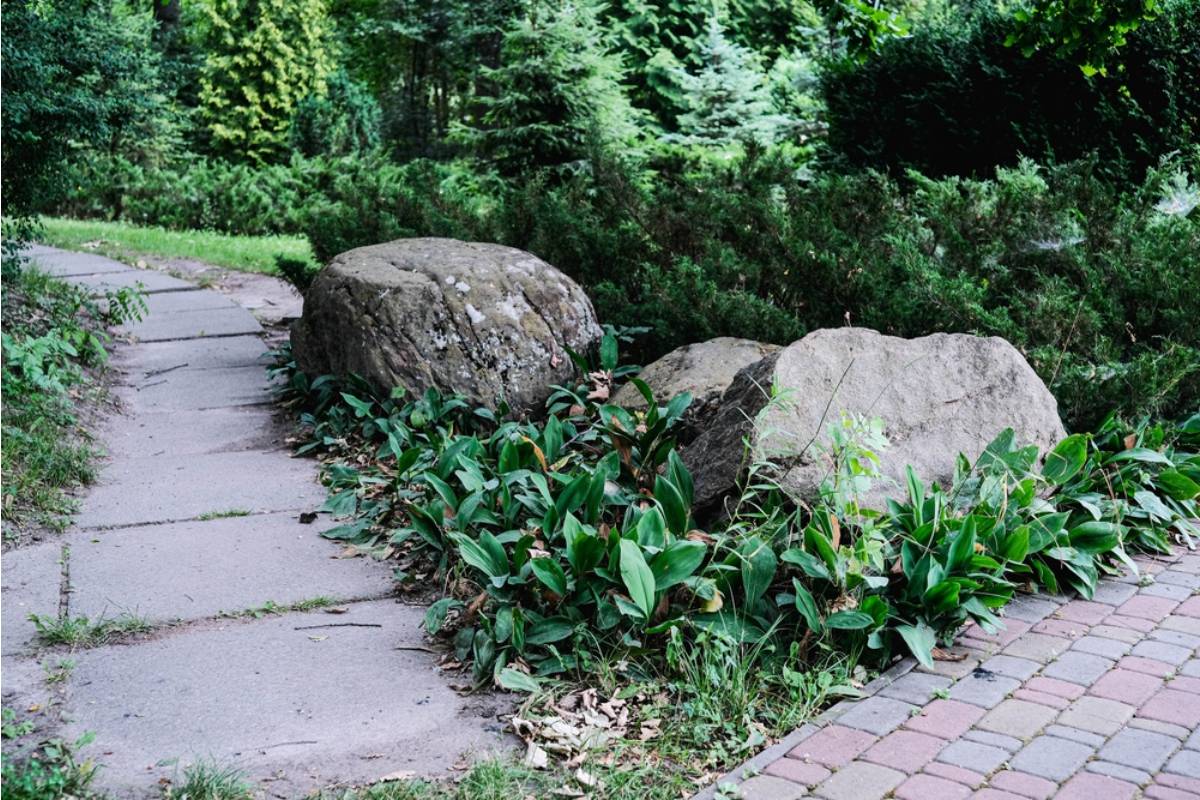
A person shared his story about a property dispute that started quietly along the edge of his yard in Massachusetts. Behind his home was a large drainage ditch, with a line of heavy boulders sitting near the property boundary for decades. They were not simply decorative garden rocks, either, because they helped hold the soil in place and protect the yard from erosion.
The neighboring house was part of a development with an HOA responsible for maintaining the drainage ditch. The homeowner explained that the actual property line began at the top of the ditch, meaning the boulders on his side were part of his property. For years, they had simply been part of the landscape, doing their job without attracting much attention.
Then the Neighbor Started Crossing Over
The trouble began after the neighboring homeowner moved in about two years earlier. The person said he repeatedly caught her walking onto his side of the property, which initially seemed strange because tall privacy trees blocked much of the view between the homes. He could see that she was crossing the boundary, but he often had no idea what she was doing.
One incident made the situation harder to dismiss when she began removing brush from his side because she apparently did not like how it looked. The homeowner confronted her and explained that she could not enter his property or alter his landscaping without permission. She claimed she did not understand where the property line was, so he clearly explained the boundary and decided to let the matter go.
He Tried Giving Her the Benefit of the Doubt
At that point, the homeowner still wanted to believe the entire situation was a misunderstanding. He had not contacted police, filed reports, or started documenting every strange appearance along the property line. His hope was that one straightforward conversation would be enough to prevent another problem.
Unfortunately, the repeated appearances continued. The homeowner later admitted that he was never certain what she was doing during those earlier visits because the privacy trees made it difficult to see. What he did know was that she kept appearing on land that did not belong to her.
Then Came the Boulders
Everything changed one day when the homeowner noticed laborers working along the drainage ditch. Instead of trimming plants or performing ordinary landscaping, they were removing several enormous boulders from the homeowner’s side of the property line. The rocks were being hauled away even though they had been sitting there for decades and served an important purpose.
These were not little decorative stones that someone could casually carry off in a wheelbarrow. They were massive landscape boulders forming part of an erosion-control barrier along the ditch. Suddenly, the strange boundary crossings seemed much less mysterious.
The Neighbor Had Hired the Workers
The homeowner confronted the neighbor and asked what was going on. According to his story, she responded that she had not realized the boulders were on his property and claimed she had received permission from the town to remove them. The homeowner strongly doubted both explanations.
She eventually said that she would have the boulders put back. That promise might have sounded reassuring under different circumstances, but it did little to explain why workers had already been hired to enter another person’s yard and move huge rocks in the first place.
The Rocks Were More Important Than They Looked
The boulders had a practical purpose that went beyond making the garden look tidy. Because they helped retain soil beside the drainage ditch, removing them could allow erosion to gradually eat away at the bank. A landscaping change that appeared minor from a distance could therefore create a much bigger problem after heavy rain.
The homeowner also worried about what might happen if the ditch bank became unstable. Water naturally looks for the easiest route, and weakened soil can disappear surprisingly quickly once erosion gets started. What had once been a quiet row of rocks had suddenly become the center of a serious property dispute.
The Homeowner Wanted to Know His Options
The person wondered whether he could have his neighbor formally warned for trespassing even though the laborers were the ones physically standing on the property. He also wanted to know whether the neighbor could be held responsible for the boulders if she was the one who hired the workers. For the first time, the homeowner realized that simply talking things out had not solved anything.
He also considered contacting the HOA because the drainage ditch was associated with the development. That raised another question about where the HOA’s responsibility ended and the homeowner’s property rights began. With the boulders sitting directly beside the ditch, the line between landscaping and drainage protection suddenly mattered a lot.
The First Response Was to Document Everything
A response from a person suggested building a paper trail immediately. That meant documenting the incident, photographing the property, recording what had been removed, and keeping track of every interaction involving the neighbor. Others emphasized that older photographs could become especially valuable because they could show what the property looked like before the boulders disappeared.
Another response from a person recommended having the boundary professionally surveyed. The homeowner had always believed he knew where the property line was, but an official survey could remove much of the uncertainty. Once the exact line was established, it would become far more difficult for anyone to claim they simply did not know where one yard ended and the other began.
Cameras Suddenly Became Part of the Garden Plan
Several people recommended installing cameras aimed at the homeowner’s own property. Trail cameras were mentioned because the back portion of the yard was quiet, difficult to watch constantly, and apparently attractive to unwanted visitors. The idea was not to start a surveillance war, but to make sure the homeowner would no longer have to rely entirely on his own memory of what happened.
The gardening dispute had now evolved into a lesson about documenting outdoor spaces. A camera watching the boulder line could capture future activity that would otherwise happen when nobody was outside. For a homeowner dealing with repeated boundary problems, evidence could be much more useful than another argument at the fence.
The Wetlands Made the Situation More Serious
Then another detail came to light that changed the stakes. The homeowner explained that wetlands were located only about fifty feet away from the ditch. That meant the boulders were not simply part of an ordinary backyard landscaping project sitting far from water or environmentally sensitive areas.
A response from a person urged the homeowner to contact the local Conservation Commission. The concern was that disturbing drainage and erosion-control features near wetlands could create environmental consequences beyond the property dispute. Suddenly, the missing boulders were potentially connected to a much larger question about protecting water and soil.
The Conservation Commission Was Contacted
The homeowner followed that advice and contacted the town’s Conservation Commission. He believed someone eventually went to inspect the ditch and wetland area, although he had not yet received a full response at the time of his update. That step gave the homeowner another independent record showing that he had reported what happened instead of quietly ignoring it.
He also began looking into the property line with a surveyor. The goal was straightforward: establish exactly where his land ended and make the boundary unmistakable. After months of uncertainty, he wanted something more concrete than a verbal explanation between two neighbors.
The Boulders Came Back, But Not All of Them
The morning after the original incident, the laborers returned several of the boulders. Unfortunately, the homeowner said the rocks had been placed back rather sloppily, and some were still missing. The attempted repair therefore did not completely restore the garden boundary or the erosion-control feature.
Instead of ending the dispute, the partial return made the homeowner more determined to find out exactly what had happened. He now had a situation where some property had been returned, some was still gone, and the original explanation remained questionable. The garden had effectively become a physical record of the disagreement.
The Property Line Finally Got Marked
Eventually, the homeowner discovered that two boundary markers had actually been surveyed years earlier. He was able to run a string between the markers to establish the line more clearly across the area between the properties. After dealing with repeated claims of confusion, he finally had a straightforward visual reference.
Then he took the next step and installed four tall metal no-trespassing signs on six-foot posts. The signs were placed along the boundary, facing the neighbor’s property, making the message very difficult to misunderstand. Whatever uncertainty had existed before was now replaced by four very obvious warnings standing beside the garden.
The Signs Apparently Made Things Worse
The homeowner said the neighbor was extremely unhappy about the signs. According to his account, she even attempted to have a fence built to hide them, although the location beside the drainage ditch and wetlands made that difficult. The attempt created an almost absurd gardening scene in which the biggest issue seemed to be whether one neighbor could block the other neighbor’s warning signs.
Instead of backing down, the homeowner installed a trail camera as well. He explained that the signs and camera gave him a way to document any future crossing without relying on another confrontation. The once-quiet edge of the yard had become the most carefully watched section of his garden.
Then He Discovered There Was More
Just when the boulder dispute seemed complicated enough, the homeowner noticed another problem. The neighbor had planted bushes that were apparently encroaching across the property line onto his side. What had begun with brush, then boulders, had now expanded into a gardening problem involving newly planted vegetation as well.
The homeowner admitted that by this point he mostly wanted the entire situation to end. He had considered pursuing compensation for items that were allegedly stolen or damaged, but he also recognized how exhausting a small property dispute could become. The bushes were one more reminder that the conflict was no longer about one afternoon of landscaping.
The Garden Boundary Became the Final Line
The homeowner also reached out to a lawyer, although he said he had difficulty finding one willing to take on what appeared to be a relatively small dispute. Small or not, the situation had already required a surveyor, signs, cameras, phone calls, and communication with local officials. A simple garden boundary had somehow become a surprisingly complicated project.
In the end, the homeowner decided he would not simply ignore future trespassing. His strategy was to make the boundary obvious, document anything that happened, and pursue the matter through legal channels if the neighbor crossed the line again. The boulders may have started the dispute, but the real lesson was about how quickly a neglected property boundary can turn into a full-scale neighborhood battle.
What Started as Landscaping Turned Into a Warning
A response from a person summed up the situation by pointing out that allowing every incident to slide could encourage more problems later. The homeowner had initially chosen patience because he wanted to remain on good terms with the people living nearby. Unfortunately, repeated boundary crossings eventually showed him that being friendly and being unprepared were two very different things.
What makes the story especially striking is how ordinary the setting must have looked at first. There was a drainage ditch, some bushes, a line of old boulders, and two neighboring gardens separated by a property boundary that had existed for years. Yet by the end, those same rocks had triggered surveys, warning signs, trail cameras, conservation concerns, and a neighbor determined to keep pushing against the line.
The Boulders Were Never Just Boulders
The biggest twist was that the boulders represented much more than an attractive feature at the edge of a garden. They were part of the landscape’s defense against erosion, and removing them could have affected the stability of the ditch bank and surrounding soil. What looked like someone rearranging rocks was therefore potentially changing how water interacted with the property.
The homeowner ultimately chose not to let the matter disappear quietly. He marked the boundary, documented the area, contacted officials, and prepared to take further action if the trespassing continued. The garden may have started with a simple row of stones, but those stones ended up drawing one very clear line: this part of the yard was not his neighbor’s to redesign.