Homeowner Says Her Neighbor’s Chickens Keep Escaping Into the Gap Beside Her Garden Fence, Then One of Her Eight Dogs Chases a Bird and Turns a Friendly Relationship Into a Backyard Dilemma
A person shared his story about living next to neighbors he genuinely liked, but their chickens had turned an otherwise peaceful neighborhood into a surprisingly stressful place. The birds kept escaping from their yard, and the homeowner was struggling to figure out how to handle the situation without damaging a good relationship. What made the problem especially complicated was that his household had eight dogs, several of which became extremely excited whenever the chickens appeared. Suddenly, a simple backyard boundary had become the center of a problem nobody seemed eager to solve.
The homeowner explained that the neighbors were not people he wanted to argue with, which made the situation even more awkward. He was not dealing with an obvious feud over property lines, noisy parties, or someone deliberately destroying a flower bed. Instead, he was trying to prevent a series of unfortunate encounters between roaming poultry and dogs with strong hunting instincts. The longer the chickens continued escaping, the harder it became to pretend the situation would resolve itself.
The Chickens Kept Finding Their Way Out
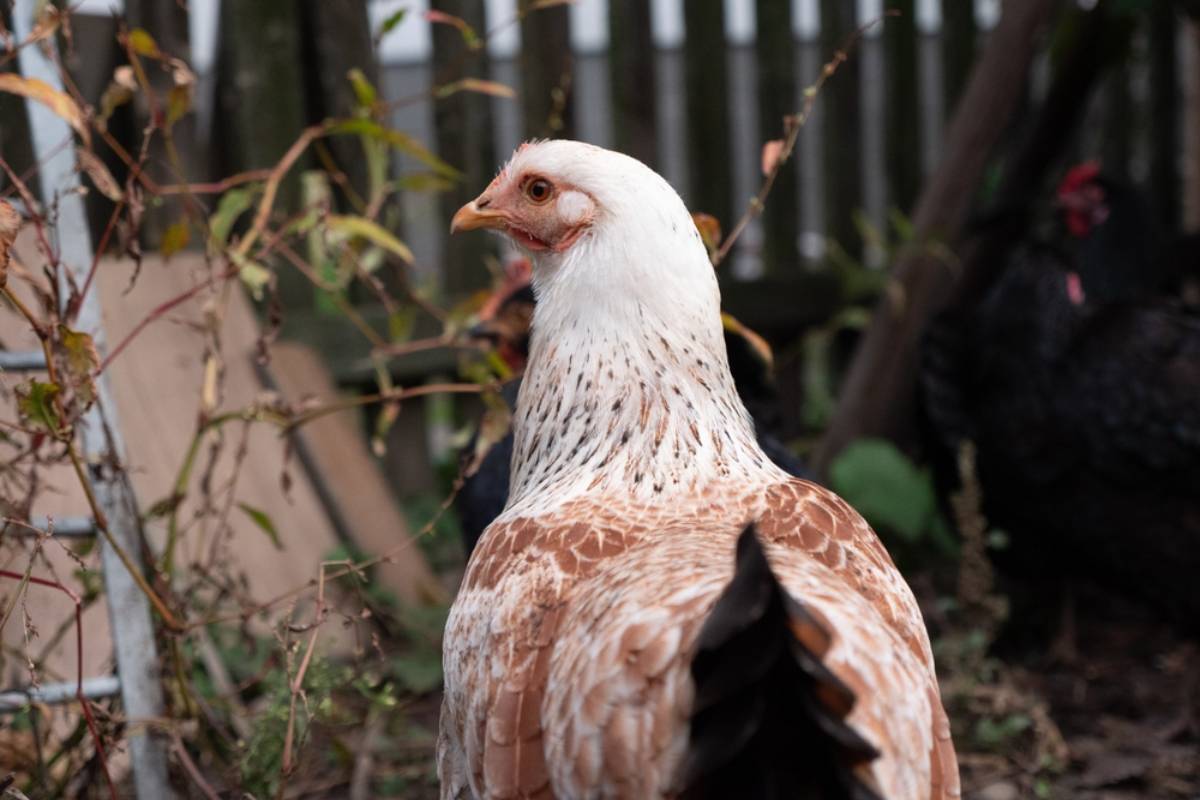
According to the homeowner, the chickens had escaped multiple times, including three consecutive days during one particularly stressful week. On an earlier occasion, the household had even managed to help return an escaped chicken to the neighbors’ yard. That seemed like a small act of neighborly cooperation, but the discovery of a chicken carcass between the two fences afterward suggested that the problem was more serious than anyone wanted to admit.
The repeated escapes were especially worrying because the dogs were becoming increasingly excited by the birds. Even if the chickens wandered into the wrong area accidentally, the dogs did not understand the difference between an innocent visitor and potential prey. The homeowner realized that another escape could end with an injured animal, a dead chicken, or a dog getting hurt during the chase. What began as an occasional inconvenience was quickly becoming a problem that demanded a real solution.
Eight Dogs Made the Situation More Complicated
The household’s eight dogs were a major part of the dilemma, and their behavior made the situation difficult to manage. The homeowner explained that several dogs had attempted to jump the fence, with more than one successfully clearing it. Although the animals were supervised, their excitement around the chickens could escalate quickly, creating risks both outside and inside the house.
The dogs also reacted strongly enough that the homeowner sometimes needed to crate them to prevent the excitement from carrying over into conflicts with one another. That meant the issue was no longer limited to what happened near the fence. A chicken wandering into the wrong spot could disrupt the entire household, leaving everyone tense while the animals settled down. For a family already managing eight dogs, the repeated escapes were becoming an exhausting routine.
The Garden Fence Was Not the Only Concern
Anyone who has maintained a backyard knows that fences can become complicated when trees, shrubs, and other vegetation grow close to the boundary. In this case, the homeowner described a gap between the two properties’ fences where vegetation created an awkward space. The chickens could enter that gap, leaving them dangerously close to the dogs even when they had not completely entered the homeowner’s yard.
The vegetation also made the obvious solutions less appealing. Removing mature trees or cutting back established growth could alter the garden and damage plants that had taken years to grow. The homeowner did not want to sacrifice healthy landscaping simply because the neighboring fence had a weakness. Unfortunately, the existing arrangement left very little room for error whenever a chicken slipped through.
Tarps Had Already Been Added to the Fence
The family had already tried to reduce the dogs’ excitement by covering sections of their fence with tarps. The coverings blocked the dogs’ view of the chickens, which seemed like a sensible way to reduce visual stimulation without rebuilding the entire boundary. The homeowner had also supervised the dogs and taken precautions after an earlier fence-jumping incident.
However, the tarps did not solve everything. One dog eventually managed to jump over a covered section, proving that blocking the view was not enough to guarantee containment. The homeowner was left wondering whether the existing fence needed additional protection or whether a different approach could keep the animals safely separated without an expensive renovation.
One Older Dog Surprised Everyone
One detail made the situation particularly frustrating: an older dog named Cecil had reportedly never tried to jump the fence before the chickens appeared. At nine years old, he had a history of chasing or killing small wildlife within the yard, but he had not previously attempted to cross the boundary to pursue something outside it. The chickens appeared to have triggered a behavior the homeowner had not expected from him.
That change made it difficult to predict what the dogs might do next. A fence that had worked for years was suddenly being tested by animals that had discovered something especially exciting on the other side. The homeowner could not assume that a dog’s previous behavior guaranteed future safety. The unexpected leap also raised a bigger question: if the chickens disappeared tomorrow, would the dogs remain interested in jumping the fence for another reason?
The Neighbors Had Already Been Told About the Gap
The homeowner said he had identified the opening in the neighbors’ fence and attempted to address the problem with them. However, he felt they had not followed up adequately, leaving him uncertain about how to encourage them to secure the chickens. Because the neighbors were otherwise pleasant, he did not want a conversation about poultry to turn into a lasting disagreement.
That hesitation is understandable, particularly when people expect to continue seeing one another across the same fences for years. A direct complaint can feel unnecessarily confrontational when the relationship has otherwise been friendly. Yet avoiding an uncomfortable conversation can allow a manageable issue to grow into something much worse. In this case, the homeowner needed a way to discuss the repeated escapes without making the neighbors feel personally attacked.
The Chickens Were Not Just Garden Visitors
Chickens can sometimes be entertaining additions to a backyard landscape, scratching through soil and searching for insects. In a vegetable garden, however, roaming birds can also disturb seedlings, scatter mulch, scratch around newly planted beds, and damage vulnerable plants. The homeowner’s immediate concern was the danger to the animals, but the same boundary problem could easily become a gardening headache if the birds began exploring planted areas.
A response from a person pointed out that chickens can provide a useful service by eating insects when they are allowed to forage safely. That observation offered a reminder that poultry is not automatically a nuisance in a garden. The problem was the lack of separation between the animals and the dogs, not simply the presence of chickens. A well-managed backyard can accommodate plants and animals, but only when their boundaries and needs are properly considered.
The Suggestion to Build a Higher Fence
One response from a person offered a straightforward recommendation: build a higher fence. On paper, that seemed like the simplest answer because the dogs had demonstrated that the existing barrier could be overcome. A taller, more secure enclosure could reduce the risk of another chase and help prevent the dogs from wandering into neighboring spaces.
Unfortunately, the homeowner explained that replacing the fence was not financially realistic. The existing five-foot chain-link fence had worked at previous homes, so the family had not anticipated needing a more substantial barrier. Rebuilding it would mean taking on an expense that the household could not easily manage. The challenge was finding an affordable improvement that offered meaningful protection without requiring a complete backyard overhaul.
Other People Pointed Out the Dogs’ Responsibility
Not every response focused on the neighbors’ chickens. Several people argued that the homeowner had a responsibility to ensure the dogs remained safely contained, regardless of whether the chickens continued escaping. Their reasoning was that a dog capable of jumping a fence could eventually pursue a squirrel, another animal, or something else that caught its attention.
That perspective introduced an uncomfortable but important distinction. Even if the neighbors improved their chicken enclosure, the dogs’ ability to escape would remain a potential safety issue. The homeowner did not want his animals running loose or getting injured while chasing poultry. Addressing the dogs’ containment therefore mattered independently of whether the neighbors changed anything on their side.
A Creative Wire Fence Idea Offered Hope
One response from a person suggested extending wire fencing upward from the existing barrier and bending the upper portion inward. The idea was to make climbing or jumping over the fence more difficult without replacing the entire structure. The person explained that a similar arrangement had helped prevent their own animals from escaping.
The suggestion appealed to the homeowner because it offered a possible middle ground between doing nothing and paying for a completely new fence. A carefully installed barrier could potentially improve containment while preserving the existing landscaping. Any modification would still need to be safe for the dogs and installed without damaging the neighbors’ property. For a homeowner trying to protect both animals and established plants, an affordable physical solution sounded worth investigating.
The Mature Trees Created Another Obstacle
The vegetation between the two fences was more than a minor landscaping detail. The homeowner explained that some of the trees were old, established, and healthy, making removal an unattractive option. Cutting them down simply to close the gap would sacrifice valuable greenery and could change the appearance of the entire boundary.
Mature trees provide shade, shelter, and structure that younger plants cannot immediately replace. Their roots, trunks, and surrounding vegetation can also make fence installation more complicated than it appears. Rather than treating the trees as disposable obstacles, the homeowner wanted to find a way to work around them. That meant any solution would need to account for both the dogs’ safety and the garden’s long-term health.
The Family Was Trying to Avoid Another Tragedy
The homeowner repeatedly emphasized that he did not want the chickens to be hurt, and he was also worried about his own dogs. Another chase could leave a chicken dead, injure a dog, or trigger a fight among animals already worked up by the encounter. Even if everyone involved managed to avoid another incident, the repeated stress was clearly taking a toll on the household.
This was why the homeowner continued looking for advice instead of simply dismissing the situation as someone else’s problem. He wanted a practical way to stop the cycle before another animal paid the price. The challenge was that he could not control every chicken that escaped from the neighboring yard, but he could take steps to make his own property safer. The best outcome would be one that protected the birds, kept the dogs contained, and allowed both families to remain on friendly terms.
The Real Solution May Require Both Neighbors
The situation ultimately highlighted a problem that neither side could comfortably ignore. The neighbors needed to consider why their chickens kept escaping, while the homeowner needed to make sure the dogs could not reach them. Relying entirely on one household to solve everything would leave the same weaknesses in place, especially if the animals continued encountering one another through the gap between the fences.
A calm conversation could help the two families agree on practical next steps, such as repairing the opening, checking the chicken enclosure, and exploring safe fencing improvements. Any changes around the trees would need careful planning so that the established landscaping remained intact. The homeowner’s relationship with the neighbors was worth preserving, but so was the safety of every animal involved. Sometimes the best backyard solution is not a dramatic confrontation, but a cooperative plan that prevents the next incident before it happens.