A Texas Homeowner Planned to Plant Five Shade Trees in His Barren Yard, Then Discovered Why Buying the Biggest Live Oaks Might Be the Biggest Mistake
A person shared his story about a yard in Southeast Texas that had been missing something important for nearly six years: trees. After years of looking at a mostly barren landscape, he was finally ready to turn things around by planting five young trees at the end of October. The plan sounded simple enough, but choosing the right trees quickly became a much bigger challenge than expected.
The homeowner lived in USDA hardiness zone 9a, where the climate can support a variety of trees but also brings intense summer heat and challenging growing conditions. He wanted shade, healthy growth, and trees that would make the property feel more welcoming over time. Unfortunately, the ground beneath his future leafy paradise was about to complicate everything.
The Soil Was Nothing Like a Gardener’s Dream
The homeowner explained that his property had what local professionals described as gumbo clay, a dense soil that can make gardening and tree establishment difficult. To make matters worse, the builder had apparently left construction debris and other unwanted material in the ground. Instead of a clean slate for planting, he had a patch of land that required careful consideration before any roots could settle in.
Clay soil is not automatically unsuitable for trees, but drainage and compaction can create serious challenges for young roots. The homeowner needed trees that could tolerate the conditions rather than varieties that would demand perfect soil from day one. His first gardening lesson was already becoming clear: a beautiful tree on the nursery lot might have a very different experience in his backyard.
Living Near a Lake Offered One Major Advantage
Despite the soil problems, the property had one promising feature that could make the project easier. The homeowner lived close to a lake and had access to reasonably priced water, along with an existing underground sprinkler system. He was also prepared to water the new trees as much as necessary during their establishment.
That was encouraging because newly planted trees need consistent moisture while their roots adjust to their new surroundings. However, abundant water does not solve every soil problem, especially when heavy clay drains poorly. The homeowner had a useful advantage, but he still needed to choose trees that could thrive rather than merely survive.
The Homeowners Association Had Its Own Ideas About Trees
The next complication involved the homeowners association, which had concerns about planting trees that might eventually grow too large and become potential hazards. The homeowner also explained that the proposed planting area technically encroached on an HOA easement. Fortunately, he had already obtained the necessary permissions and completed utility mapping before moving forward.
That preparation meant he was not simply digging holes and hoping nobody complained afterward. He had taken steps to address the practical and administrative concerns before spending money on the trees themselves. Now, with the paperwork largely handled, the biggest question was which species would provide the right balance of shade, safety, and long-term growth.
Live Oaks Seemed Like the Obvious Choice
Several people had recommended live oaks as a suitable option for the region, and it was easy to understand the appeal. These evergreen trees can develop broad canopies that provide generous shade and give a landscape a mature, established appearance. For someone who had spent years staring at a mostly treeless yard, that promise was especially tempting.
The HOA’s concerns about tree size, however, meant the homeowner could not simply choose a species based on its reputation. A tree that looks manageable as a sapling can eventually occupy a substantial amount of space. He needed to think about the mature tree, not just the attractive little specimen he would bring home from the nursery.
The Nurseries Wanted to Sell Him Bigger Trees
When the homeowner started looking for trees, local nurseries were offering him live oaks grown in 30-gallon containers. Larger nursery trees can create an immediate visual impact, making an empty yard look closer to its finished landscape. For someone eager to see progress after years without shade, that offer was understandably appealing.
But the homeowner had been researching the subject and worried that a larger tree might struggle more after transplantation. He was paying for the project himself, so the thought of spending a significant amount on a tree that failed to establish was concerning. Rather than automatically accepting the nurseries’ recommendations, he decided to ask people with tree-growing experience for advice.
The Smaller Sapling Argument Changed the Conversation
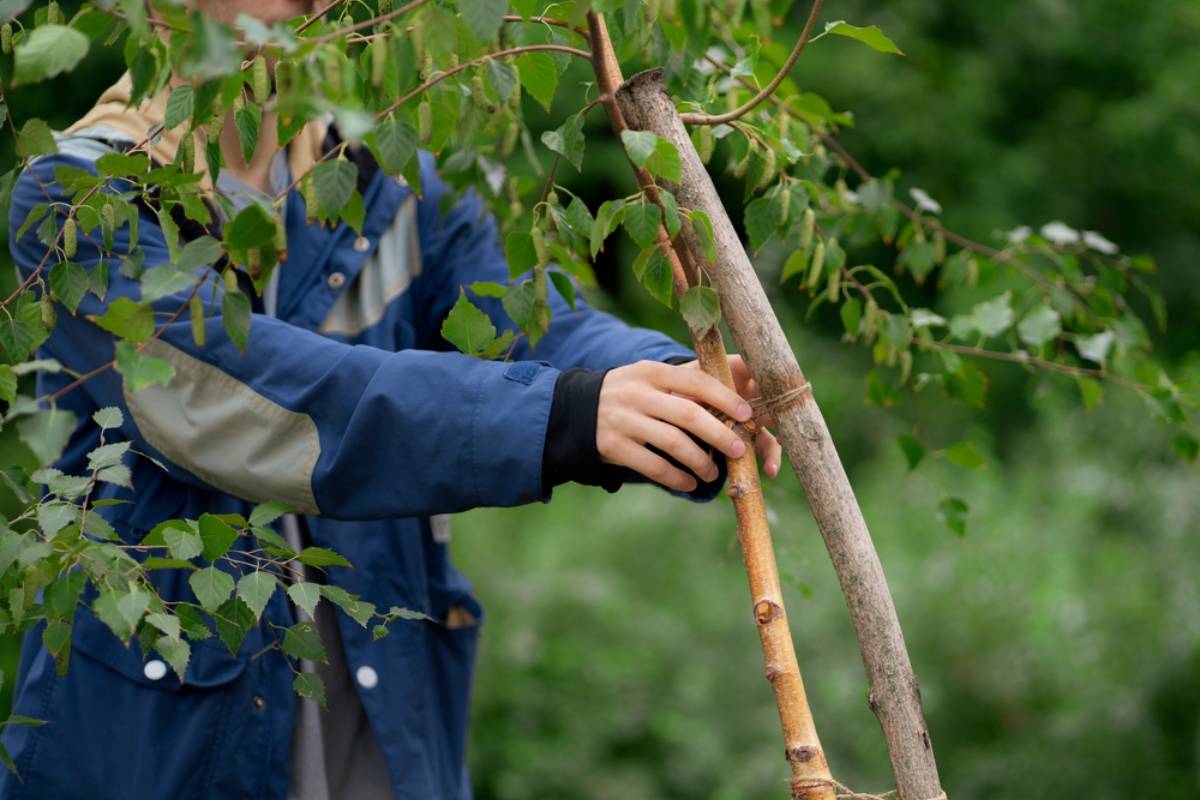
One response from a person suggested that smaller trees are generally easier to establish than larger nursery specimens. Smaller root systems can be less difficult to transplant, and younger trees often need less water while adapting to their new surroundings. That advice offered a different way to think about the project: instead of buying the biggest trees available, the homeowner could focus on getting healthy trees established.
Another response agreed that smaller live oaks would be a sensible choice. Although a 30-gallon tree might provide more immediate height, a smaller specimen could establish roots more quickly and eventually catch up with its larger counterpart. The idea was particularly attractive for someone who wanted five trees to survive without turning the planting project into an expensive gamble.
Why Bigger Trees Do Not Always Win
It is easy to assume that a larger tree is automatically the better investment because it appears more mature when planted. In reality, the size of the canopy alone does not tell the whole story, since the root system must also adapt to the surrounding soil and growing conditions. A smaller tree that establishes successfully can become a better long-term investment than a larger one that struggles.
That does not mean every large nursery tree will suffer from transplant shock or that smaller trees always outperform larger specimens. Tree health, root condition, planting technique, species selection, and aftercare all influence the outcome. For this homeowner, the important realization was that paying more for immediate size would not necessarily guarantee faster progress toward a shady yard.
Local Knowledge Could Be More Valuable Than a Sales Pitch
One response from a person recommended visiting a local nursery that understood the region rather than treating trees as interchangeable products. That advice made sense because two trees of the same species can perform differently depending on their origin, health, and suitability for the planting site. Local experience could help the homeowner avoid choosing a tree that looked perfect in a container but struggled once planted.
The discussion also highlighted the importance of observing established trees in nearby neighborhoods. Trees that are thriving under similar soil, weather, and watering conditions can provide useful clues about what may work on a particular property. Instead of relying entirely on a nursery’s inventory, the homeowner could combine professional advice with evidence from the landscape around him.
One Gardener Had a Surprisingly Different Idea
While live oaks dominated the conversation, another person offered a more unconventional perspective. They described allowing mesquite trees and a Jerusalem thorn tree to grow naturally after discovering them in their backyard. Over roughly two years, those trees had reached nearly six feet tall, offering an example of how unexpected seedlings can become useful parts of a landscape.
The gardener appreciated that these trees were drought-resistant and could attract birds and pollinators. They also pointed out that mesquite and Jerusalem thorn belong to the legume family, whose members can contribute to nitrogen cycling through their relationships with soil bacteria. Still, what works in one part of Texas does not automatically work everywhere, especially when humidity, heavy clay, and local growing conditions differ.
The Mesquite Suggestion Was Not Exactly a Crowd-Pleaser
The suggestion of planting mesquite trees did not receive universal enthusiasm. One response from a person joked that they would never willingly plant mesquite, explaining that they did not consider it a good match for the humid conditions and heavy clay in their own area. The exchange showed how quickly a seemingly straightforward tree recommendation can become a debate about regional preferences.
For the homeowner, that disagreement reinforced the need to evaluate individual species carefully. A tree that is tough and drought-tolerant in one setting may be less suitable for a different combination of soil and moisture. Rather than choosing a tree simply because someone praised it, he needed to consider the exact conditions in his own yard.
Bald Cypress Was the Tree He Really Wanted
Despite the interest in live oaks, the homeowner admitted that his personal preference leaned toward bald cypress. These distinctive trees can be particularly well suited to moist environments, making them worth investigating for some Southeast Texas landscapes. Their unusual appearance also offers something different from the familiar evergreen canopy of a live oak.
However, bald cypress trees are deciduous, meaning they lose their foliage during part of the year. Their suitability also depends on the specific planting site, including drainage, available space, and the amount of moisture the roots receive. The homeowner’s preference therefore introduced another important question: could the tree he liked best also meet the HOA’s concerns and the practical demands of his property?
The Real Secret Was Choosing Trees for the Actual Site
The conversation eventually circled back to the importance of matching trees to the conditions where they would grow. Texas A&M Forest Service recommends considering the available space, preparing a planting hole that is wider than the root ball, and keeping the root collar at or slightly above the surrounding soil grade. It also advises using the original soil when backfilling rather than automatically adding amendments.
Texas A&M Forest Service
+1
For this yard, drainage deserved special attention because heavy clay can hold water for extended periods. Checking how quickly water leaves a test hole before planting could help reveal whether the proposed location was suitable for the selected species. The homeowner’s access to irrigation was valuable, but the goal was to provide enough water without creating a permanently waterlogged root zone.
Five Trees Could Finally Transform the Yard
After years of living without the shade he wanted, the homeowner was ready to turn an empty landscape into something more inviting. His original plan involved five saplings, a late-October planting date, and a willingness to provide the water they needed to establish. The discussion helped him consider not only which species to buy, but also whether smaller trees might offer a more practical starting point.
The most useful lesson was that a successful tree-planting project does not begin with the biggest tree in the nursery. It begins with understanding the soil, checking drainage, choosing suitable species, and giving the roots room to grow. For a homeowner working with difficult clay and HOA restrictions, those decisions could make the difference between an expensive disappointment and a landscape that grows more beautiful with every passing year.