Homeowner Says She Finally Explored the Woods Behind Her House, Then Discovered Her Neighbor Had Been Cutting Down Trees for a Better View
A person shared his story about discovering that his Rhode Island neighbor had apparently been maintaining part of his wooded property without permission. For years, the back section of the land had been so heavily overgrown that the family could barely access it. That changed when the homeowner decided to expand the yard and create paths through the property, revealing a surprise that had apparently been developing for years.
The homeowner found that trees and plants had been cut down in the wooded area, creating a noticeably clearer view from the neighbor’s property. The discovery was frustrating enough on its own, but the situation became even stranger when the neighbor complained about several tree stumps the homeowner had placed in the already-cleared area. Suddenly, the people who had apparently been cutting his trees were objecting to what he did with his own land.
The Back of the Property Had Been a Mystery
The homeowner and his wife had owned the property for about five years, but they had never been able to properly explore every part of it. The rear portion was heavily wooded and difficult to access, so much of the land remained essentially hidden from the family. That meant there was little reason for them to suspect that someone else had been regularly entering the area.
Eventually, the homeowner decided to change that by expanding the yard and cutting paths through the property. The project was partly about making better use of land they already owned. Instead, the first major discovery was that the woods did not look quite the way they should have.
The Trees Had Been Disappearing
As the homeowner worked farther into the property, he realized that sections of the wooded area had already been cleared. Trees and plants had apparently been trimmed or removed, opening up areas that should have remained dense and private. The more he explored, the more obvious it became that the clearing was not simply the result of natural growth or an occasional fallen branch.
The homeowner eventually connected the clearing to the neighboring property. The trees had been removed in a way that appeared to give the neighbors a better view through the woods. What had once been a natural screen between the properties was gradually becoming an open sightline.
Then the Neighbor Complained About the Stumps
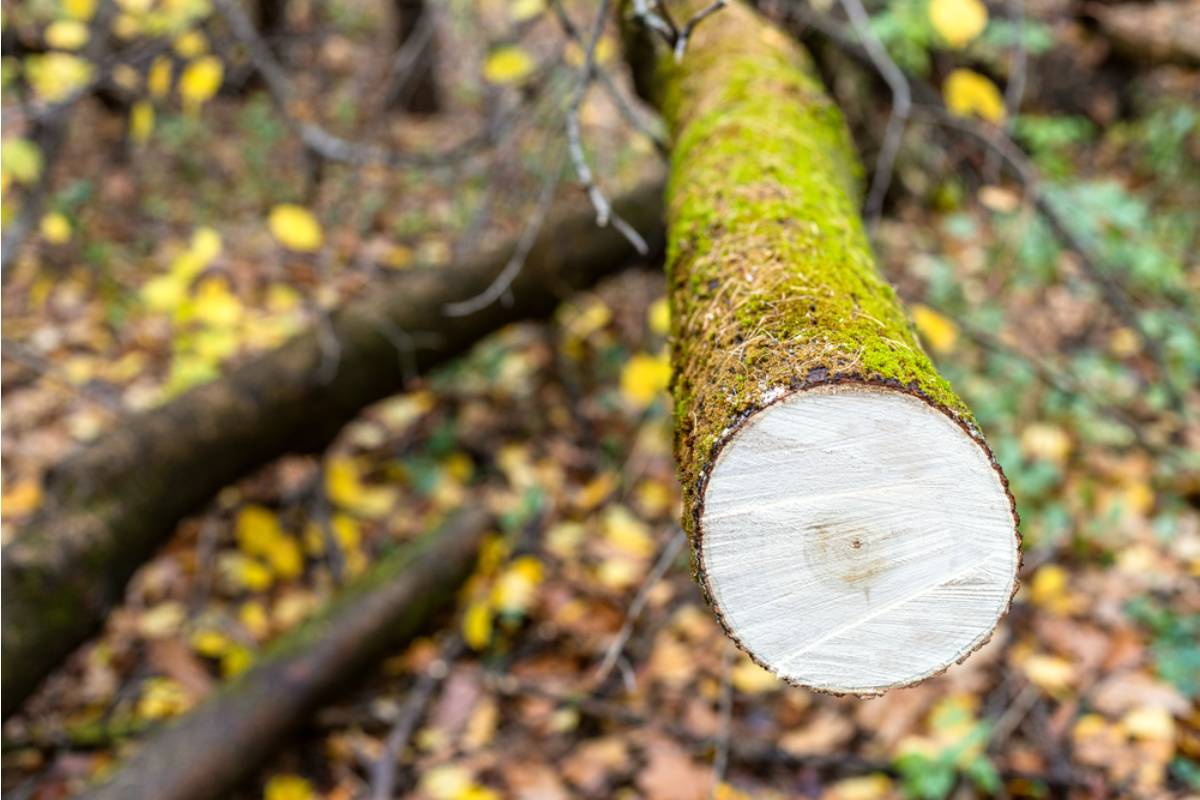
The homeowner had been using an excavator during his own work and had dug out several tree stumps from the area. Since the neighboring clearing had already changed the character of the woods, he decided to place some of those stumps back there. To him, they were simply part of working on his own property and restoring some of the natural character of the area.
Then the neighbor approached him and complained about the stumps. The homeowner found the confrontation almost unbelievable because he had just discovered that the same neighbor had apparently been cutting vegetation on his land. The situation had suddenly flipped from someone altering his property without permission to that person objecting to how he used it.
The Neighbor Had an Explanation
When questioned, the neighbor reportedly claimed that the homeowner’s wife’s grandfather, who had previously owned the property, used to hire someone to trim the land. According to the neighbor, that history somehow explained why the vegetation had been maintained over the years. There was one obvious problem with that explanation: the grandfather had died in 2016.
The homeowner and his wife had now owned the property for five years, and nobody had asked them for permission to continue the alleged arrangement. There was also no written agreement giving the neighbor access to maintain the wooded area. The homeowner was therefore left wondering why an old arrangement involving a former owner was being treated as though it automatically continued forever.
Nobody Had Asked the New Owners
The homeowner emphasized that there was no written permission allowing the neighbor to trim trees or plants on the property. There was also no deeded access granting the neighbor rights to use the wooded section. From the family’s perspective, ownership had changed, and any previous informal arrangement should have been discussed with the new owners.
Instead, the neighbor appeared to have continued treating the land as though he had some kind of standing permission. The homeowner had not even realized the maintenance was happening because the woods were so difficult to reach. By the time he finally explored the area, years of growth had apparently already been altered.
The Neighbor’s View Suddenly Made Sense
The homeowner’s discovery also gave him a possible explanation for why so much vegetation had been removed. The neighbor had apparently wanted a clearer view through the property. By trimming trees and clearing plants, the neighbor could see through areas that had once been blocked by dense woodland.
That detail made the old claim about maintaining the property feel less innocent to the homeowner. The clearing was not simply about keeping a boundary neat or removing dangerous growth. It appeared to have produced a direct benefit for the neighboring household.
The Homeowner Decided to Draw a Line
After speaking with the neighbors, the homeowner gave them a straightforward instruction. They were told not to trim, cut, or otherwise alter anything on his property anymore. The conversation established a clear boundary that had apparently been missing for years.
But the homeowner was not convinced the warning would be enough. Something about the neighbors made him distrustful, particularly after discovering that they had already been making changes without permission. He began thinking about what would happen if the trimming quietly started again.
Trail Cameras Became the Next Move
The homeowner decided to install trail cameras around the property. The cameras would give him a way to monitor the wooded areas that were difficult to watch personally. If someone entered the property and began cutting vegetation again, there could potentially be a record of what happened.
A response from a person also suggested making sure the property boundaries were clearly marked and using the appropriate no-trespassing signs for the area. The advice was practical because the homeowner did not want another argument over whether the neighbor believed he had permission. Clear boundaries and documented warnings could make future disputes much harder to misunderstand.
A Survey Suddenly Looked Like a Good Idea
Several responses from people strongly recommended getting the property surveyed. One response came from a person who identified himself as a surveyor and explained that having a professional establish the boundary would give the homeowner much firmer ground when dealing with the neighbor.
The homeowner was already considering hiring an attorney, and the idea of a survey fit naturally into that plan. If the exact boundary were professionally identified and documented, there would be less room for the neighbors to claim that the cleared trees had somehow been on their side. The survey could also become important if the dispute escalated beyond a simple conversation.
The Old Property History Raised a Bigger Concern
Some responses from people warned the homeowner about a separate issue involving long-term possession and maintenance of someone else’s land. The concern was that a neighbor who has treated another person’s property as their own for a long period might eventually try to make a legal claim based on that history.
The homeowner pushed back because the situation was more complicated than simply leaving the land unattended. He mentioned that there had been a fenced boundary, which he believed made the circumstances different. Still, another response from a person explained that a local attorney familiar with these disputes had warned that inaction could create problems.
The Trees Could Be Worth More Than They Looked
One of the biggest surprises in the responses was how seriously people treated the destroyed trees. A response from a person suggested bringing in an arborist to examine the remaining stumps and determine what species had been removed and how mature they were. The value of established trees can be very different from the cost of buying small replacement saplings.
That meant the homeowner could potentially be dealing with substantial property damage rather than a minor landscaping disagreement. The exact amount would depend on what was removed and what could be proven. Before removing more evidence or cleaning up the area, documenting the stumps and existing damage could therefore become extremely important.
The Neighbor Had Apparently Admitted Something Important
The homeowner did not have video proof of the neighbor personally cutting the trees. There was, however, one potentially significant detail: when asked who had done the cutting, the homeowner said the neighbor himself had admitted doing it.
A response from a person pointed out that such a statement could potentially be viewed as an admission. The homeowner still needed to establish exactly what had been cut, where it had been located, and what damage resulted. But suddenly, the story was no longer based entirely on a guess about who had entered the woods.
Old Images Could Tell the Story
Another response from a person suggested looking through historical satellite imagery to compare the property over time. If older images showed dense vegetation in places that were now cleared, they could help establish that the landscape had changed. The homeowner could also search his own photographs, previous property records, and anything else showing the condition of the woods before the discovery.
That kind of evidence could become especially useful because the homeowner had not personally witnessed the cutting. The absence of a direct witness did not necessarily mean there was no way to reconstruct what happened. Over time, photographs, camera footage, surveys, stump evidence, and the neighbor’s own statements could potentially form a much clearer picture.
The Possibility of a Fence Entered the Conversation
Once the property had been surveyed, several responses from people suggested installing a physical fence along the boundary. The homeowner had initially been focused on expanding and enjoying the land rather than turning it into a heavily secured property. But after learning that someone had apparently been entering and altering the woods, a visible boundary suddenly had a different appeal.
A fence would not replace the need for documentation or legal advice, but it could make the physical boundary harder to ignore. The homeowner could also continue using trail cameras to monitor areas that remained outside the fence or were difficult to observe. The goal was becoming less about confronting the neighbors and more about making future unauthorized activity impossible to dismiss.
The Old Favor Was Starting to Sound Different
The neighbor’s explanation about the previous owner’s landscaping arrangement might have seemed harmless under different circumstances. A former owner hiring someone to trim vegetation could explain why an old section of land looked maintained. But the current owners had possessed the property for years without anyone telling them that the arrangement was supposedly still active.
There was also the uncomfortable fact that the neighbor benefited from the clearing. The vegetation had been removed in a way that apparently improved the neighbor’s view, while the homeowner had received no benefit from having his woods opened up. What the neighbor described as an old practice increasingly looked to the homeowner like an informal privilege that had simply continued without permission.
The Homeowner Was Now Watching the Woods Differently
Before the discovery, the back of the property had been little more than an inaccessible stretch of woodland. After the discovery, every stump and cleared patch became a clue. The homeowner now knew that someone had apparently been making decisions about the vegetation without consulting the people who actually owned the land.
The trail cameras gave him a way to watch without constantly patrolling the property himself. He could also document the condition of the woods and establish a record after explicitly telling the neighbors to stop. If another tree disappeared, there would at least be a much better chance of determining when and how it happened.
What Began as Yard Expansion Became a Property Investigation
The homeowner had originally set out to make his own property more usable. He wanted paths, access to the entire parcel, and a better understanding of the land he and his wife had owned for years. Instead, he uncovered what appeared to be a long-running pattern of unauthorized trimming.
The discovery also forced him to consider questions he had never expected to face, including property boundaries, old informal arrangements, potential claims based on long-term use, and the value of mature trees. Responses from people repeatedly pointed him toward the same basic strategy: survey the land, document the existing damage, keep the cameras running, and get legal advice before the situation grows.
The Twist Was Who Thought They Had the Right to Complain
The most bizarre moment came after the homeowner began reclaiming and developing his own property. After apparently cutting trees and vegetation to improve their own view, the neighbors approached him to complain about several stumps he had placed in the cleared area.
That confrontation changed the entire tone of the situation. The people who had apparently been treating his woods as their own were now acting as though they had a say in what happened there. With the boundary about to be professionally verified and cameras watching the property, the homeowner was finally in a position to find out whether the neighbor’s version of the old arrangement could withstand a closer look.