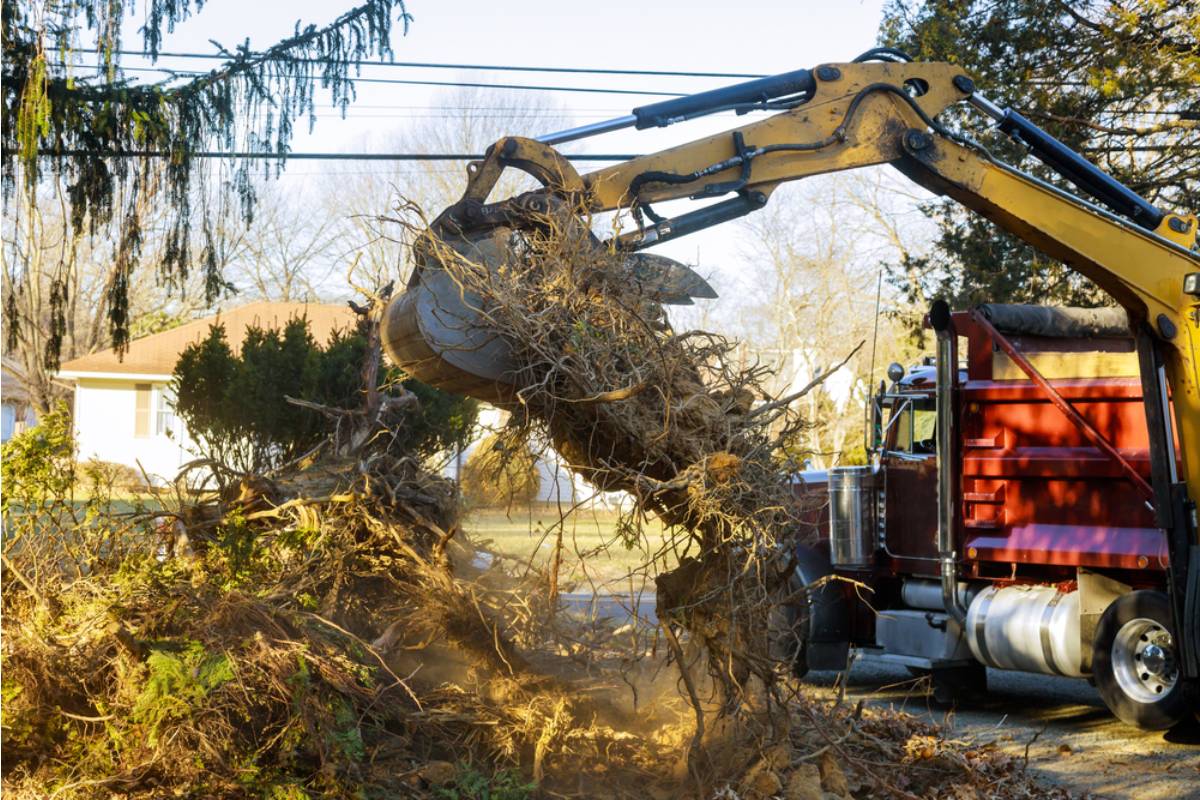
Homeowner Says Road Construction Tore Through His Tree Roots, Then The City Told Him To Call Them About The Dying Tree
A person shared a frustrating gardening problem after a major road construction project damaged an established tree on his property. The city was installing new underground utilities to connect nearby homes, and the construction work reportedly tore through a large portion of the tree’s roots. Not long afterward, the tree began showing signs that it might not survive.
The situation became even more frustrating because the homeowner was already paying a substantial amount toward the project. Each residence was expected to contribute around $25,000, yet the construction had seemingly damaged a mature tree that had been growing there for years. When the homeowner asked the general contractors about the damage, they directed him to contact the city instead, leaving him wondering whether the tree’s value would be acknowledged at all.
The Road Project Started With Underground Utilities
The construction wasn’t simply a routine road resurfacing project. The city was installing underground utilities intended to connect individual houses, meaning workers needed to dig through areas around the existing road and nearby properties. For the homeowner, the project quickly became a much bigger issue when the excavation reached the roots of his established tree.
The roots were reportedly damaged badly enough that the tree began showing signs of decline. Although the tree was still standing, the homeowner believed the damage had already put its survival in serious doubt. That created an awkward situation because the visible damage had occurred during a public construction project rather than through anything the homeowner had done.
The Tree Had Been Growing There for Years
The tree wasn’t some recently purchased plant that could easily be replaced with another one from a garden center. It was an older, established tree that had already become part of the property’s landscape. Losing it would mean more than simply making another trip to a nursery and putting a sapling in the ground.
Established trees also provide shade, privacy, and character that young replacements can’t immediately reproduce. A newly planted tree might eventually grow into something similar, but the homeowner would have to wait years for that result. That was one reason several people suggested determining the tree’s value before accepting a simple replacement.
Construction Workers Had Already Done the Damage
The homeowner explained that he had spoken with the general contractors after noticing what had happened. Rather than offering a solution themselves, they reportedly told him to contact the city.
That response left the homeowner with more questions than answers. If the contractors were working on a city project, it wasn’t immediately clear who was responsible for the tree damage. The homeowner wanted to know whether the city would simply pay for removal or whether he could receive compensation for losing the tree.
The Tree Was Already Showing Signs of Dying
The most worrying part of the situation was that the tree wasn’t merely missing a few roots. According to the homeowner, the damage was severe enough that the tree had already begun showing signs of dying.
A response from a person bluntly agreed that the tree appeared to be finished. While that kind of prediction isn’t necessarily an official arborist assessment, the comment reflected what the homeowner was seeing firsthand. Once substantial roots have been removed from an established tree, the consequences can become visible gradually rather than immediately.
The Homeowner Wanted to Know What He Was Owed
The central question was simple: if the city paid to remove the damaged tree, would the homeowner also receive compensation for the tree itself? Paying for removal would solve the immediate safety problem, but it wouldn’t replace what had been lost.
The homeowner wasn’t just asking about cleanup costs. He wanted to know whether the city had some obligation to compensate him for killing an established tree during construction. That distinction became important because several responses suggested that the city might agree to remove the tree without necessarily paying for its value.
Some People Said the City Might Not Owe Anything
Several responses took a pessimistic view of the situation. One person said the city probably wouldn’t have to provide compensation, while another suggested the most the homeowner might receive would be a new, smaller tree if he asked nicely.
That possibility was particularly frustrating because a small replacement tree wouldn’t immediately restore what had been lost. An established tree and a newly planted sapling can technically occupy the same spot, but they aren’t equivalent from a landscaping perspective. The homeowner therefore had good reason to investigate the situation before agreeing to anything.
Then Someone Noticed the Easement
A response from a person spotted something potentially important in the construction setup. The area appeared to have been taped off in a way that might indicate a utility easement, which could significantly affect the homeowner’s rights.
If the work occurred inside an existing utility easement, the city or utility company might have broader rights to access and excavate the area. The fact that the homeowner technically owned the land wouldn’t necessarily mean he could prevent utility work there. However, whether an easement actually existed was something that needed to be confirmed rather than assumed.
The Property Line Wasn’t Necessarily the Whole Story
The homeowner appeared to understand that construction workers could have legitimate access to certain parts of the property. The problem was determining exactly where those rights applied and whether the damaged section of the property was actually part of the utility easement.
A response from a person recommended checking the property records before making accusations or demanding compensation. If the excavation happened outside an easement or approved construction area, the situation could look very different. If it happened inside one, the homeowner’s options might be more limited.
The Homeowner Said This Section Wasn’t Even For The Utility Tie-In
Then the homeowner added an important detail. He explained that the particular section where the roots were damaged wasn’t actually needed for the utility connection to his house.
According to him, that portion of the excavation was being done as part of demolishing the old road. That distinction made the situation more complicated because the homeowner wasn’t simply complaining about workers accessing the exact area required to connect his property.
The Cost of the Project Made It Hurt Even More
The homeowner also revealed that each residence was expected to pay approximately $25,000 toward the overall project. That meant the damaged tree felt like a particularly unpleasant second bill.
From his perspective, residents were already paying a significant amount for the infrastructure work. Now one of those residents might also lose an established tree because of the same project. The homeowner described the situation as a “double whammy,” which neatly captured why the damage bothered him so much.
He Questioned Why More Care Wasn’t Taken
The homeowner wondered why the workers couldn’t use a less destructive excavation method around the tree. In particular, he questioned why they hadn’t used hydro excavation in the area where the roots were located.
Hydro excavation can be used for certain utility work to expose underground infrastructure with less mechanical digging, although whether it would have been appropriate or practical for this particular project would depend on the circumstances. The homeowner’s frustration was less about the technical details and more about the feeling that the tree might have been saved if greater care had been taken.
Someone Reminded Him That the City Had a Much Bigger Job
One response pushed back on the idea that the city should have treated one tree as the central priority. The person pointed out that the project involved an entire city rather than a single property.
The homeowner responded that the project only involved around 230 people. That exchange highlighted the disconnect between the two sides: the construction team likely saw the work as one part of a large infrastructure project, while the homeowner saw one specific tree that might soon disappear from his yard.
An Arborist Could Change the Conversation
One of the more practical suggestions was to have a qualified arborist evaluate the tree before agreeing to its removal. An arborist could potentially determine how severe the root damage was, whether the tree had a realistic chance of recovery, and what might need to happen next.
That assessment could also provide useful documentation. If the city later argued that the tree was already unhealthy or that construction hadn’t caused the damage, an independent professional’s report could help establish the condition of the tree and the likely cause of its decline.
The Homeowner Was Told To Gather Documentation
Another response suggested obtaining documentation from the city concerning the contractor, construction plans, and the relevant work area. This could help establish exactly what the workers were authorized to do.
Photographs would also be important. Pictures showing the tree before construction, the excavation around its roots, and its condition afterward could create a timeline that would be much more persuasive than a verbal complaint. The more clearly the homeowner could connect the construction activity to the tree’s decline, the stronger his position would potentially become.
The Value of an Old Tree Can Be Complicated
One major issue was that the tree’s value couldn’t necessarily be determined simply by looking at what a replacement sapling costs at a garden center. Established landscape trees can have value based on their size, species, location, condition, and contribution to the property.
That meant the homeowner shouldn’t necessarily assume that the tree was worth only the price of a small replacement. At the same time, he also shouldn’t assume that the city would automatically owe him the full cost of replacing a mature tree. Getting an independent valuation could help establish a more realistic figure.
Some People Thought a New Tree Might Be the Best Outcome
Not everyone believed the homeowner should expect a large payout. One response suggested that the city might be willing to plant a replacement tree if approached reasonably.
That wouldn’t completely solve the problem, but it could at least restore some greenery to the property. The bigger question would be whether the city would agree to plant an appropriate species and size rather than simply dropping a tiny sapling into the empty space.
The Timing Made The Damage Suspicious
The homeowner had a fairly clear sequence of events in mind. Construction began, the tree’s roots were heavily disturbed, and afterward the tree started showing signs of decline.
That timing doesn’t automatically establish legal responsibility, but it was certainly enough to justify investigating the cause. The homeowner wasn’t describing a tree that had been gradually dying for years and suddenly happened to be near construction. He was describing an established tree that appeared to deteriorate following significant root damage.
The Biggest Question Was Who Was Responsible
The general contractors had already directed the homeowner toward the city, leaving him caught between the people doing the work and the government entity behind the project. That made it especially important to identify who had hired the contractors and what agreements governed the construction.
A response from a person suggested checking the easement and project documents before confronting anyone further. If the contractor had followed the city’s approved plans, the city might be the appropriate party to address. If the contractor had gone beyond the authorized work area, however, the situation could potentially become a different kind of dispute.
The Homeowner Was Looking For Advice Before Calling City Officials
Rather than immediately filing a complaint, the homeowner wanted to know what he should actually say to the city council. That was a smart concern because a vague complaint about “killing my tree” might not get nearly as much attention as a documented claim describing the construction activity, root damage, arborist findings, and requested remedy.
A response from a person suggested approaching the matter with documentation rather than emotion. The homeowner could ask for the relevant easement information, construction plans, contractor details, and the city’s position on tree damage caused by the project. That would turn a frustrating gardening complaint into a specific request for information and accountability.
The Tree May Become The Most Expensive Part Of The Project
For now, the homeowner still had to determine whether the tree was truly beyond saving. If it could recover, careful monitoring and professional treatment might prevent the situation from becoming a total loss. If it couldn’t, the homeowner would need to deal with removal and replacement while figuring out who should pay.
The irony wasn’t lost on the people responding. A massive underground utility project designed to improve homes and infrastructure had potentially sacrificed an established piece of landscaping in the process. For the homeowner, the issue wasn’t simply that a construction crew dug near his garden. It was that after paying thousands toward the project, he might now have to watch one of his oldest trees disappear because of it.
A Gardening Problem Turned Into A City Hall Problem
What began as construction outside a house eventually became a question about property rights, utility easements, tree valuation, contractor responsibility, and government accountability. The homeowner wasn’t sure whether he was entitled to compensation, but he clearly didn’t want to accept the loss without first finding out what his options were.
The strongest advice centered on slowing down and gathering information before agreeing to removal or replacement. Checking easements, requesting project documents, photographing the damage, and getting an independent arborist’s assessment could give the homeowner a much clearer picture of what happened. And if the tree really was killed by the project, the homeowner would at least walk into the conversation with the city holding something more persuasive than frustration: evidence.
Read The Full Story Here