Homeowner Says Years of Neighbor Harassment Took a Dark Turn After Their Garden Suddenly Died Along the Fence
She had spent years trying to keep the peace with neighbors who seemed determined to make living next door miserable. But after trash, fireworks, late-night noise, threats, and screaming matches, she noticed something that made the situation feel much more serious: nearly everything growing along their shared fence had suddenly died.
What happened next forced her to stop treating the situation like an ordinary neighborhood feud. With her garden damaged, local authorities offering little help, and the possibility of contamination hanging over her property, she began considering a completely different strategy.
The Problems Started Almost As Soon As They Moved In
A person shared her story about moving into a home with her husband and quickly discovering that the neighbors were going to be a problem. At first, the incidents seemed irritating but manageable, with trash appearing in their yard, fireworks being set off during the early morning hours, and drums being played late into the night.
They had an infant at the time, so the constant noise was especially frustrating, but they tried not to make a major issue out of it. The neighbors were considerably older, and the couple hoped that being patient would prevent the relationship from becoming hostile.
Their Attempts to Keep the Peace Seemed to Backfire
Instead of calming down, the neighbors appeared to become bolder. The homeowner said they had accused the couple of mistreating their animals while they were simply maintaining their own yard, and the situation eventually included shouting and deeply personal insults.
Things became particularly uncomfortable when the woman next door allegedly called the homeowner a whore in front of her child. What had started as annoying behavior was beginning to feel like an ongoing campaign to make the family uncomfortable in their own home.
Then the Fence Became the Center of the Argument
About a month before the garden disaster, the neighbor approached the homeowner while she was working near the property line. Rather than having a friendly conversation, the woman allegedly insulted her husband and complained about vegetation growing near the fence.
Her main target appeared to be a magnolia tree that had been on the property since the homeowner moved in. A few small branches were reaching toward the neighbor’s side, and the homeowner agreed to do her best to keep the vegetation under control.
She Thought the Conversation Was the End of It
The homeowner apparently believed that agreeing to maintain the fence line would at least remove one source of conflict. She had no intention of using chemicals or doing anything drastic to control the plants, and she simply wanted to continue caring for her property.
Unfortunately, that conversation seemed to be less of a resolution and more like a warning of what was coming. The next discovery would make her wonder whether the argument over the plants had been about something much bigger.
Plants From the Backyard Suddenly Appeared Up Front
The first strange clue appeared when the homeowner was working in her front garden. She noticed several plants that appeared to have been pulled from the backyard and tossed into the front garden.
She cleaned up the mess without confronting anyone. At the time, it was annoying, but compared with everything else that had happened, she didn’t realize it might be connected to something far more serious.
Then She Walked Into the Backyard
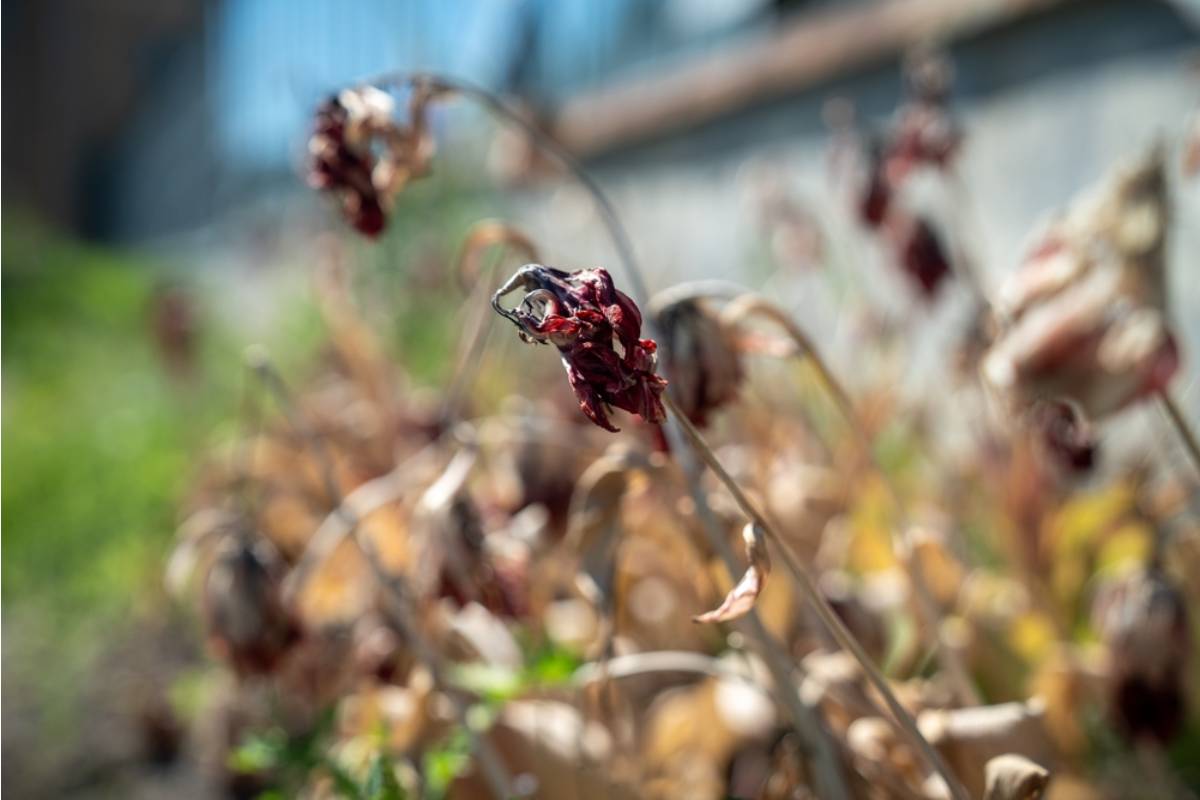
The following day, she went into the backyard to do some weeding and immediately noticed something was wrong. Everything within roughly two feet of the fence had turned crispy and brown, while plants farther away were still thriving.
The contrast was difficult to ignore. The rest of the yard was green, the neighboring property appeared healthy, yet a suspiciously precise strip along the fence looked as though something had deliberately killed it.
It Wasn’t Just One Little Patch
This wasn’t a single dead shrub that could be blamed on heat or bad luck. The homeowner said most of her vegetable garden, numerous shrubs, native plants, and large sections of grass had been damaged.
That made the situation much harder to dismiss. She also remembered previous occasions when she had documented water from the neighbors’ swimming pool being emptied toward the fence and into her yard, giving her another reason to wonder what had happened.
The Weather Made Everything Even More Complicated
There was one obvious problem with proving what had happened: the weather. Temperatures had been above 95 degrees, and recent rain had made the ground wet, meaning some of the damage could potentially have been caused or worsened by environmental conditions.
The homeowner also explained that she couldn’t simply spend hours doing heavy yard work in extreme heat. Hiring someone to maintain the fence line wasn’t financially realistic either, leaving her caught between an aggressive neighbor and conditions that made the accusations harder to prove.
Talking Things Out Was No Longer an Option
Under normal circumstances, the obvious advice would have been to knock on the neighbor’s door and ask what happened. But this family had already tried reasonable conversations, and the homeowner said those discussions had sometimes resulted in threats.
She also said her husband couldn’t safely approach the fence because the neighbor would begin screaming whenever she saw him nearby. At that point, another friendly conversation didn’t sound like conflict resolution. It sounded like another opportunity for the situation to explode.
The Police Sent Her Somewhere Else
The homeowner eventually contacted the police, hoping the damage and alleged pool discharge would finally receive official attention. Instead, she was told that the pool-water issue was a code-enforcement matter.
A code-enforcement employee became involved, but the homeowner said she was left waiting for an email that never seemed to arrive. Because she lived in a small town, she also worried that local connections might make it difficult to get anyone to take the complaint seriously.
Then the Evidence Strategy Changed Everything
A response from a person suggested that the homeowner stop trying to win the argument verbally and start building evidence instead. The recommendation was surprisingly practical: collect soil samples from the damaged area, protect the ground from further contamination, and keep samples from healthier parts of the yard for comparison.
Another suggestion was to collect samples from the dead plants and weeds as well. Suddenly, the dead garden wasn’t merely something to be angry about. It could potentially become physical evidence showing exactly what had happened.
Cameras Became the Next Piece of the Puzzle
Several people also urged the homeowner to install cameras around the property, especially near the fence line. The goal wasn’t to catch the neighbors in an embarrassing moment but to document exactly what was happening whenever nobody was watching.
A response from a person pointed out that inexpensive cameras or trail cameras could provide useful evidence without requiring an elaborate security system. The homeowner admitted that she had previously avoided cameras because she was concerned about accidentally recording too much of the neighbors’ property, but the new damage made documentation feel far more important.
One Person Suggested Taking the Case Beyond the Town
Another response from a person told her not to assume that the local authorities were the only option. If complaints continued going nowhere, the homeowner could research county or state agencies that handle water discharge, environmental issues, or property damage.
That suggestion gave the situation another possible direction. Instead of repeatedly knocking on the same local doors, she could potentially move the complaint to an agency with jurisdiction beyond her immediate neighborhood.
The Lawyer Problem Wasn’t Easy to Solve
There was another major obstacle: money. The homeowner explained that she maintained a vegetable garden partly to help with grocery costs because she didn’t receive regular income during the summer, so hiring an expensive attorney wasn’t exactly an easy decision.
A response from a person offered an alternative by pointing toward legal-aid clinics associated with law schools. Another person suggested researching small-claims options, where the homeowner might be able to seek compensation for individual losses without paying for a full-scale lawsuit.
Even the Funniest Suggestion Gave Her a Moment of Relief
Amid all the serious advice, someone offered a deliberately ridiculous suggestion involving digging several human-sized holes in the homeowner’s yard. It obviously wasn’t a serious legal strategy, but the homeowner admitted that the absurd idea made her laugh for the first time that afternoon.
That small moment said a lot about how exhausting the situation had become. After years of dealing with trash, fireworks, screaming, accusations, threats, and now a dying garden, even a completely impractical joke was enough to provide a little relief.
She Finally Had a Reason to Stop Playing Defense
By the end of the discussion, the homeowner seemed to be moving away from the idea of simply enduring the neighbors. Cameras, photographs, labeled samples, records of incidents, official complaints, and professional advice could give her something she had been missing for years: a documented timeline.
The biggest twist was that the dead garden might have forced the family to approach the feud differently. Instead of another shouting match at the fence, the next chapter could be decided by evidence, records, and people outside the immediate neighborhood.
The Fence Was No Longer Just a Boundary
For years, the fence had represented the uncomfortable line between two families who clearly couldn’t get along. Now it had become the dividing line between healthy plants and a suspicious strip of dead vegetation, making the homeowner look at the property boundary differently.
She still didn’t know exactly what had caused the damage, and proving who was responsible would be another challenge entirely. But after everything that had happened, she finally had a reason to stop relying on promises and start documenting every detail.
The Next Move Could Change the Entire Neighborhood Feud
The homeowner wasn’t looking for revenge, even though some of the responses offered plenty of colorful ideas. What she needed was a way to protect her property and establish what was actually happening without putting herself or her family in another dangerous confrontation.
For now, the strategy was simple: preserve evidence, document future incidents, learn the applicable rules, and seek qualified help if necessary. After years of trying to keep the peace, the family seemed ready to let the evidence do the talking.