Homeowner Wondered When Garden Waste Stops Being His Property, Then a Simple Question About a Fallen Branch Opened a Much Bigger Legal Mystery
A person shared his story after becoming curious about a surprisingly complicated part of everyday life: what actually happens to something once its owner throws it away. He wasn’t dealing with a stolen lawn mower or a disputed piece of land, but the question quickly wandered into trash cans, recycling bins, toilets, landfills, and even garden clippings. What sounded like a simple question about garbage soon became a strange examination of where ownership ends and waste begins.
His curiosity eventually turned toward the garden, where things get even less clear. A branch falls from a tree, grass gets cut, soil gets moved, and old plants are pulled from the ground, yet none of those things feel quite like ordinary household trash. He wondered whether someone could simply take those materials and whether doing so could somehow become theft.
Throwing Something Away Changes the Situation
The first mystery involved an object that was once unquestionably private property. A person owns an item, places it in the trash, and then realizes five minutes later that the item was thrown away by mistake. The obvious emotional reaction is to dig through the garbage and retrieve it, but the legal question is whether the person still owns it at that point.
Ownership and possession aren’t always the same thing, which is where the situation becomes complicated. Throwing something away can be evidence that the owner intentionally abandoned it, but the exact circumstances can matter. A mistaken disposal, a bag waiting for collection, and material already accepted by a waste facility can all create very different situations.
The Garbage Can Creates a Strange Border
A household trash bin seems like a simple container, but it can represent a temporary stage between private possession and commercial waste collection. Once a homeowner puts a bag beside the street, other people may have limited rights to interfere with it even if the original contents once belonged to the homeowner. Local rules, collection arrangements, and the circumstances surrounding the disposal can all matter.
That distinction makes the classic accidental-trash scenario more complicated than it first appears. If someone notices an expensive item sitting inside their own garbage bin before collection, retrieving it is one thing, while someone else taking it may raise entirely different questions. A response from a person pointed out that waste facilities can acquire rights over material once it enters their system, particularly when commercial processing or franchise arrangements are involved.
Landfills Make the Ownership Question Stranger
The situation becomes even more unusual after garbage reaches a landfill. By then, the original owner generally isn’t treating the discarded item as something they still possess, and the facility may have contractual or legal authority over the incoming waste. A person cannot simply walk onto a landfill and start searching through piles because they suddenly remember throwing away something valuable.
One response from a person focused on this exact point. The response explained that recycling plants and solid-waste landfills can acquire legal title or other legally recognized rights to incoming materials through their commercial or franchise arrangements. It also pointed out that someone trying to retrieve discarded property from a commercial facility without permission could potentially run into trespass and theft issues.
Recycling Adds Another Layer
Recycling makes the question particularly interesting because the discarded object may not remain recognizable for very long. A plastic bottle might be sorted, crushed, transported, processed, and eventually turned into something entirely different. By the time the original owner regrets throwing it away, the physical object could already be part of a much larger industrial process.
That doesn’t necessarily mean ownership changes through one universal rule at one precise second. Recycling systems operate through contracts, municipal regulations, facility policies, and property laws that can vary depending on the circumstances. The important distinction is that throwing something into a recycling stream doesn’t create a magical legal vacuum where nobody has rights to it.
What Happens to Something Flushed Away?
The original question then took an unexpected turn toward toilets and plumbing. A person wondered whether flushing an object down a toilet meant ownership continued while the object traveled through pipes, or whether it became abandoned waste almost immediately. The image of a wedding ring disappearing down a drain made the question much easier to understand.
In that situation, intention becomes especially important. Someone who accidentally flushes a valuable item hasn’t necessarily decided that they want to abandon it forever, which makes the situation different from deliberately throwing an unwanted object into the garbage. Recovering something from private plumbing may therefore be a very different matter from trying to retrieve something after it has entered a public or commercial waste system.
A Wedding Ring Can Turn Trash Into Property Again
The wedding-ring example revealed just how quickly an ordinary plumbing problem can become a property dispute. If someone loses a ring down a sink, the owner obviously still wants it back, and nobody would naturally describe the ring as ordinary garbage simply because it entered a pipe. The difficulty begins if another person finds it before the owner can recover it.
Finding something doesn’t automatically make the finder its owner. Depending on where the item was discovered and the applicable law, the finder may have obligations rather than an automatic right to keep it. A response from a person emphasized that property law can distinguish between abandoned property and lost property, which is an important difference in situations involving accidentally discarded valuables.
The Garden Makes Everything Messier
Yard waste creates an entirely different kind of puzzle because nature itself is constantly moving things around. Leaves blow across property lines, branches fall into neighboring yards, and grass clippings can scatter down the street after mowing. A homeowner might consider those materials part of the normal cycle of maintaining the property, while someone else could see them as something freely available.
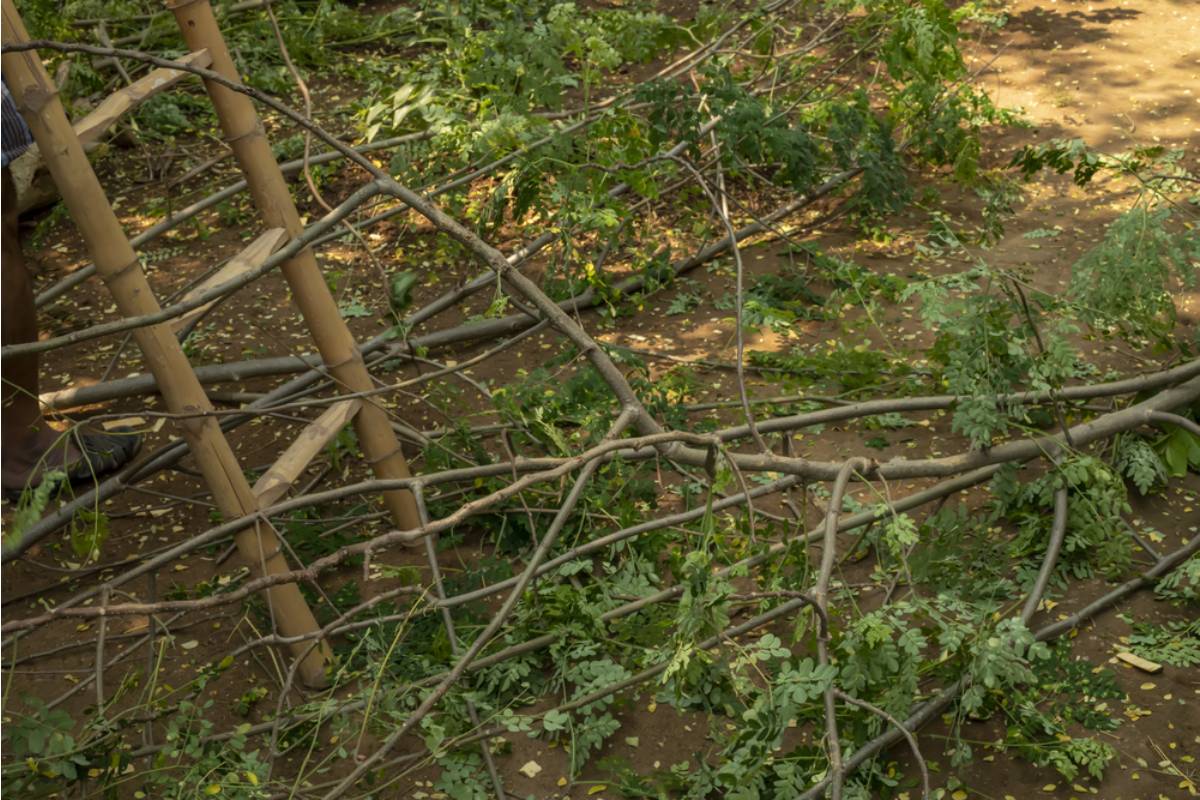
The question becomes especially amusing with something as ordinary as a fallen branch. If a large branch breaks from a homeowner’s tree and lands on the ground, that doesn’t necessarily mean another person can simply carry it away because it looks abandoned. Whether it remains the homeowner’s property can depend on circumstances, but the fact that something is lying on the ground isn’t by itself a universal declaration that anyone can take it.
Can Someone Really Steal a Pile of Dirt?
The question about dirt sounds almost ridiculous until landscaping enters the picture. A homeowner may spend thousands of dollars having soil brought in, graded, amended, and carefully prepared for a garden. If somebody later arrives with a shovel and starts removing that soil, it becomes much harder to argue that the material is merely worthless dirt.
The same principle can apply to other landscaping materials. Decorative stone, mulch, compost, topsoil, and gravel can have obvious economic value even though they are found naturally somewhere else. A person shared his story wondering whether such materials could be stolen, and the garden examples demonstrated why the answer can’t simply be based on whether something looks like waste.
Grass Clippings Occupy Their Own Strange Category
Freshly cut grass creates an even more amusing problem because homeowners regularly scatter it without thinking about ownership. A lawn mower chops the grass into tiny pieces, and some of those pieces end up on sidewalks, driveways, roads, or neighboring property. Treating every individual blade as personal property would obviously be impractical.
That doesn’t mean every pile of grass is automatically classified as litter or abandoned property. Context matters, including whether the material was deliberately placed somewhere, accidentally blown elsewhere, or left as part of ordinary lawn maintenance. The practical rules governing yard debris can also be completely different from the rules governing valuable objects.
Garden Plants Are Different From Garden Waste
A living plant can make the property question much clearer because it has obvious value and may still be actively maintained. A homeowner who spends years cultivating a rose bush, fruit tree, or ornamental shrub is unlikely to regard it as disposable simply because it is growing outside. Someone digging up that plant and carrying it away would therefore be doing something very different from picking up a loose leaf.
This is where the garden itself becomes part of the story. Plants can be intentionally removed, transplanted, sold, gifted, or destroyed, but none of those things automatically happens just because another person wants the plant. A response from a person noted that garden plants can indeed be stolen, showing how quickly the supposedly simple distinction between waste and property disappears.
Excavation Creates an Unexpected Ownership Problem
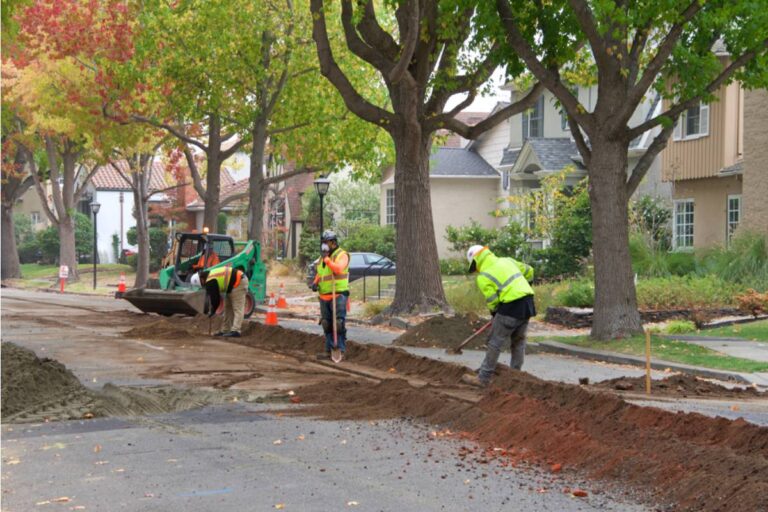
The construction example pushed the question even further. Suppose a contractor excavates part of a homeowner’s yard to install a utility line, foundation, drainage system, or other structure, and the soil and rocks must be removed. The homeowner might wonder whether the contractor becomes the owner of everything that comes out of the ground.
The answer can depend heavily on the agreement between the parties and what exactly is being removed. Construction contracts often specify who is responsible for excavated material, where it goes, and whether disposal is included in the project. Simply touching or moving material doesn’t necessarily transfer ownership, but a contract or disposal arrangement can establish what happens next.
Property Damage Complicates the Garden Story
The original question noticed an important contradiction. If somebody damages a yard, the law can recognize the damage as harm to someone’s property, so it seems strange to suggest that everything sitting in that same yard is worthless or ownerless. A destroyed flower bed, damaged tree, or excavated lawn can have genuine financial consequences.
That distinction is useful because property law isn’t based solely on whether an object has a market price sitting on a shelf. Land, plants, landscaping materials, and improvements can all have value even when they aren’t easily sold individually. The garden therefore becomes a perfect example of how physical objects and legal rights can overlap without being identical.
The Real Turning Point Was Abandonment
Eventually, the central issue became clearer: the story wasn’t really about garbage at all. It was about abandonment and whether a person’s actions demonstrate an intention to give up ownership. Throwing an unwanted object into a trash can can be strong evidence of abandonment, while accidentally losing an item usually tells a very different story.
That distinction also explains why the location of the object matters so much. Something sitting inside a homeowner’s garage, something placed in a curbside trash bin, something collected by a waste company, and something buried at a landfill aren’t necessarily treated the same way. Each stage can involve different rules, agreements, and legal relationships.
The Final Twist Was That “Waste” Isn’t a Magic Legal Category
The biggest surprise was that there isn’t one universal moment when every discarded object instantly transforms from property into nobody’s property. Instead, different circumstances can affect whether something was abandoned, lost, transferred, entrusted to a waste collector, or processed under a particular municipal or commercial system. What looks like worthless garbage to one person can still carry legal rights or economic value for another.
That realization brought the garden back into the center of the mystery. A leaf blowing away is not necessarily comparable to a deliberately removed rose bush, just as a forgotten ring in a sink isn’t automatically comparable to a broken plastic container placed in a recycling bin. The strange little question about waste ultimately revealed something much bigger: throwing something away may change your rights, but exactly how and when that happens depends on what you discarded, where it went, what you intended, and what rules govern that particular waste stream.
A Response From a Person Added the Missing Piece
A response from a person offered the most practical warning of the entire discussion. They explained that once materials reach a commercial landfill or recycling facility, attempting to retrieve them without permission can create legal problems because the facility may have acquired legal rights to those materials. In other words, the person who originally owned the object can’t necessarily follow it through the entire waste system and reclaim it whenever they change their mind.
That response gave the original question its final twist. The journey from private property to waste isn’t simply a straight line from “mine” to “nobody’s,” but a series of stages involving possession, abandonment, collection, contracts, regulations, and processing. And somewhere between the forgotten wedding ring, the pile of excavated soil, and the branch lying beside a garden fence, an ordinary question about trash turned into a surprisingly deep lesson about what ownership really means.