Homeowners Built Two Fences Around a Failing Tree, Then Discovered Neither Side Wanted to Claim What Was Growing Between Them
A large, aging tree had somehow become the neighborhood’s most unwanted resident. It stood directly along the property line between two small lots, with one fence on either side leaving the trunk stranded in a narrow strip of land that nobody seemed willing to claim.
A person shared his story after noticing the tree had started dropping branches into both yards and wondering what would happen when the inevitable finally arrived. The strange part was that both homeowners appeared perfectly happy to let the problem grow between them.
The Tree Was Stuck in the Middle
The tree was not standing in an ordinary backyard where someone could simply walk outside with a saw and call a gardener. Its trunk sat so close to the boundary that a survey line reportedly appeared to run straight through its center. That meant the tree seemed to belong to both properties, at least according to the description of the lot lines. Yet neither neighbor wanted to take responsibility for it.
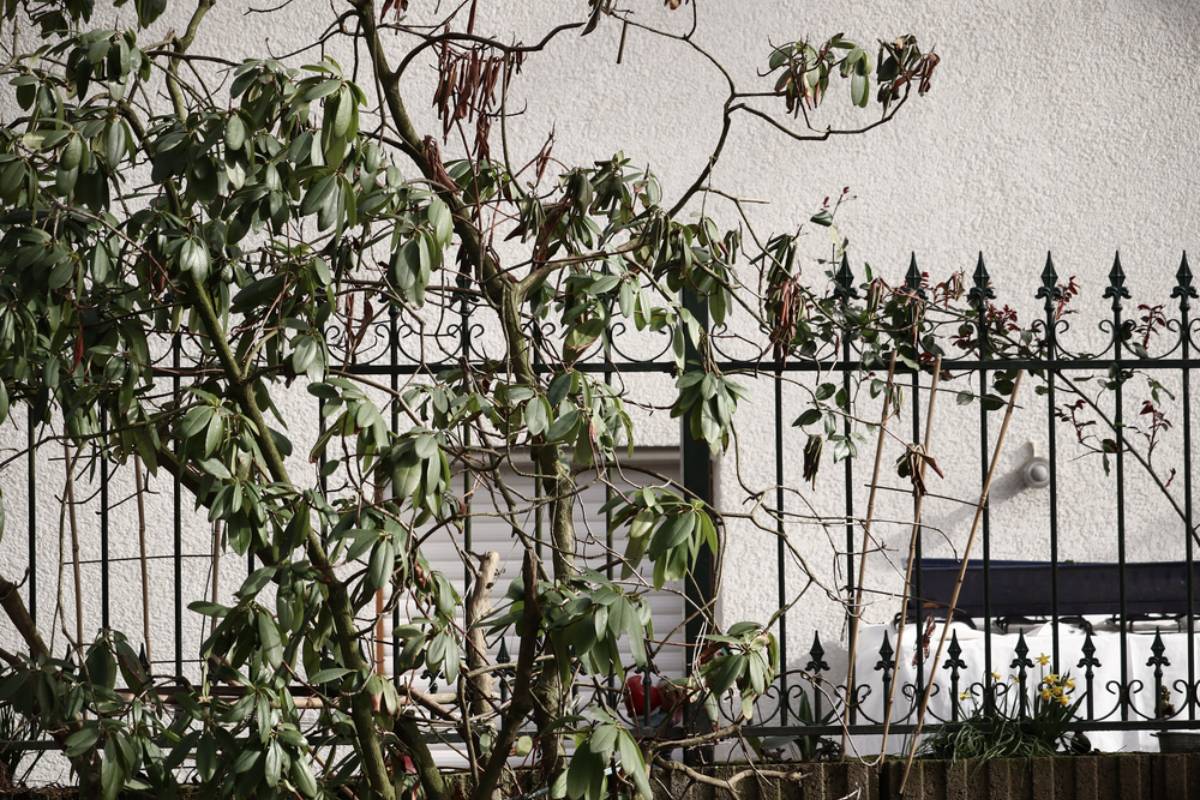
The situation had become even stranger because the homeowners had built two separate fences facing each other. Instead of surrounding the tree, the fences left it sitting in a little strip of no-man’s land between them. From a distance, it probably looked less like a carefully planned garden boundary and more like everyone had quietly agreed to pretend the tree did not exist.
Both Neighbors Wanted Nothing to Do With It
The neighbors’ position was surprisingly simple: it was not their tree, and therefore it was not their problem. That might have been easier to argue if the tree were healthy, young, and peacefully growing leaves every spring. Instead, it was old, reportedly unhealthy, and already dropping limbs into both yards.
The person who shared the story expected the neighbors to ignore the situation until the tree eventually became impossible to ignore. That could mean another fallen branch, a damaged fence, or something much larger coming down during a storm. The tree had become a slow-moving problem that was getting closer to someone’s roof with every passing season.
A Survey Suddenly Changed the Story
The mystery became more interesting when the storyteller mentioned having a paid survey done on their own property. According to the survey, the line separating the neighboring lots would continue straight between the properties and pass directly through the tree’s base. That detail suggested the tree was not merely near the boundary but potentially sitting across it.
A response from a person explained that boundary-line trees can raise a completely different set of ownership questions. Another response pointed out that a tree’s exact condition matters too, because dropping branches alone does not automatically prove that an old tree is dying or dangerous. Suddenly, what looked like a gardening nuisance had turned into a property-line puzzle.
Old Does Not Always Mean Dying
One response came from a person who said they were a lawyer rather than an arborist and challenged the assumption that the tree was necessarily sick. Trees can shed branches for ordinary reasons, and age alone does not establish that a tree is approaching the end of its life. Some species can survive for remarkably long periods, making the tree’s appearance only part of the story.
That observation added an important twist. Everyone looking at the tree may have seen an old, battered trunk and assumed disaster was coming, while an expert inspection could potentially tell a very different story. Without knowing the species, structural condition, decay, and other factors, the neighbors were essentially making decisions about a tree they had not properly diagnosed.
The Falling Branches Were Already Getting Attention
Even without a formal diagnosis, the tree had started leaving evidence of its problems behind. Limbs were falling into both neighboring yards, which meant neither homeowner could honestly say the tree had no effect on their property. Every fallen branch was another reminder that the awkward arrangement was becoming harder to ignore.
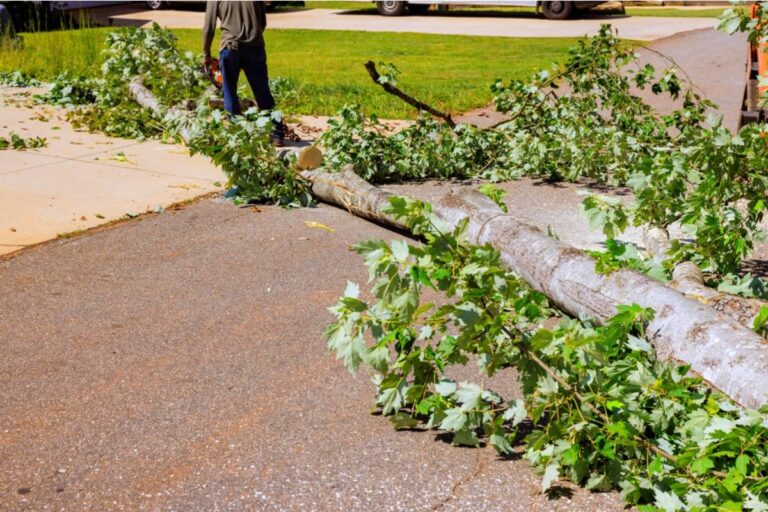
That raised an even bigger question about what happens when part of a tree lands on one property while the trunk sits partly on another. A response from a person suggested that once the tree falls, ownership of the trunk becomes less important than where the debris and damage end up. In other words, the tree could cross the property line without moving an inch.
What Happens When a Tree Finally Falls
The storyteller was especially curious about a future scenario where the tree came down and damaged a house. One response explained that, depending on the circumstances and local law, responsibility can change when a tree has been identified as a hazard and the owners have been warned. That made the difference between an ordinary fallen tree and a known danger especially important.
The discussion also made it clear that tree disputes can become complicated very quickly. One person suggested that property owners might end up dealing with the portion of the tree that lands on their side, including removal and damage there. Suddenly, the little strip between two fences looked like the place where a very large bill could eventually arrive.
An Arborist Could Be the Person Everyone Needs
The most practical idea in the discussion involved calling a credentialed or licensed arborist. Rather than relying on appearances, an arborist could evaluate the tree and determine whether it actually presents a meaningful hazard. That kind of professional assessment could turn vague neighborhood anxiety into something documented and specific.
The catch was obvious: someone has to make the call and pay for the inspection. Neither neighbor seemed eager to volunteer, especially when doing so might create a new responsibility. The tree had already survived this long by being ignored, so there was little reason to expect the homeowners to suddenly become enthusiastic about paperwork and maintenance.
Then Came the Question About Splitting the Cost
The storyteller asked what might happen if one neighbor hired an arborist and the tree was declared hazardous. Could that neighbor force the other homeowner to split the removal cost? It was the kind of question that sounds simple until you start considering ownership, boundary lines, local laws, and what each homeowner knew about the tree.
A response from a person suggested that refusing to deal with a known hazard could create larger problems later, particularly if the tree caused damage after the danger had been documented. Another person suggested that disputes over removal expenses could eventually involve court proceedings or other legal remedies. The conversation never produced one universal answer because tree laws can vary significantly from one jurisdiction to another.
Removing the Tree Without Agreement Could Create Its Own Problem
One of the most interesting warnings came from a response pointing out that one homeowner should be careful about simply taking the tree down without getting the other side involved. Even when a tree looks dangerous, a boundary-line tree can raise questions about who has authority to make decisions about it. Cutting first and sorting out ownership later could create a completely different dispute.
That is how the tree managed to become a neighborhood headache in two directions at once. Leave it alone, and someone could eventually face falling branches or structural damage. Remove it without agreement, and the act of solving the problem could become the new problem.
The Fences Made the Mystery Even Stranger
The two fences were perhaps the most memorable part of the entire story. Each neighbor had effectively built a barrier on their side while leaving the tree untouched between them. It created a tiny accidental garden zone where the tree stood like an unwanted centerpiece.
A response from a person even jokingly suggested that maintaining the tree might somehow strengthen a claim to the strip of land around it. That comment was met with a sigh, which may have been the most reasonable reaction in the entire conversation. What began as a question about gardening had somehow wandered into the territory of fences, surveys, and property rights.
Could Home Insurance Force Everyone to Act?
The storyteller then raised another possibility that made the situation even more complicated. What if a homeowner’s insurance company decided the tree was too risky and demanded that something be done? That would create an awkward scenario where one neighbor might suddenly have a strong reason to act while the other still preferred to leave the tree exactly where it was.
The idea also showed why insurance could become an important part of a property dispute involving a dangerous tree. One person suggested that homeowners facing such a situation might want to discuss the risk with their insurer or seek legal advice. Even before anything fell, the tree could already be affecting how the owners viewed their homes and their responsibilities.
The Neighbors Were Waiting for a Problem That Had Not Happened Yet
The strangest part of the story was that the tree was still standing. Nothing catastrophic had happened, no roof had been crushed, and nobody had yet been forced to drag a massive trunk out of a flower bed. Yet everyone could already see the possibility of trouble ahead.
That is often how garden problems begin. A cracked branch becomes a fallen branch, a neglected shrub becomes an overgrown hedge, and a tree that nobody wants to claim becomes a looming hazard above two homes. The longer everyone waits, the more dramatic the eventual cleanup can become.
A Professional Opinion Could Change Everything
If an arborist determined that the tree was healthy enough to remain standing, the neighbors might suddenly have far less reason to panic. If the inspection found serious structural problems, the conversation could shift toward removal and safety. Either way, professional information could give both homeowners something more useful than guesses from across the fence.
That is what made the situation so fascinating. The tree itself was not the only mystery, because nobody seemed certain whether it was healthy, who was responsible for it, or what should happen next. One inspection might answer the first question, but the others could require a survey, communication between neighbors, and possibly advice about the laws where the homes are located.
The Tree Was Going to Force a Conversation Eventually
For years, the two fences had allowed everyone to avoid the awkward question of who should deal with the tree. But trees have a stubborn way of refusing to respect property lines, fences, or neighborhood politics. Roots grow, branches spread, and eventually something lands somewhere it was never supposed to be.
That means the neighbors may not get to ignore the tree forever. Whether the eventual answer involves pruning, monitoring, removal, insurance, or a disagreement over expenses, the tree has already forced everyone to think about the boundary they were trying to avoid. For now, it remains planted in the middle, quietly growing while two homeowners wait for someone else to make the first move.
Then the Tree Became Everyone’s Problem
The storyteller originally wanted nothing to do with the situation and simply hoped to understand it from a safe distance. Yet the discussion revealed why trees planted along property lines can become surprisingly complicated. A single trunk can turn an ordinary backyard into a tangle of maintenance questions, ownership issues, safety concerns, and expensive what-ifs.
And perhaps that was the biggest twist of all. The two neighbors had spent years treating the tree as though it belonged to neither of them, but the tree itself had never agreed to that arrangement. Until someone finally decides what to do with the giant plant standing between their fences, it will remain the one neighbor neither household can completely ignore.