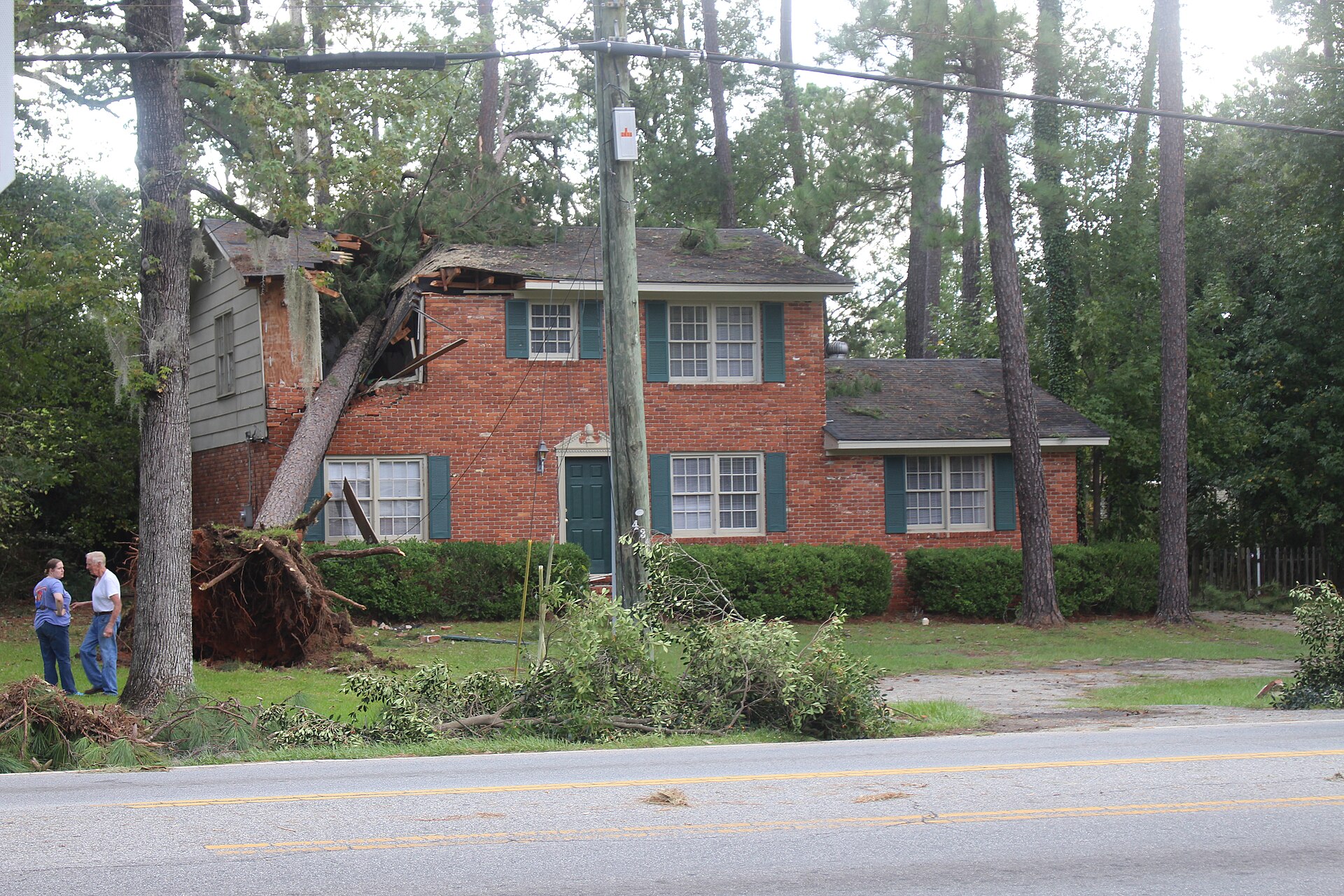
Falling Trees Crushed Homes in Birmingham and Escambia County, Killing Residents, as Hurricane Isaias Came Ashore Near Destin With 105 mph Winds
When Hurricane Isaias came ashore near Destin, Florida, on the night of Oct. 9, the damage did not stop at the beach. In Escambia County, Florida, and in Birmingham, Alabama, falling trees crashed through homes with people inside. Residents in both places were killed.
In the days that followed, the confirmed death toll grew, and Alabama extended its state of emergency into late October.
A Category 2 landfall and a long reach inland
Isaias made landfall as a Category 2 hurricane, with 105 mph winds as its eyewall reached the coast near Destin, according to FOX10 News. It was the fourth named storm to make U.S. landfall this season, the strongest of them, and the season’s first hurricane.
Alabama had been bracing for days. In a statement on Oct. 8, Gov. Kay Ivey’s office said she had declared a state of emergency covering 40 counties, and ordered non-residents, tourists and visitors out of Gulf Shores, Orange Beach and Dauphin Island. “Forecasts continue to show the real likelihood this hurricane will hit Alabama as early as Friday,” Ivey said.
The storm weakened quickly over land. NPR reported that by 5 a.m. Saturday its sustained winds had dropped to 35 mph as it moved through Alabama. Landfall came around 8:30 p.m. local time, about two hours before high tide in Destin, and the storm surge reached about 5 feet, below the 6 to 9 feet forecasters had warned was possible.
Where the trees fell
In Escambia County, at the far western end of the Florida Panhandle, a resident was found pinned under a large tree shortly before 9 p.m. Friday. Sgt. Melony Peterson of the Escambia County Sheriff’s Office told NPR the tree collapsed while the victim was inside the home. Florida Gov. Ron DeSantis described the victim as a man killed when a tree fell on his home.
Birmingham Fire and Rescue was called after midnight on Oct. 10 to a home on Monterey Drive, where two people were reported trapped. One person was pronounced dead at the scene, according to a Gray News report, which said the department later updated its account to say the second person had also died. Jim Coker, director of the Jefferson County Emergency Management Agency, confirmed the fatality to NPR and said the county had multiple downed trees and power lines.
Those were not the only deaths. In Escambia County, Sheriff Chip W. Simmons said another person died of carbon monoxide poisoning after running a generator indoors, and four others were hospitalized. DeSantis warned residents never to run a generator inside, saying “it’s something that could be fatal.” Ivey’s office confirmed a separate death in Barbour County, Alabama, without giving details.
By Oct. 13, DeSantis said six storm-related deaths had been confirmed in Florida, including a car crash at an intersection where the traffic signal was out and two people whose medical treatment was disrupted by the storm, Reuters reported.
More than 390,000 customers across Florida and Alabama were still without power Sunday morning, NPR reported. DeSantis said Santa Rosa, Holmes, Washington and Walton counties had more than 80% of residents without power, and about 16,000 utility workers were on the job. Alabama Power brought in more than 5,000 additional crews from nearly 25 states, according to FOX10.
Recovery is still underway
On Oct. 14, Ivey signed a proclamation extending Alabama’s state of emergency by 14 days, through Oct. 28. State emergency management teams were focusing damage assessments on Coffee, Houston, Monroe, Escambia and Conecuh counties, which will help decide whether residents qualify for federal assistance. “This hurricane took a toll on parts of Alabama,” Ivey said.
Her office said it was also working with the IRS on possible federal tax-filing postponements for affected residents.
Escambia County Emergency Management, meanwhile, told residents to sort and separate storm debris for pickup and not to burn it without approval.
What homeowners should know about storm-damaged trees
The trees that killed residents in Birmingham and Escambia County fell during the storm itself. The trees still standing across the region raise a different question for homeowners: whether a damaged tree is safe to keep.
Research from the University of Florida’s Institute of Food and Agricultural Sciences suggests homeowners are not well placed to judge that risk on their own. In a study published in the journal Urban Forestry & Urban Greening, UF/IFAS environmental horticulture professor Andrew Koeser showed photos of trees to more than 90 people and found that “most respondents were fixated on tree defects”. “Only experienced professionals considered other pertinent factors,” such as whether a tree could hit a person, a car or a house.
Koeser said he would prefer that homeowners not assess tree risk themselves, and concluded that “experienced arborists are best equipped to provide a thorough assessment.”
The International Society of Arboriculture, the professional body that certifies arborists, keeps a tree-owner resource page with guidance on storm-related tree damage, recognizing tree risk and finding a certified arborist through its directory.
Cleanup carries its own hazards. Alabama law enforcement officials urged drivers to watch for debris and stay away from downed power lines in the days after landfall, and the same caution applies in a backyard, where a broken limb can be tangled in a service line.
Homeowners dealing with a tree that already hit a house have faced their own set of questions, from who pays when a neighbor’s storm-damaged tree comes down to what an arborist finds inside a trunk that keeps failing. After Isaias, the first step for many Gulf Coast households is simpler: getting the fallen wood off the roof and out of the yard safely.
Get stories like this by email. Sign up for The Parent Diaries Letter.
This article was produced with AI assistance and edited for accuracy against the sources linked above.
Image: File photo from Hurricane Hermine, Valdosta, Georgia. Michael Rivera – CC BY-SA 4.0/Wikimedia Commons