Iowa State Extension’s Richard Jauron Rubs Linseed Oil Into Wooden Tool Handles in Fall So They Don’t Dry Out and Crack Over Winter
Richard Jauron of Iowa State University Extension gives wooden tool handles one job before winter: sand the rough spots, then wipe them with linseed oil. His answer to a gardener’s question about preparing tools for the cold season says the oil prevents drying and cracking, the two things that split a handle while it sits in a shed.
The short answer, last updated March 20, 2024, sits in a longer checklist that also covers blades, metal surfaces and hoses. Other extension services publish nearly the same routine, with a few differences in how to apply the oil and how to sharpen.
What Jauron puts on the fall list
In the Iowa State yard and garden answer, Jauron starts with cleaning: remove caked-on soil from shovels, spades, hoes and rakes with a wire brush or stiff putty knife. Blades of hoes, shovels and spades get sharpened, and metal surfaces are wiped with an oily rag or sprayed with WD-40.
Wooden handles come next. He says to sand rough handles and wipe them with linseed oil to prevent drying and cracking. Garden hoses need draining, and to prevent kinking they should be stored on reels or coiled on a flat surface. Everything then goes into a dry location, hung up or stored.
How other universities describe the oil step
University of New Hampshire Extension’s winterizing guide, written by George Hamilton and published Oct. 31, 2017, uses stronger wording for the handles of shovels, rakes and hoes: paint them with boiled linseed oil to prevent drying, cracking and weathering. The same guide says to replace any broken or split wooden handles and to coat metal parts with light oil or silicone spray.
Purdue Extension’s tool storage guide, by Rosie Lerner, leaves room for substitutes. It says to rub a little linseed oil or a similar protector over wood handles to keep the wood from drying and splitting.
University of Illinois Extension horticulture educator Mary Fischer adds detail in a Sept. 27, 2021 release. She says to sand rough spots smooth, apply boiled linseed oil, which is oil from dried flax seeds, and polish the handle with a dry, soft cloth.
In Georgia, UGA Extension educator Shannon Kennedy’s Dec. 1, 2020 tool maintenance article says to check handles for splinters and rough areas, trim and sand them, and apply a light coat of linseed or mineral oil, then wipe off the excess.
Cleaning, sharpening and the rust coat
Every source puts the oil after the cleaning. The Illinois release says tools must be clean and dry before storage, with caked soil removed by a wire brush, paint scraper or strong hose spray. Purdue’s guide says blades and handles can be scrubbed with soap and water and must dry completely.
On sharpening, Fischer says to sharpen dull digging and pruning tools before winter and to avoid power grinding stones, because heat generated through friction can make the metal brittle. UNH instead lists a power grinder or hand file for bladed tools. The two universities do not agree on grinders, which leaves hand filing as the common ground between them. Kennedy points to a file or whetstone as well, with the tool held in a clamp or vise and the original edge angle kept.
For rust, Kennedy says to remove it with sandpaper or steel wool, then coat the clean, dry metal lightly with WD-40 or another light machine or engine oil and wipe off the excess. Fischer recommends a light coat of an oil lubricant such as WD-40 after sharpening.
Where the tools and hoses spend the winter
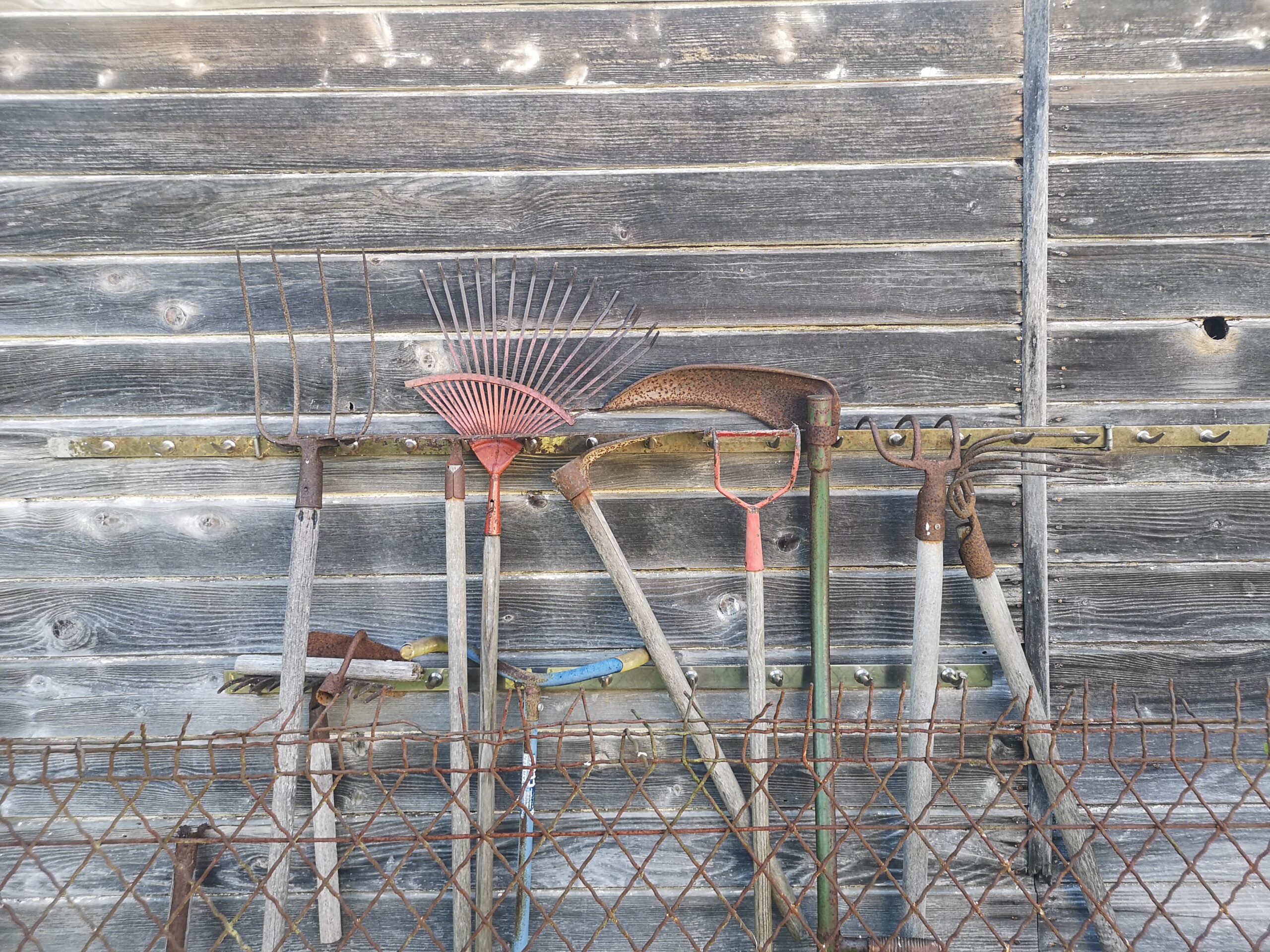
Storage rules center on moisture. Fischer says tools should be kept off the ground and out of damp areas, with long-handled tools hung on racks or holders to protect their edges. Short-handled tools can go on a pegboard, she adds, where outlining each one makes a missing tool easy to spot.
UNH says hoses should be thoroughly drained and then stored rolled up and laid flat. Jauron’s version asks for the same draining and a reel or flat coil.
Gardeners who also have a mower to put away can pair the tool routine with the steps in the site’s piece on what Nebraska Extension lists for putting a lawn mower away for winter. Kennedy’s article also covers power equipment, with advice to clean out grass clippings, empty the fuel tank or add a fuel stabilizer, and check the spark plugs, oil and air filters.
Get stories like this by email. Sign up for The Parent Diaries Letter.
This article was produced with AI assistance and edited for accuracy against the sources linked above.
Image: Dereckson – CC BY 4.0/Wikimedia Commons