Half a Row of 27-Year-Old Arborvitae Was Gone When a Homeowner Got Home From Work. A Friend of the Neighbor Who Wanted a Fence Had Cut Them.
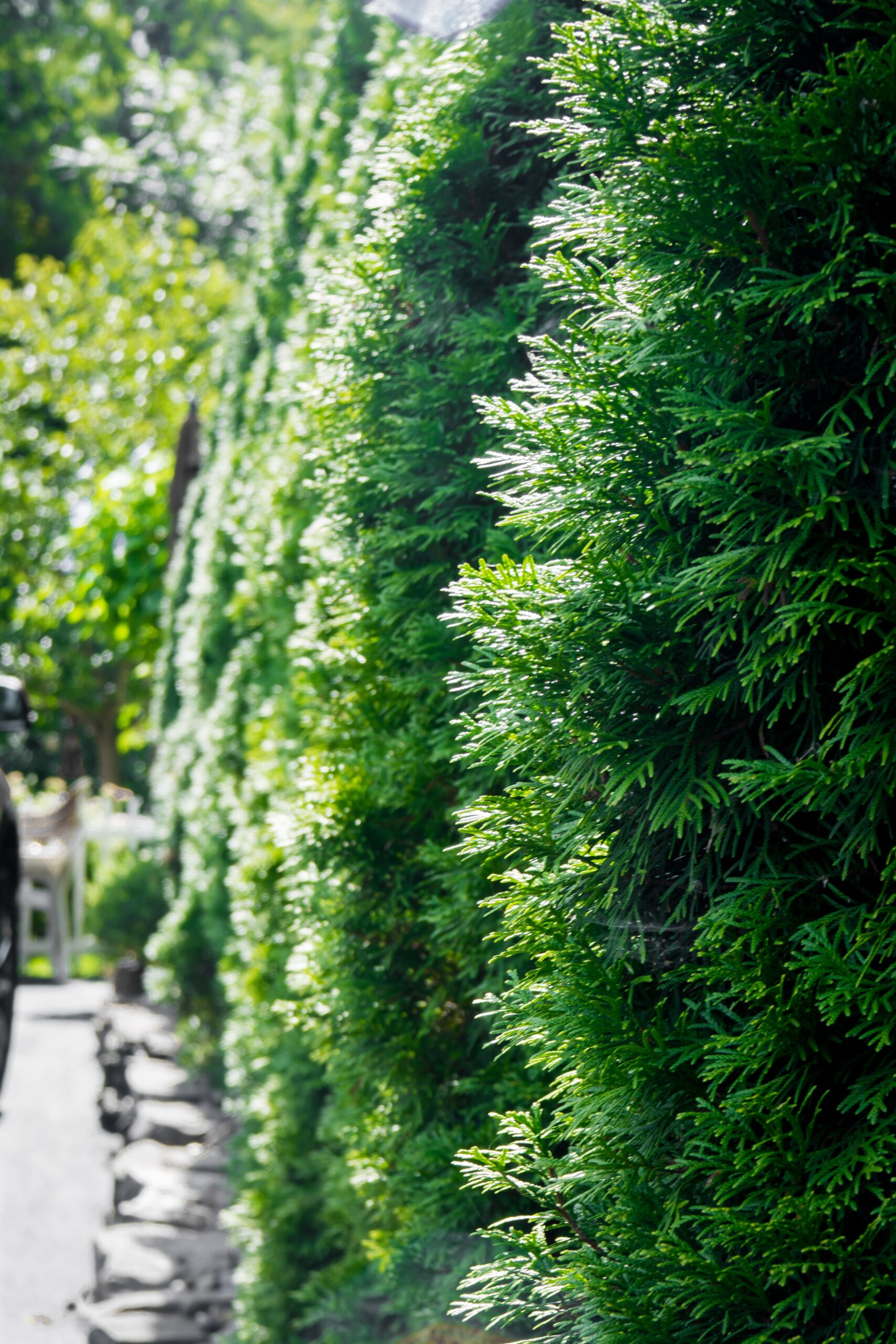
For 27 years, a row of arborvitae stood between two backyards as a green privacy wall. The homeowner on one side had the trees treated every year. Then the homeowner came back from work one day in late September and found almost half the row cut down.
The person holding the saw was not the next-door neighbor, but a friend of hers. According to a Yahoo Life story by Dana Daly, the neighbor had wanted a privacy fence and thought the old evergreens were “unsightly.”
A screen that took decades to grow
The homeowner shared photos of the damage in a post on Sept. 29. The trees had formed a natural screen between the two properties for nearly three decades, and the homeowner said they had been cared for and treated each year.
Arborvitae are a common choice for that job. NC State Extension’s plant toolbox lists the American arborvitae as a slow grower and notes that, planted in groups, it performs well as a hedge, privacy screen or windbreak. Mature trees can reach 40 to 60 feet.
That slow growth is what makes a cut like this so hard to undo. A 27-year-old screen cannot be bought back in a season.
No knock on the door
Asked whether the neighbor had come to talk before the trimming started, the homeowner answered with one word: “No.”
The homeowner called the police. An official from the local ordinance office came out and spoke with both sides. According to the Yahoo Life account, the official said a privacy fence would have to go in front of the existing chain-link fence, which marks the property line, and that the neighbor would be responsible for whatever grows between the two fences.
The article noted that the homeowner did not say whether the property had been professionally surveyed.
An apology, and a promise the trees would grow back
The neighbor apologized. She said she had no idea her friend would go that far. Both she and the friend said the trees would grow back.
Gardeners who read the post doubted it, and so did the homeowner. The Yahoo Life story cited NC State Extension’s guidance against cutting arborvitae back into bare, older wood, because that wood seldom produces new growth. Commenters on the original post said the same thing, and the homeowner agreed the trees won’t come back.
What tree experts say about cutting near the line
The general rule on neighboring trees is narrow. A guide from The Spruce, republished by AOL, says a person can usually trim branches that hang over the property line, but only on their own side, while standing in their own yard, and without damaging the tree. If the pruning causes significant damage, the person who cut can be held liable.
Mark Chisholm, a New Jersey-licensed tree expert quoted in that guide, advises telling the tree’s owner before any work begins. The same guide recommends confirming the exact boundary first, using survey pins, the property deed or city records, before anyone picks up a saw near a shared line.
When courts get involved
Cases like this can end up in front of a judge. In September, an Ohio appeals court upheld $11,523.87 in treble damages against a neighbor who pulled out a white spruce standing on a shared boundary, ruling that trees on the line are jointly owned and cannot be destroyed by one owner alone.
In New Hampshire, a boundary hemlock led to felony charges against a Sunapee homeowner, and the case ended with a $1,000 trespassing fine, according to the Valley News.
The arborvitae homeowner has not said whether any claim is planned. Privacy plantings are a frequent flash point between neighbors: this site has reported on a homeowner whose neighbor kept chopping the tops off her evergreen screen, and on a Bolton council investigation into a 10-foot evergreen hedge.
In this case, the neighbor will still get her fence, and the ordinance office has already said where it has to go. What the homeowner will not get back, at least not for years, is the green wall that stood there first.
This article was produced with AI assistance and edited for accuracy against the sources linked above.
Image: Jess Mann – CC BY-SA 4.0/Wikimedia Commons