A New Neighbor Who Says She’s a Lawyer Wants a Family’s Decades-Old Oak Cut Down Because Its Leaves Fall in Her Pool
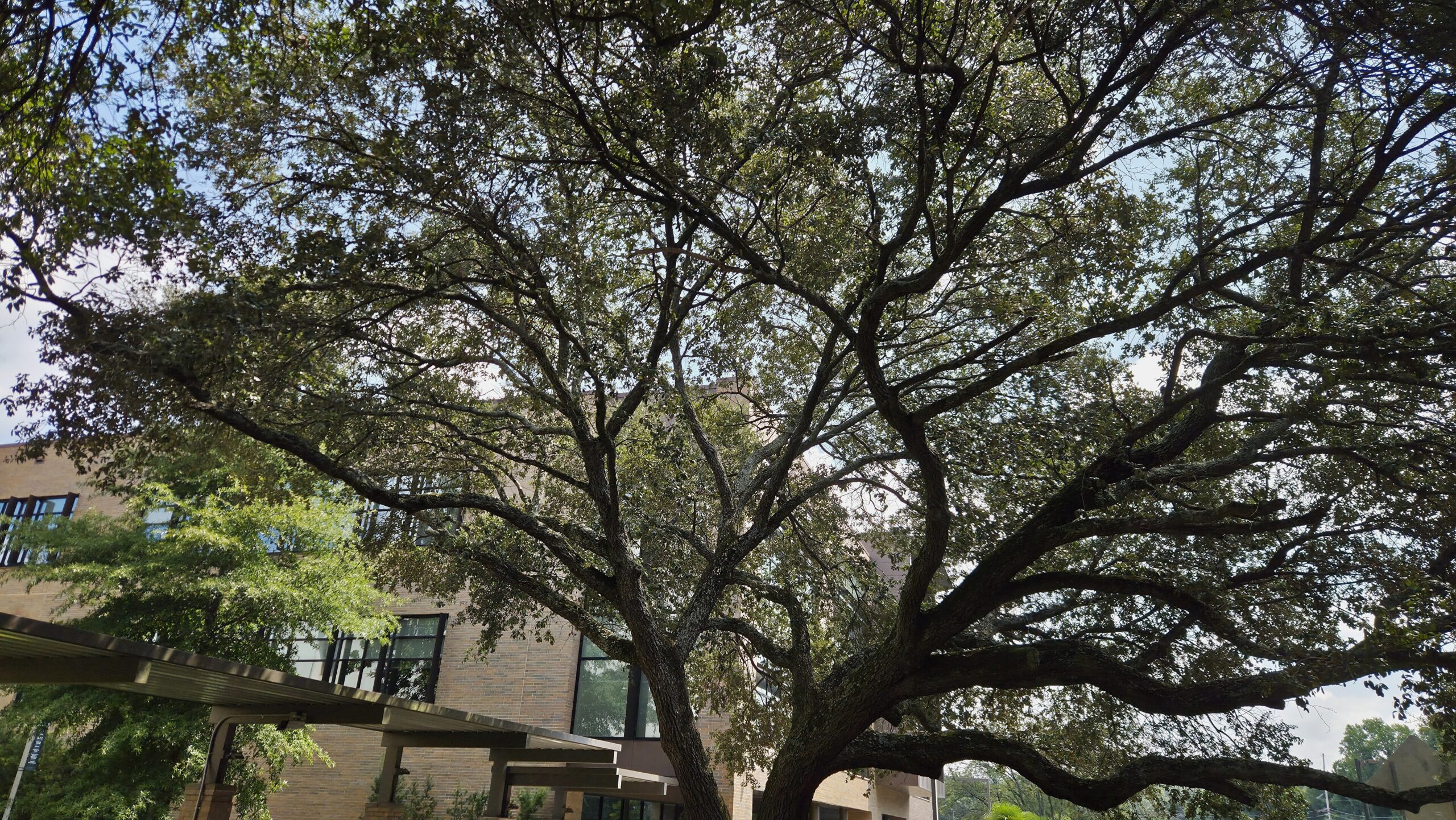
A mature oak that has stood behind one family’s house for decades is now the subject of a request from the neighbor who bought the property behind them: take it down, because its leaves land in her pool. The homeowner, who wrote that he has lived there “going on 20-something years,” says he has no plan to do it. The account comes from an anonymous post that Backyard Garden Lover wrote up and Yahoo Life carried on Nov. 16, and the neighbor’s side is not part of it.
Because nothing in the post has been independently confirmed, everything below about the dispute is what the poster says. The sections that follow lean on public guidance to explain where homeowners usually stand when a neighbor asks for a healthy tree to go.
A Pool Complaint Against a 20-Year-Old Oak
According to the post, the new owner got the wife’s phone number through her realtor and asked about cutting down a tree in the family’s yard. Some of its branches reach over to the neighbor’s side. Her complaint is that leaves fall into her pool.
The poster wrote that four earlier owners of that house never asked for the oak to come down, and that one of them said the summer shade outweighed the leaves. He also wrote that he recently removed other trees and that his arborist advised against more changes until the yard recovers.
Later, the post says, the neighbor came to the door and told the family she bought the house as a rental investment and that she is a lawyer. She reportedly said she did not want things to “get messy.” The post does not say where the home is, though commenters guessed Texas, and it reports no resolution.
Who Owns the Oak and What a Neighbor Can Trim
Commenters pointed to the Texas State Law Library. Its neighbor tree FAQ says that under common law an owner may cut back branches and roots that cross into the yard, but may not trim past the boundary line or go onto the neighbor’s land without permission unless the branches pose an imminent threat. It adds that a person may not injure, kill or cut down the tree, and that even a neighbor with the right to trim can be sued for damages if the work harms the tree or other property.
The University of Georgia Extension’s tree ownership guide frames it the same way. It says a tree whose trunk stands entirely on one lot is that owner’s responsibility, that a trunk on the line is jointly owned, and that a property survey can settle which applies. A neighbor may trim branches that cross onto his or her lot, it says, but the page advises talking with the tree owner first about who will do the pruning and how often.
In this case the post places the trunk on the poster’s side and says the neighbor’s request was for removal, not for trimming back to the fence line. Rules differ by state and city, so the law library’s page is a starting point and not a ruling on this yard.
What an Arborist Would Weigh
The Georgia guide advises getting a professional opinion before acting on overhanging limbs, having a certified arborist inspect trees with health concerns, and putting any agreement in writing before work starts on a neighbor’s tree. The poster’s own arborist has already advised him to hold off on more changes.
Heavy pruning is also not harmless for oaks. Texas A&M Forest Service guidance, shared by AgriLife Today, says winter is usually the best time to prune oaks, that they should not be pruned or wounded from February through June when sap beetles that spread oak wilt are most active, and that pruning stressed trees for appearance should be avoided. Regional forest health coordinator Demian Gomez is among the experts it names.
Other local rules can matter too. North Carolina State Extension’s citizen’s guide to community trees says owners maintain trees on their own property, warns against removing a neighbor’s trees because of possible civil and criminal penalties, and notes that some trees are protected by local ordinances, easements, covenants or HOA rules.
What Commenters Told Him to Do
The article reports that commenters noted calling oneself a lawyer does not mean the neighbor practices law. One top comment suggested a notarized letter refusing any trimming or removal, which a lawyer could draft inexpensively. The write-up concludes that talking to a legal expert before replying may be the safest move.
Disputes over trees on a shared line are common. Another homeowner’s case, in which a city arborist weighed a boundary tree’s roots, shows how much a professional assessment can change the picture. Another family looked at what its HOA’s own rules said about saving a beloved tree.
This article was produced with AI assistance and edited for accuracy against the sources linked above.