Cameras Caught a Man Pouring Liquid on John Giurco’s North Massapequa Lawn Three Times at 4 a.m., and the Family Is About to Sell
The video Nassau County police released shows a man in shorts and a hooded sweatshirt walking across a front lawn on North Linden Street in North Massapequa and dumping an unknown substance onto the grass, according to ABC7 New York. Cameras at the home recorded the same man pouring liquid on the lawn three times, and homeowner John Giurco says the visits came around 4 a.m. CBS New York reported that Giurco and his wife are now about to sell the house.
Police have not made an arrest. They describe the suspect as a man about 60 years old, 5 feet 8 inches tall, with gray hair.
What the Surveillance Video and Police Say Happened on Linden Street
Nassau County police, through the Seventh Squad, say the criminal mischief happened on three dates: July 24, July 26 and Sept. 19, 2026. According to the department’s account published on LongIsland.com, the first incident came at 3 a.m. on a Friday, when an unknown man walked onto the front lawn of a Linden Street home and poured a substance onto the grass, “causing significant damage.” Police say the same man returned two days later and again on Sept. 19 and repeated the act.
Police put the total damage at about $5,000, and News 12 Long Island reported on Oct. 15 that the investigation remains ongoing, with no arrest reported. Detectives ask anyone with information to contact Nassau County Crime Stoppers at 1-800-244-TIPS or call 911. Callers remain anonymous.
The times differ slightly depending on who is describing them. Giurco told ABC7 the man was sneaking around at 4:10 and 4:17 in the morning, pouring “who knows what” on the lawn. That is the basis for the 4 a.m. detail. Police list the July 24 visit at 3 a.m. No arrest or later development had turned up in coverage found as of Nov. 6.
A Gardener’s Confrontation in May and a Family Ready to Leave
Giurco believes the trouble began in May, when he was gardening and a man walking two dogs crossed his property. He told ABC7 that the man yelled at him, and that after he told the man to leave, the man threatened his life. Giurco says the man on the video wears the same sneakers and that he would recognize him from a hundred miles away. That identification is Giurco’s own belief, not a police finding.
He has said he fears the man might do something worse than damage the lawn, and that he does not plan to repair the grass because he expects the vandalism to happen again. CBS New York reported that the incidents have left Giurco and his wife unsettled, that she cannot stand it anymore, and that the couple are about to sell.
Neighbor Laura Millard told ABC7 that she saw someone looking over the property with a camera several months ago and remains watchful. Police have not said what the substance was, or whether the May encounter is connected to the lawn damage.
What Extension Turf Guides Say Dead Stripes Can Mean
Extension turf specialists describe several chemical and salt problems that leave lines or patches in grass. None of these identifies what was poured on Linden Street, but they show how a spill is diagnosed.
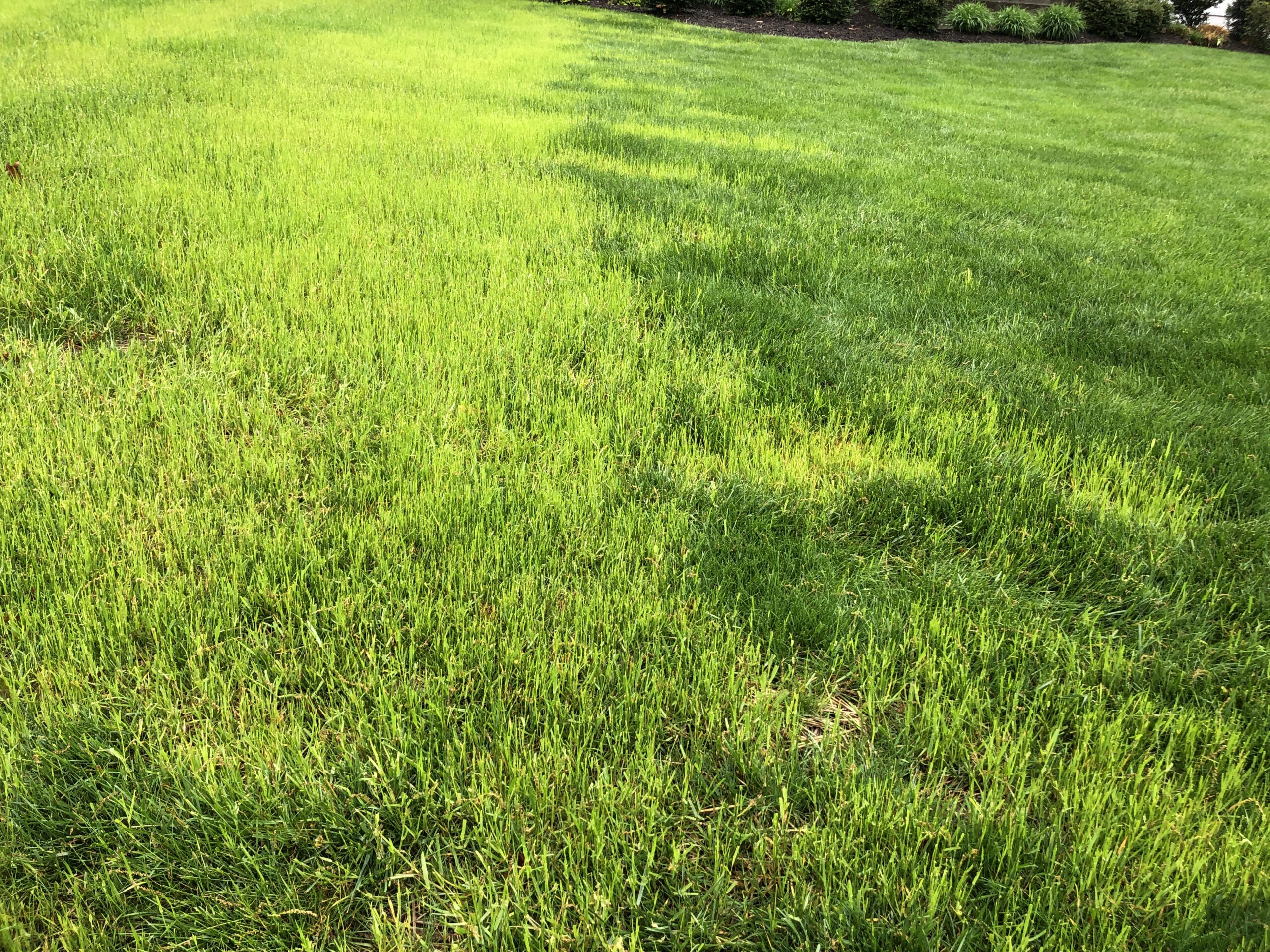
The University of Maryland Extension says banded streaks or irregular patterns may result from uneven or excessive fertilizer, because fertilizers contain soluble salts that burn root tissue and turn a lawn brown. Excess salts can be flushed by soaking the area with an inch of water, repeated three to four times. The same guide notes that color bands following the path of a spreader or sprayer point to uneven application, with some areas over-treated and others missed, and that missed areas should be treated on their own rather than adding product to ground already covered.
The University of California’s turf guide says uniform yellow or dead spots that suddenly occur in one area point to non-living causes, while symptoms that gradually expand are more typical of disease or insects. It advises checking for fertilizer burn, herbicide damage and watering problems before blaming a pest, and reviewing recent treatments and how the lawn is irrigated.
Colorado State University Extension’s lawn-diagnosis guide suggests asking when the problem appeared, where it is, and whether neighboring lawns are affected. For salt injury, it says no product fixes it besides copious amounts of water, that tall fescue and perennial ryegrass tolerate salts better for reseeding, and that turf that looks dead may still show new growth. The University of Minnesota Extension notes that de-icing salt damage appears in strips or irregular patches near paved areas, turning tan and then dark brown.
For a lawn hit by a deliberate spill, the guides point to the same first steps: record the dates and the pattern of damage, flush the area with water if a salt or fertilizer is suspected, and wait for new shoot growth before deciding whether to resod or overseed.
Get stories like this by email. Sign up for The Parent Diaries Letter.
This article was produced with AI assistance and edited for accuracy against the sources linked above.
Image: Famartin – CC BY-SA 4.0/Wikimedia Commons