A Landscaper Grading for a New Granite Terrace Found the Pine Stump a Tree Company Was Paid to Grind Away, Still Sitting Under the Wood Chips
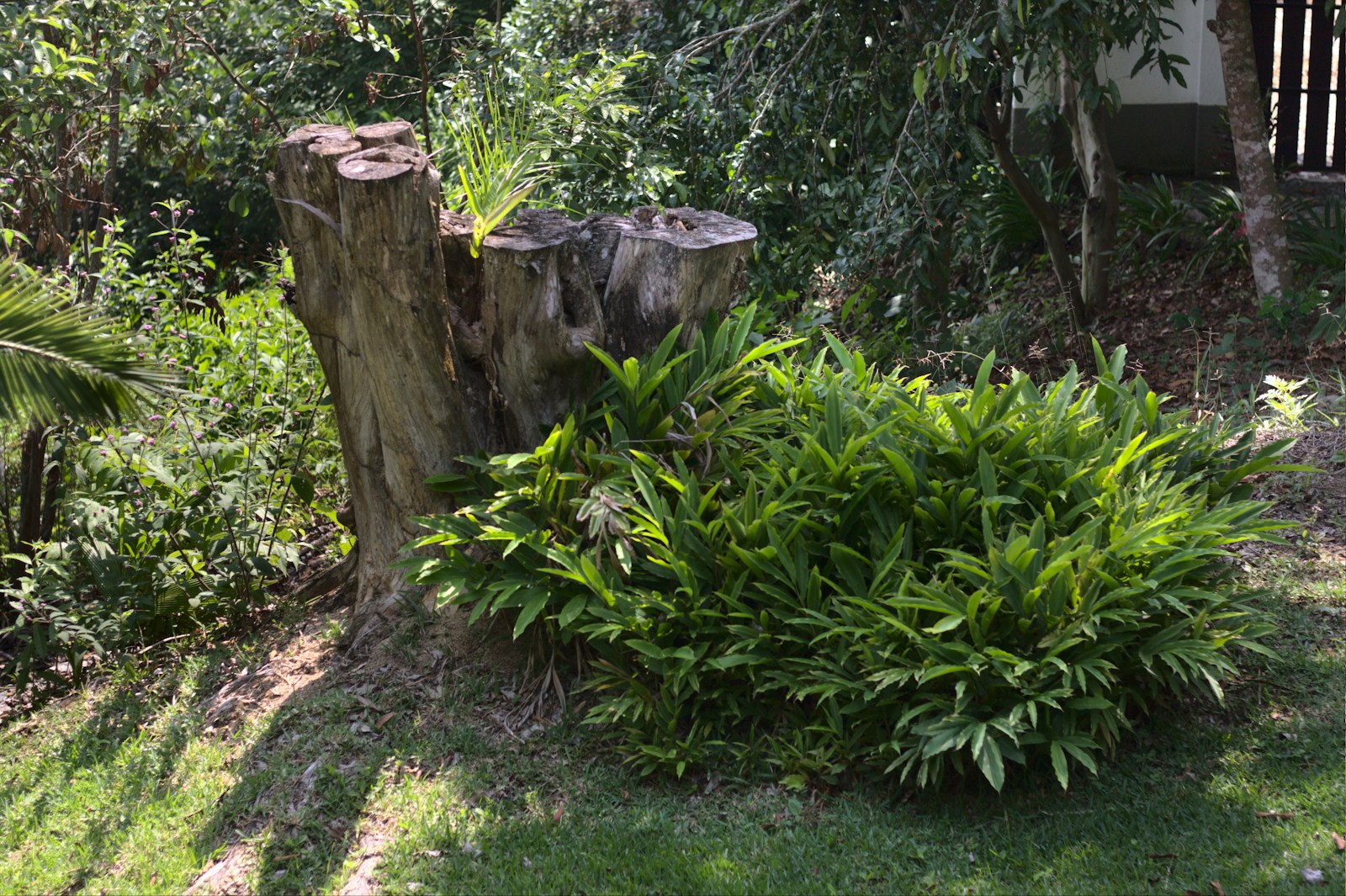
The pine was gone, and the yard looked ready for a new granite terrace. Then a landscaper started grading the ground and hit something solid: the stump a tree company had been paid to grind away, still sitting there under a layer of wood chips.
The homeowner’s story was reported by Aaron Goldstein of The Cool Down and republished by Yahoo Life on Nov. 2. The stump belonged to a ponderosa pine and measured roughly 20 inches across and 6 to 7 inches high, according to the report.
A stump that was supposed to be gone
The homeowner had hired a removal company to take the pine down and grind out the stump. With that done, or so it seemed, the plan moved on to a decomposed-granite terrace, with concrete work scheduled nearby.
The surprise came during grading. As the landscaper scraped and leveled the area for the granite, the stump turned up hidden beneath the wood chips, the outlet reported.
The homeowner posted photos online and asked whether this was simply how stump grinding works. In the homeowner’s telling, stump removal had sounded like a promise that the spot would end up flat. The homeowner also wondered whether the crew had ground deep enough, noting that a few inches of soil had already been taken off while preparing the terrace.
What other tree pros said
Responses split along trade lines, according to The Cool Down. A commenter who said they worked for a tree company asked whether the crew had ever been told about the terrace plans, since that can change how deep a stump needs to go. A self-described professional landscaper said shallow grinding is common.
The timing mattered. With concrete work already scheduled nearby and the granite waiting, the stump had to be dealt with before the project could go any further.
Several people suggested the same next step: give the original company a chance to finish the job before paying anyone else to do it.
That is what happened. The removal company agreed to come back, and the homeowner said it scheduled the visit without any pushback. The landscaper planned to be on site during the return trip so both crews could agree on how deep the grinding had to go before the granite went down.
Having the landscaper there is a practical safeguard. The person who will build the terrace knows exactly how much clearance the base needs, and can say on the spot whether the stump is low enough, rather than finding out again once the next layer of material is in.
Why the depth of a stump grind matters
For a lawn, a stump ground a few inches below the surface may be enough. For a hardscape project, it often is not. A decomposed-granite terrace needs a firm, even base, and a 20-inch pine stump left a few inches high sits right where that base has to be.
The International Society of Arboriculture’s consumer guide to hiring an arborist calls tree removal expensive and recommends bringing in a professional when a tree stands where construction is planned. Telling the crew about that construction is part of the job.
The ISA’s brochure on avoiding tree damage during construction makes the same point from the other direction. It urges homeowners to bring an arborist in during planning, before work begins, and treats grading and the adding or removing of soil as steps to plan carefully, because small changes early can head off big problems later.
The ISA notes that its certification is a voluntary, nongovernmental credential, and that certified arborists have to keep up with continuing education to hold it. Its guide adds that tree work should be done only by people trained and equipped to work safely in trees, which matters on any job where heavy grinders are working close to a house, a patio or a concrete pour.
The same group’s brochure on why to hire an arborist puts it simply: get it in writing. It advises homeowners to read the contract closely, ask about anything unclear and compare more than one estimate rather than automatically taking the lowest bid.
Questions to settle before the crew arrives
The ISA’s guidance does not spell out stump depth, which is why it belongs in the written agreement. A homeowner planning a patio, terrace, garden bed or new lawn can ask the company to note how far below grade the stump will be ground and what happens to the chips.
The organization also tells homeowners to ask for proof of insurance and to call the insurer to confirm it, to check whether local permits are needed, and to be wary of people who knock on the door offering bargains. Its tree owner pages also point to a directory of certified arborists and a tool to verify a credential.
Tree work has a way of getting expensive fast. Lovely Garden Roots has covered cities where taking out a single large live oak could cost a homeowner $6,000 under local tree rules, before a single grinder shows up.
In this case, the fix so far has taken a phone call and a little patience. The stump that hid under the chips is due for a second pass, and this time the landscaper will be watching.
This article was produced with AI assistance and edited for accuracy against the sources linked above.