Deer Fences 8 Feet Tall Protect Young Trees Best, While Shelters and Wire Mesh Around Single Trees Need to Reach 5 to 6 Feet
Before the snow settles in for the season, young trees in the yard face their hungriest neighbors. Extension services agree that a fence 8 feet tall is the standard for keeping deer out of a whole yard, while shelters and wire mesh around single trees need to reach 5 to 6 feet: at least 5 feet in University of Georgia guidance and at least 6 in Iowa State’s.
Iowa State specialists have also weighed the two most common single-tree options against each other. Here is how the choices stack up and what each one asks of a homeowner.
Why 8 Feet Is the Number for a Deer Fence
The Iowa State winter deer browsing guide sets the bar at 8 feet for fencing a whole garden area. Woven wire or mesh works well, it says, and it can be put up temporarily in fall.
There is one exception Iowa State notes. A small enclosure, under about 8 by 16 feet, can use a 50-inch fence, because deer typically won’t jump into a small space. Iowa State also lists electric fencing, after checking local regulations, with peanut butter on foil as bait to teach deer to avoid it. Where deer numbers are low, 30-pound monofilament fishing line strung about 36 inches high and 2 feet beyond the bed can work in the short term.
North Dakota State University horticulturist Tom Kalb uses the same height. In a Dakota Gardener column on keeping deer out of an orchard, he recommended an electrified fence 8 feet high. He also listed white tree guards around trunks and chicken-wire rings around individual trees as options, though he called the rings impractical in a large orchard.
Which Trees and Shrubs Need It Most
Some plants draw deer more than others. Iowa State lists arborvitae, pines and other evergreens as commonly browsed, especially on their lower branches, and says deer turn to other plants too when snow cover lasts.
Extension Dane County horticulture educator Lisa Johnson names fruit trees, crabapples, burning bush, shrub hibiscus, fothergilla, young witch hazel, low-growing junipers and arborvitae among the plants most often damaged over winter in a UW-Madison guide to winter critter damage. Young trees are at the highest risk, she writes, because their bark is thinner.
In Georgia, the University of Georgia Extension office in Lincoln County calls exclusion the only scientifically proven way to cut deer damage in a UGA guide to protecting young trees, and says home repellents are not proven. It also notes that bucks rubbing their antlers on trunks can seriously harm a young tree, which a cage or tube helps prevent.
Protecting One Tree at a Time
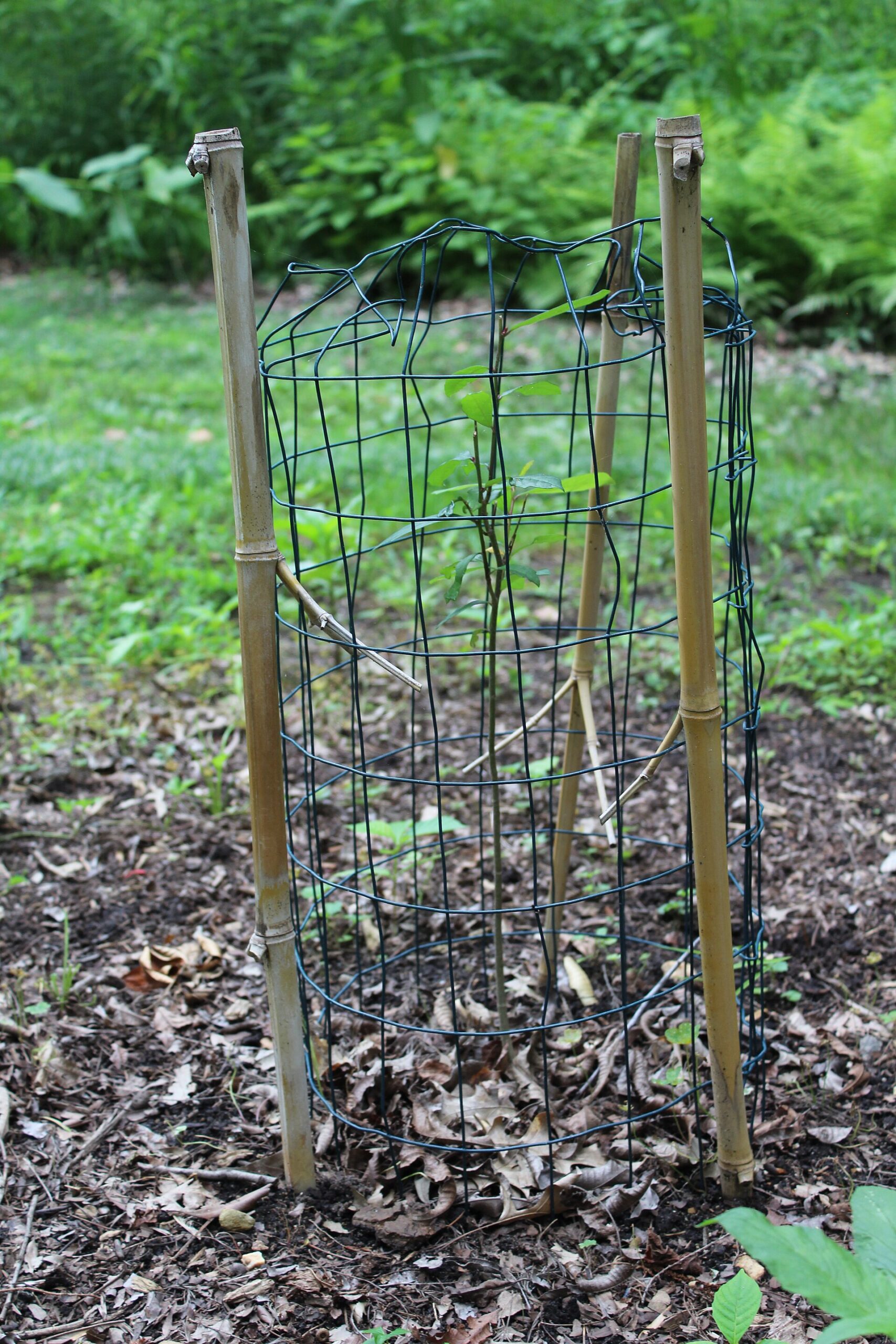
Fencing a whole yard is not practical for everyone. For single trees, Iowa State says tubes, wraps and wire cylinders should be at least 6 feet tall, though cylinders can be shorter for small plants if they are closed on top. They work best on small, young plants and should come off in spring.
Billy Beck of Iowa State University Extension and Outreach lays out the trade-offs in an overview of tree cages and shelters. Shelters are translucent plastic sleeves, typically 4 to 6 feet tall, held up with metal rods or T-posts. They are easy to install and push fast height growth, but they cost more, can trap birds and can shelter mice or voles at the base over winter. Metal mesh cages are sturdier and less likely to harbor rodents, but they take more work to install and must be removed by hand.
UGA’s Lincoln County office puts the floor a little lower, saying either a wire cage or a plastic tube should be at least 5 feet tall to prevent deer damage. It estimates both cost about $5 to $10 per tree in money and labor. Wire cages are permanent and very durable, while plastic tubes are temporary, come off after the first few years and can speed growth by creating a greenhouse effect around the trunk. Saplings often need a stake to hold the tube or cage up, and the office suggests cutting stakes about a foot longer than needed so they sit deep enough.
Materials, Snow Depth and Timing
Johnson recommends metal hardware cloth with quarter-inch or half-inch mesh rather than chicken wire, whose holes are large enough for voles and mice. She prefers 36- or 48-inch heights, which hold up better when snow is deep and against bucks rubbing their antlers on trunks. For deer reaching over the top, she sometimes screens the top of the shrub as well.
Her installation steps are specific. She says cages should go up before the ground freezes too deeply, with the mesh splayed flat on the ground around the trunk, pinned with 4- to 6-inch sod staples, and a few inches of mulch or rocks added where the wire meets the ground to stop tunneling rodents. Cages come off around mid-April, once grass is greening up and wildlife has more to eat.
She also advises thick gloves, strong tin snips and safety goggles, since cut hardware cloth has sharp edges and rolls can snap back.
Repellents as a Backup
Sprays are the weakest option in cold months. Iowa State says winter effectiveness is limited because reapplying in freezing temperatures is hard. When using them, it recommends spraying from about 6 feet down, since deer browse from the top down, and rotating products so deer don’t get used to one scent.
Kalb was blunt in his NDSU column: no repellent will stop a starving deer. He did report success, though, after spraying Liquid Fence on the branches monthly from fall through winter and later watching a herd of 40 deer graze nearby without entering the orchard.
Homeowners already putting rabbit and vole guards around young trees this month can pair them with taller deer protection in one trip around the yard. The order the extension guides suggest is simple: fence or cage first, then treat repellents as an extra rather than the plan.
Get stories like this by email. Sign up for The Parent Diaries Letter.
This article was produced with AI assistance and edited for accuracy against the sources linked above.
Image: Hameltion – CC BY-SA 4.0/Wikimedia Commons