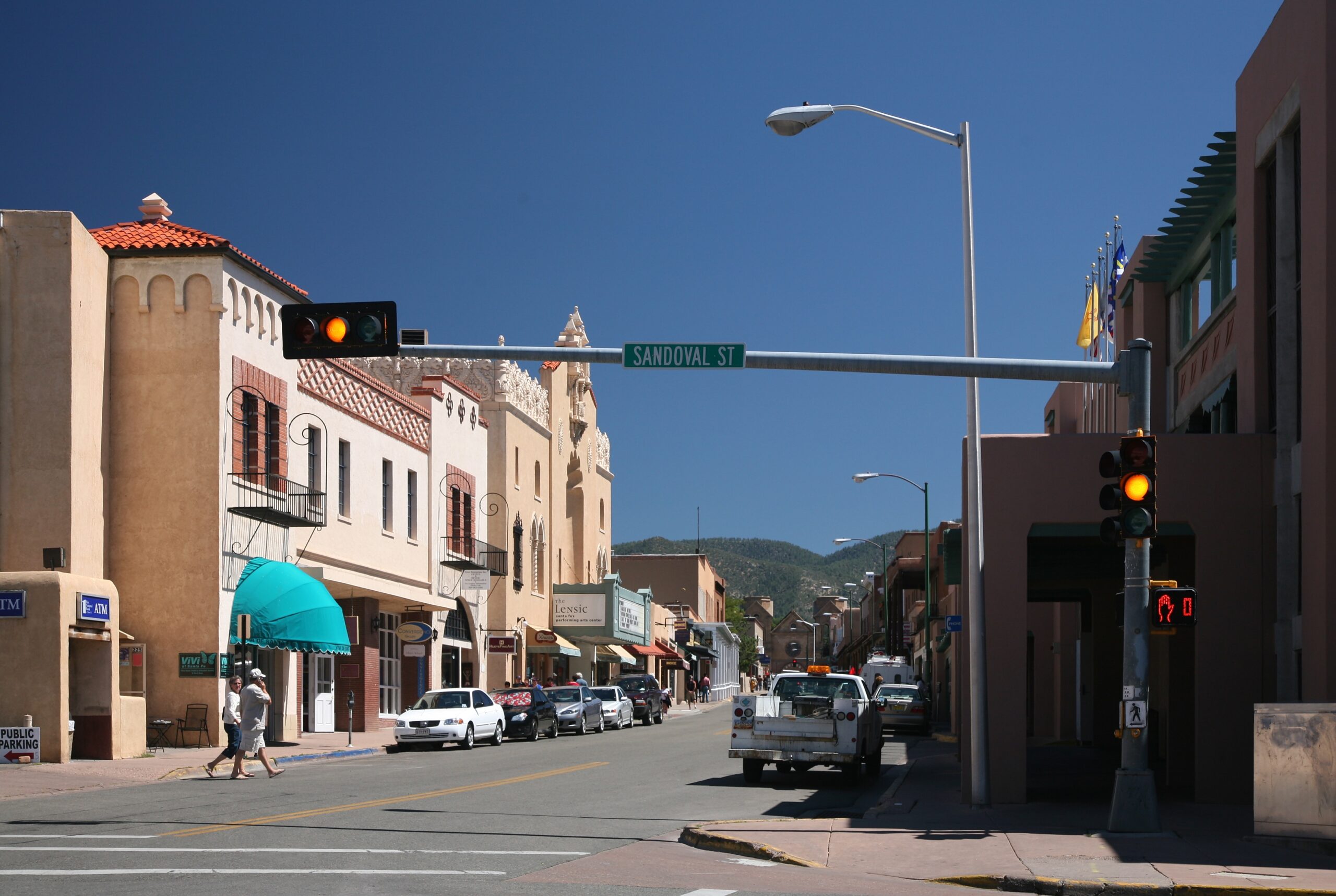
A Tornado Toppled Trees and Destroyed a Home in Midtown Santa Fe on Oct. 24, and the City’s Spokesman Says Nobody Can Recall One There Before
For the first time anyone at Santa Fe City Hall could remember, a tornado touched down inside the city on the night of Saturday, Oct. 24, toppling trees across midtown yards near Rancho Siringo Road and Camino Chueco and leaving one house described as destroyed. City spokesperson Peter Olson told the Albuquerque Journal that “Nobody can recall ever having a tornado in Santa Fe.” A National Weather Service survey later counted 10 damaged homes and gave the storm a preliminary EF-1 rating, with winds of 86 to 110 mph along a path of about 1.4 miles, the Santa Fe New Mexican reported. City officials said no one was hurt.
A 7:01 p.m. Warning Over a City With No Tornado Memory
The storm was part of a strong Pacific system crossing New Mexico. The Weather Service office in Albuquerque issued a tornado warning just after 7 p.m. for northeastern Santa Fe County. At 7:01 p.m., the warning said, “a severe thunderstorm capable of producing a tornado was located over Santa Fe, moving north at 25 mph,” according to the New Mexican’s warning coverage.
The warning ran until 7:30 p.m. and covered Santa Fe, Tesuque, Agua Fría, Chupadero, Hyde Memorial State Park and a stretch of Interstate 25 between mile markers 279 and 284. It told people to get to a basement or the lowest floor of a sturdy building, warned that flying debris could damage roofs, windows, vehicles, mobile homes and trees, and noted that “Tornadoes are difficult to observe at night.”
Serena Yanez, driving in from Española, filmed a funnel cloud south of downtown, the Journal reported. Traffic backed up on Interstate 25 that evening, and first responders pulled a driver from an arroyo in a swift-water rescue.
Toppled Trees, Downed Fences and a Damaged Car on Rancho Siringo Road
Most of the damage fell along Camino Chueco and Rancho Siringo Road in midtown, just south of the Midtown redevelopment area. The New Mexican reported trees, fences and power lines down across the neighborhood. City staff counted at least eight homes with direct damage, a slightly lower figure than the Weather Service survey’s 10.
Olson told the Journal he saw a lot of downed trees and damage to houses, and described one roof that “bounced off” a neighbor’s roof. A Journal photo caption described one house on Rancho Siringo Road as destroyed, and another showed a vehicle badly damaged by a falling tree.
Resident Gary Delgado told the New Mexican the tornado tore apart his home’s guest bedroom, and said the household was still in disbelief, though he knew what he had seen.
On Sunday, residents, volunteers and city officials worked along Rancho Siringo Road hauling away what the storm left behind. Mayor Michael Garcia was among them, helping neighbors clear debris, the Journal reported. Daniel Lujan, Dorothy Trujillo and Teresa Anaya were among the residents out on the street.
Twenty-Seven Tornadoes in Santa Fe County Since 1950
Tornadoes are not unheard of in New Mexico. The Weather Service counts an average of nine a year statewide over the 30 years ending in 2024, mostly on the eastern plains. NOAA data cited by the Journal show 27 tornadoes in Santa Fe County since 1950.
What city officials could not recall was one inside Santa Fe itself. Officials told the Journal they could not remember a tornado ever touching down within city limits.
The preliminary EF-1 rating puts the storm in the second tier of the Enhanced Fujita scale, which the Weather Service has used since Feb. 1, 2007. According to the Weather Service’s EF scale reference, EF-1 covers estimated three-second gusts of 86 to 110 mph, one step above EF-0’s 65 to 85 mph. The ratings are estimates, not measurements, worked out from damage to 28 kinds of indicators. Two of those indicators are hardwood trees and softwood trees, alongside one- and two-family homes, which is why toppled trees in yards like those on Camino Chueco feed into a survey team’s rating.
Trees have been at the center of other storm stories this fall, from the trees that crushed homes as Hurricane Isaias came ashore to a decaying tree that fell on a St. Louis street.
Photos Before the Chainsaw, and the City’s Cleanup Numbers
The city has placed dumpsters in the affected neighborhood and said it plans to add resources. Mayor Garcia asked people who do not live there to stay away so crews and volunteers can move through, saying the city has plenty of support and does not need sightseers.
City emergency management staff, the American Red Cross, PNM and New Mexico Gas crews were surveying the area Sunday morning, according to the New Mexican. Residents who need help with debris cleanup or other storm problems can call the city’s Constituent Services Team at 505-955-6949; the Constituent Services office answers that line Monday through Friday, 8 a.m. to 5 p.m. For transportation help or power and gas outages, the city pointed residents to 211 or 505-245-1735. Volunteers can contact the same Constituent Services Team.
Before any tree is cut up or any fence panel is hauled off, the city advises homeowners to photograph and video the damage and the debris, and to note where each item sits. It also recommends contacting insurers, since private insurance is the main source of recovery money for many families.
For yards on Camino Chueco and Rancho Siringo Road, that means a documented record of every toppled tree, broken limb and downed fence before the cleanup begins, in a city that until Oct. 24 had no tornado anyone could remember.
Get stories like this by email. Sign up for The Parent Diaries Letter.
This article was produced with AI assistance and edited for accuracy against the sources linked above.
Image: Daniel Schwen, CC BY-SA 4.0, via Wikimedia Commons