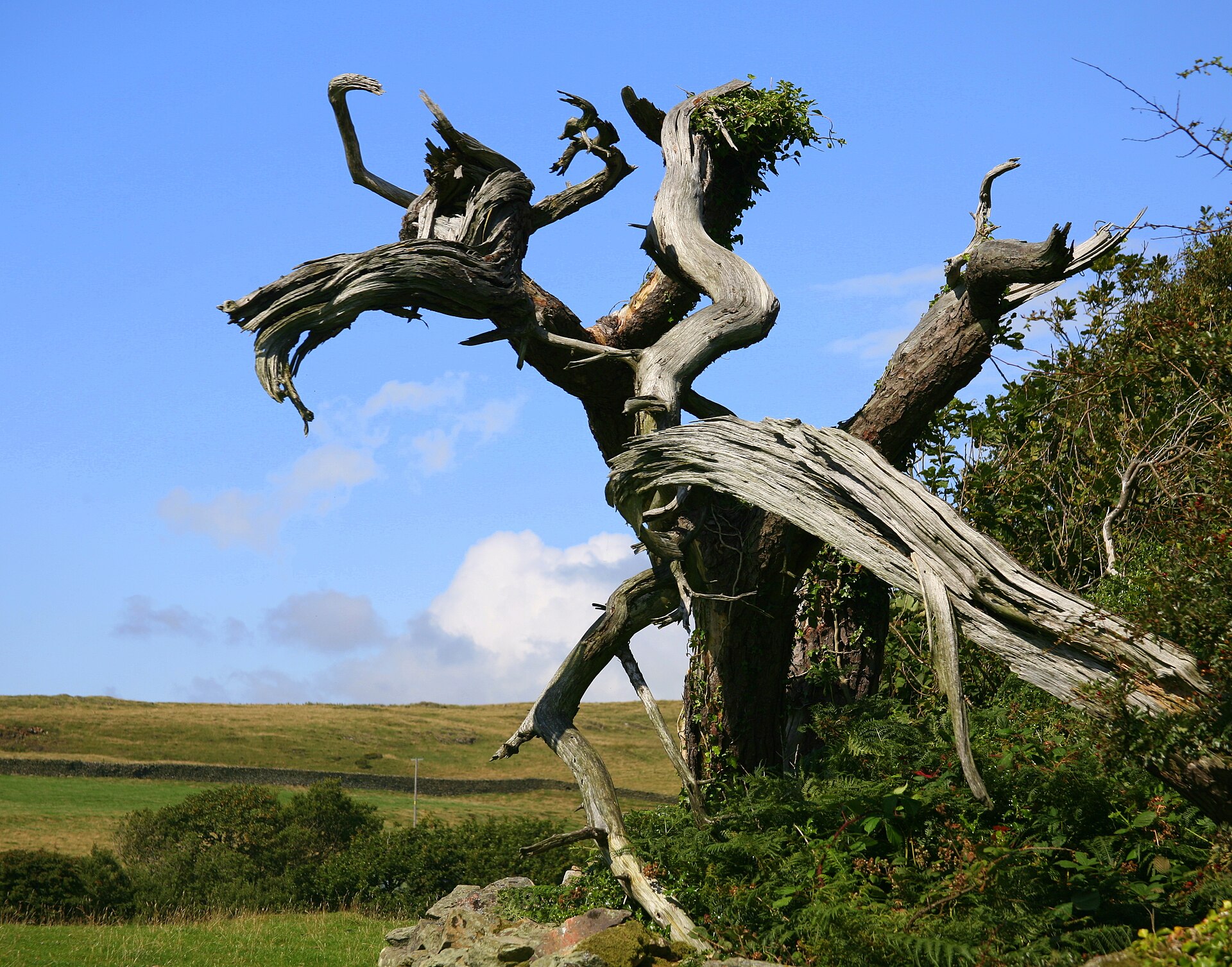
A 33-Year-Old St. Louis Man Was Killed When a Decaying Tree Fell on Gimblin Street, and a Neighbor and the City Now Disagree Over Who Should Have Cut It
Around 10 p.m. on Thursday, Oct. 15, as storms pushed wind gusts of about 30 mph across St. Louis, a tree on Gimblin Street came down on a 33-year-old man. Clayton Thomas died at a hospital that night, the St. Louis medical examiner’s office confirmed. A neighbor described the tree as already half decayed, and residents and the city now disagree over who was responsible for keeping it from falling.
The tree stood on private property in the Baden neighborhood, just north of Bellefontaine Cemetery, on the city’s north side.
What happened on Gimblin Street
Police received a call for a person trapped under a tree, First Alert 4 (KMOV) reported. Officers said the tree fell on Thomas during the storms. A nearby resident told the station the aging tree collapsed onto Thomas and several parked cars. Another neighbor described broken glass from a Chrysler 300 scattered across the scene and distraught people gathered on the street.
First Alert 4 meteorologists put the wind gusts that night at around 30 mph.
Katlyn Dettrie, who lives nearby and drives Gimblin on her regular commute, told the station that with the weather, a tree that was already half decayed could easily have fallen.
A man identified by the station as Mr. Westbrook, who has lived on Gimblin Street for decades, said he knew Thomas and has been in touch with his family. Another neighbor said they hoped Thomas’s family would get the support it needs.
Two different accounts of whose tree it was
The disagreement centers on who planted the tree and who should have taken care of it.
Westbrook told First Alert 4 that the city planted the tree, which sits on private property, and that it had not been maintained. He said the tenant who lived in the house had complained to the city about it several times.
The city’s Forestry Division gave a different account. A spokesperson said the city does not plant trees on private property and is not responsible for maintaining them. The spokesperson said the forestry director visited the property and confirmed the tree was on private land, and that the department has recently spent considerable time in Baden maintaining city-owned property.
That distinction matters under the city’s own rules. St. Louis Forestry says its Tree Section is “responsible for planting, pruning, removing street and parks trees, and code enforcement.” Street trees are the ones growing on residential streets between the sidewalk and the curb, or in city parks.
Everything else belongs to the landowner. In its guidance on emerald ash borer, the department states that “trees not on public rights of way are privately owned trees and the responsibility of the landowner.” The same page says a private tree that dies or becomes hazardous is a nuisance violation, and the owner “will be sent a notice to remove the tree.”
The city’s tree rules are set out in Ordinance 68607, which took effect March 25, 2010, and covers “the planting, maintenance, preservation and management of trees, shrubs and plants” in St. Louis. It replaced an earlier ordinance that declared dead, defective, diseased or decayed trees in the city to be public nuisances and let the forestry commissioner order them removed or pruned.
The reports do not say whether the city ever inspected the Gimblin Street tree before Oct. 15, whether any notice was sent to the property owner, or who owns the house. Those questions remain open.
Who is liable when a tree falls
The city’s position places responsibility for the tree on the landowner. Whether a city can be held responsible for a falling tree in Missouri depends on state law.
Missouri keeps broad legal immunity for public entities, with limited exceptions. Under Section 537.600 of the Missouri Revised Statutes, one of those exceptions covers injuries caused by a dangerous condition of a public entity’s own property. To use it, a plaintiff has to show “the property was in dangerous condition at the time of the injury,” that the condition directly caused the injury, and that the entity either created the condition or had notice “in sufficient time prior to the injury” to fix it.
Missouri courts have drawn that line before. Case notes published with the statute list a 1988 decision, Donahue v. City of St. Louis, that treated a broken-down stop sign as a dangerous condition of government property. They also list a 1989 case, Tyler v. Housing Authority of Kansas City, in which privately owned rental property in a subsidy program was found not to be “public property” under the exception, even with a public agency involved.
The key words are “public entity’s property.” The Forestry Division says the Gimblin Street tree was on private land, and Westbrook also described the lot as private property. His point is that the city planted the tree and that the tenant’s complaints went unanswered. Whether that history creates any responsibility for the city is a question the reports leave unresolved. No lawsuit had been reported as of First Alert 4’s coverage.
For homeowners and renters, the case points to a few practical steps. The Forestry Division can be reached at (314) 613-7200 on weekdays from 8 a.m. to 5 p.m., and the city takes reports of problems with city trees through its Citizens’ Service Bureau. Keeping a record of when a hazard was reported, and to whom, can matter later.
Disputes over who should deal with a tree that looks dangerous come up often between neighbors, too, from two households that fenced around a failing tree neither wanted to claim to a storm-damaged tree that fell across a neighbor’s driveway. On Gimblin Street, that question is now being asked after a man’s death.
Get stories like this by email. Sign up for The Parent Diaries Letter.
This article was produced with AI assistance and edited for accuracy against the sources linked above.
Image: Andy Deacon – CC BY-SA 2.0/Wikimedia Commons