She Kept a Single Unmarked Grave-Sized Patch of Dirt in Her Garden for Thirty Years, Until Her Daughter Finally Asked What Was Supposed to Go There
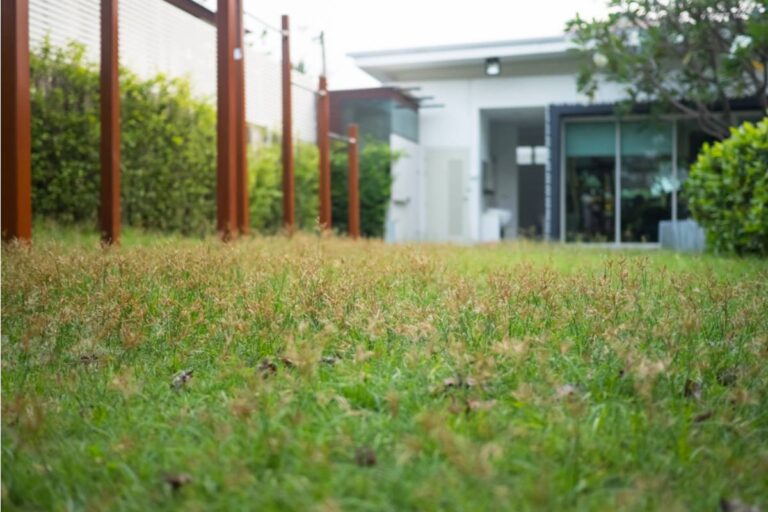
For thirty years, Margaret Hale kept one strange patch of bare earth in the middle of her backyard garden. She planted flowers around it, watered the soil when everything else was dry, and refused every suggestion that she should fill it with something useful.
Her daughter, Rachel, grew up assuming it was simply one of her mother’s peculiar habits, until one afternoon she finally asked the question Margaret had been avoiding for decades.
Rachel Finally Pointed at the Empty Space
Rachel was helping her mother divide a clump of daylilies when she noticed the bare patch again. It was roughly the size of a small grave, perfectly maintained and bordered by smooth river stones that Margaret had carefully repositioned every spring. “Mom, seriously,” Rachel said, leaning on her shovel, “what is supposed to go there?”
Margaret froze with a handful of weeds in her glove. She looked at the dirt, then at her daughter, and said, “Nothing.” Rachel laughed because she had heard that answer before, but this time Margaret did not smile with her.
The Question Had Been Asked Before
Rachel remembered asking about the patch when she was eight, after planting a sunflower seed there without permission. Margaret had rushed outside, pulled the seed from the dirt, and told her never to plant anything in that particular spot. At the time, Rachel had assumed her mother was simply being overly protective of some buried bulb.
Years later, when Rachel was a teenager, she had jokingly suggested putting a birdbath there. Margaret had become unusually serious and told her that the space needed to remain exactly as it was. Rachel had eventually stopped asking, partly because she thought the answer would be boring and partly because she knew her mother hated discussing the past.
Margaret Put Down Her Garden Shears
That afternoon, Margaret sat on the edge of the porch while Rachel remained standing beside the garden. She removed her gloves slowly and placed them beside her, then stared toward the empty soil as though someone had suddenly moved it closer to her. “Your father knows,” she finally said.
Rachel felt a strange chill because her father had died eleven years earlier. She asked whether the patch had something to do with him, but Margaret shook her head and said, “Not exactly.” Then she added, “Your father only knew because I finally had to tell him.”
The Old House Had One Previous Owner
Margaret bought the house in 1974, long before Rachel was born. The backyard had been mostly grass then, except for an old vegetable garden left behind by the previous owner, a woman named Evelyn Price. Margaret remembered Evelyn as a quiet widow who had lived there for decades and seemed reluctant to leave.
According to Margaret, Evelyn had shown her around the property on the day the house changed hands. She had pointed toward the center of the backyard and said, “That part stays empty.” Margaret had assumed she meant until the grass grew back, but Evelyn’s expression made it clear that she meant something more permanent.
Evelyn Left Behind More Than a Garden
After moving in, Margaret discovered that Evelyn had left several gardening tools in the shed. There were hand pruners, a rusted wheelbarrow, seed packets, and a wooden planting box with Evelyn’s initials carved into the side. At the bottom of the box was a folded note that simply said, “Please don’t disturb the earth.”
Margaret found the note strange but respected it because she had no reason not to. She planted roses along the fence and vegetables near the kitchen, but she deliberately left the center untouched. For years, she told herself that she was honoring a harmless request from an elderly woman she barely knew.
A Storm Exposed Something Beneath the Soil
The first real mystery appeared after a violent storm knocked down part of the backyard fence. When Margaret went outside to inspect the damage, she noticed that rain had washed away several inches of soil near the empty patch. Something pale was visible beneath the dirt.
She crouched down and brushed the soil away with her fingers. It was the corner of a small metal box, badly rusted but still sealed. Margaret remembered Evelyn’s warning and immediately stopped digging, but curiosity eventually won because the box was already exposed.
The Box Contained a Child’s Things
Inside the box, Margaret found a faded photograph of a little girl, a blue ribbon, a tiny silver shoe charm, and several folded pieces of paper. There was no name on the photograph, but the handwriting on one of the papers belonged to Evelyn. Margaret read the first few lines and realized she had discovered something that had never been mentioned during the sale of the house.
The papers described a daughter Evelyn had lost when she was young. Margaret could not understand whether the child had died in the house, disappeared, or simply been taken away by another relative. The final page contained one sentence that frightened her enough to close the box immediately: “One day someone will come looking for what I buried.”
Margaret Asked Her Husband for Help
Margaret told her husband, Thomas, about the box that evening. He wanted to call the police, but Margaret insisted that she first needed to understand what Evelyn had meant. Thomas reminded her that they had no idea whether the documents were important or whether the story was even true.
They returned to the garden with a flashlight and examined the patch without disturbing it further. Thomas noticed something Margaret had missed, a small iron stake hidden beneath the grass near the river stones. Scratched into the metal were two initials that matched the name written on the photograph.
The Search Led to an Old Newspaper
Thomas spent several weekends searching through newspaper archives at the local library. Eventually, he found a short article from decades earlier about a child named June Price who had disappeared from the area. The article was brief, but it mentioned that Evelyn had reported her daughter missing after an argument with June’s father.
Margaret felt sick when she read the article because it suggested that June had not died. She had apparently been taken by her father, who left the state shortly afterward. There was no evidence that Evelyn had ever seen her daughter again.
The Empty Patch Took on a Different Meaning
Margaret kept the garden exactly as it was while Thomas continued researching the family. She began to understand why Evelyn had refused to let anyone disturb that particular section of soil, even though there was no grave beneath it. It was not a grave at all, but a place where Evelyn had hidden the only belongings she still possessed that connected her to her daughter.
Margaret decided the patch was no longer simply Evelyn’s secret. She felt responsible for protecting whatever remained of the story because she was now the only person living there who knew about it. She never told Rachel because she feared that once the story entered the family, the garden would become a place of speculation instead of peace.
Rachel Found the Old Photograph
Rachel eventually discovered the photograph years later while cleaning the basement after her father’s death. She recognized the little girl immediately because she had seen the same face in a framed photograph at Evelyn’s old house, although she had no idea how it had ended up in her mother’s possession.
When Rachel confronted Margaret, her mother finally admitted everything. She explained that she had spent decades believing Evelyn might eventually return for the belongings, even though nobody ever came. Rachel asked why Margaret had never contacted the family, and Margaret replied, “Because I didn’t know whether I was protecting someone or protecting a lie.”
A Stranger Arrived With a Familiar Name
Several months after that conversation, a woman named June Price called Margaret’s house. Rachel happened to be visiting when the phone rang, and she watched her mother’s face change as the woman introduced herself.
June explained that she had spent most of her life believing her mother had abandoned her. She had recently discovered records suggesting that Evelyn had searched for her for years and had eventually stopped only after being told that June wanted no contact. Margaret listened silently before asking whether June remembered the old house.
“I remember the garden,” June said.
The Patch Was Not What Anyone Expected
June came to the house several weeks later, and Margaret walked her into the backyard. She stopped when she saw the empty patch and immediately covered her mouth with both hands.
“I thought she planted something here,” June whispered. Margaret told her about the metal box, the photograph, and the letters. June began crying before Margaret had even finished explaining what was inside.
She knelt beside the river stones and placed one hand against the soil. “She told me once that she would save a place for me,” June said. Margaret realized that Evelyn had never meant the patch to contain a grave. She had meant it as a place waiting for someone who might someday come home.
June Opened the Box Herself
Margaret brought the metal box inside and placed it on the kitchen table. June opened it carefully, removing each item as though she were afraid the smallest movement might erase decades of history.
When she found the blue ribbon, she immediately recognized it. She explained that her mother had tied one around her hair before she was taken away, and she had remembered it for most of her life. The little silver shoe charm was even more important because June had worn its matching pair as a child.
Margaret watched June hold the charm against her palm and finally understood why Evelyn had insisted that the patch remain untouched. It had never been about dirt or gardening. It had been about leaving a physical place for a memory that refused to die.
Rachel Learned Why Her Mother Stayed Silent
That evening, Rachel and Margaret sat together on the porch after June had gone home. Rachel admitted that she had spent years thinking her mother’s refusal to explain the garden was frustrating and unnecessary.
Margaret apologized for keeping the secret, but Rachel told her she finally understood. “You weren’t keeping a secret from me,” she said. “You were keeping someone else’s promise.”
Margaret looked toward the empty patch and nodded. “I suppose I was.”
The Garden Finally Changed
For the first time in thirty years, Margaret asked Rachel to help her plant something in the bare soil. They chose a small flowering tree because it would eventually provide shade over the entire center of the garden.
Rachel dug the first hole while Margaret held the young tree upright. Before they covered its roots, Margaret placed a small stone at the bottom with Evelyn’s initials carved into it.
She did not bury the photograph or the letters again. Those belonged with June now.
June Came Back With Her Own Memory
A few weeks later, June returned carrying a cardboard box filled with photographs. She spread them across the porch and showed Margaret pictures of herself as a little girl, including one taken shortly before she disappeared.
In the photograph, June wore the blue ribbon and the matching silver shoe charms. Margaret stared at the picture and then looked toward the young tree growing in the garden.
“She would have loved this,” June said.
Margaret smiled. “She would have complained about where I planted it.”
June laughed through her tears.
The Garden Was No Longer Waiting
The tree grew slowly, and Margaret continued tending the rest of the garden as she always had. The old empty patch disappeared beneath its widening roots and a circle of flowers that June helped choose.
Rachel eventually understood that the space had never been waiting for a plant, a statue, or even a grave. It had been waiting for a story to finish.
Thirty years after Margaret first inherited Evelyn’s secret, the garden finally contained something new in the place that had always been kept empty. It contained a living tree, planted by a mother, a daughter, and a granddaughter who had finally found each other through the soil.
And Margaret no longer had to tell anyone that nothing was supposed to go there.