She Was Gardening in Her Own Yard When a Neighbor Started Shouting at Her, and the Neighborhood Soon Discovered This Was Only the Beginning
A person shared his story about a neighborhood where most people got along perfectly well, with one glaring exception. The trouble seemed to follow a pair of neighbors who repeatedly found reasons to confront, document, and accuse people around them. At first, the incidents sounded like isolated arguments, but over time they began to feel like pieces of a much bigger pattern.
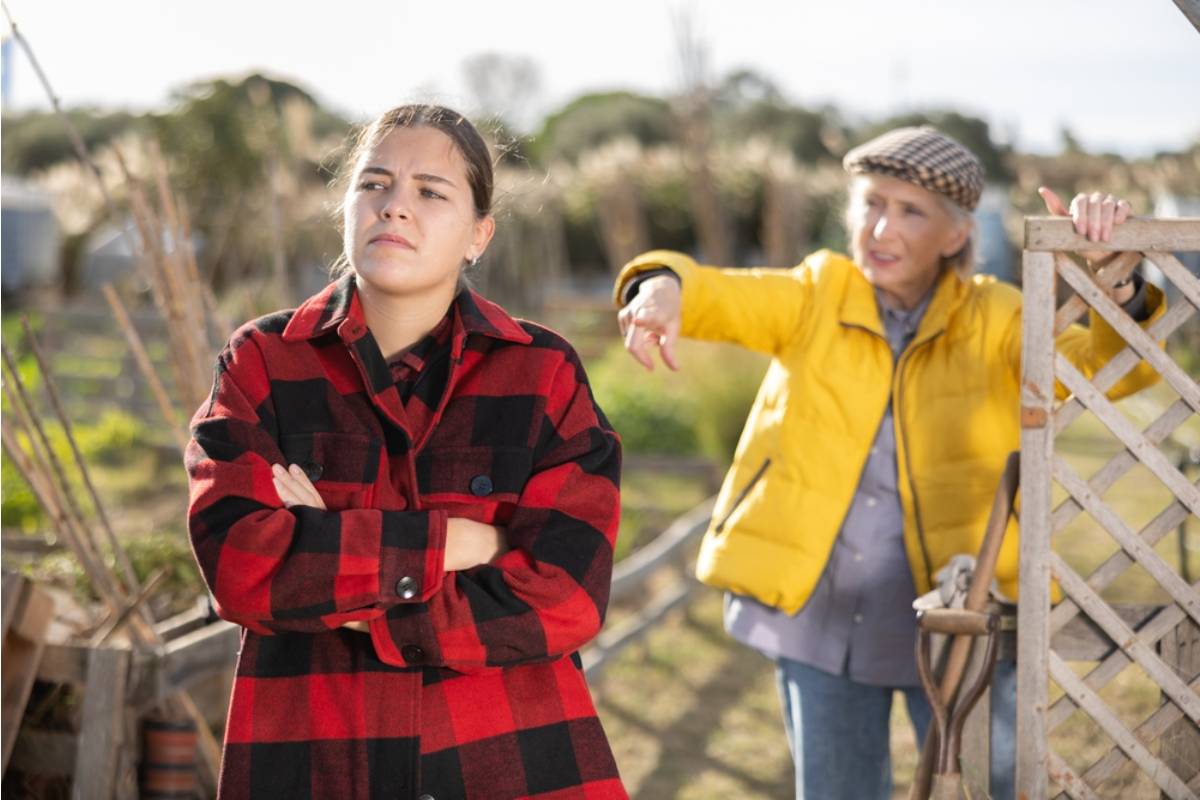
One of the strangest moments happened while a middle-aged woman was gardening in her own yard. She was wearing garden boots, gloves, gym shorts, and a bathing suit top while working outside, apparently doing nothing unusual at all. Then one of the neighbors opened a window and shouted an insulting accusation about her appearance.
A Quiet Afternoon in the Garden Suddenly Turned Ugly
The gardener was simply trying to get through her outdoor chores when the shouting started. There was no reported argument beforehand, no dispute over a flower bed, and no obvious reason for the confrontation. A normal afternoon among tomato plants and garden tools suddenly became something the neighbors would remember.
According to the story, this was not treated as a one-time outburst. The same neighbor was also known for filming or recording people while slowly driving past their homes. What might have looked like an ordinary car passing by instead became another uncomfortable chapter in the neighborhood’s growing list of incidents.
The Cameras Appeared Whenever People Were Outside
Neighbors reportedly became accustomed to seeing a phone pointed in their direction whenever they were outside. The recording seemed particularly unsettling because there was often no conversation or explanation attached to it. People were left wondering whether they were being watched simply because they had stepped into their own yards.
For a community where gardening, walking, and chatting outside were supposed to be routine parts of daily life, that atmosphere became exhausting. Even simple tasks such as watering plants or working around a flower bed could suddenly feel like an invitation for another confrontation. The story suggested that the constant attention was almost as stressful as the direct arguments.
Then the Legal Letters Started Landing
The situation eventually moved beyond shouting and recording. Multiple neighbors reportedly received cease-and-desist letters containing demands that seemed unrelated to ordinary neighborhood disputes. One homeowner was even accused of staring toward the troublesome neighbors’ patio because she had a desk inside her own house for working from home.
The letters created a new kind of problem because people had to spend time and money responding to claims they considered baseless. According to the person who shared the story, attorneys became involved because the couple repeatedly used legal complaints against individual neighbors and the homeowners association. The lawsuits were reportedly dismissed, but the financial cost of responding to them still piled up.
Even the Garden Wasn’t the Only Place People Felt Watched
The tension did not stay neatly inside property lines. An elderly neighbor’s caregivers were reportedly harassed and threatened, leading to protective orders being sought. Suddenly, the issue was no longer simply about homeowners disagreeing over fences, patios, or yards.
The story described a neighborhood where people increasingly felt that ordinary interactions could become another source of conflict. Some neighbors stopped engaging altogether, hoping distance would make the situation disappear. Unfortunately, avoiding contact did not seem to stop the stream of complaints and accusations.
One Flag Turned Into an Absurd Threat
At one point, another neighbor put up a Pride flag at his home. The couple reportedly responded by threatening to display a Nazi flag if the flag was not removed. The bizarre exchange became one of the most memorable examples of how quickly an ordinary household decision could turn into a neighborhood dispute.
A response from a person suggested that the threat only made the situation stranger, because putting up another flag would hardly accomplish what the couple apparently wanted. Other responses joked that the community might as well let them choose whatever they wanted to display. Beneath the humor, though, the story showed just how far ordinary neighborly disagreements had spiraled.
The Community Finally Started Comparing Notes
For a long time, each neighbor apparently dealt with the problem separately. Then people began talking to one another and realized that the incidents were not isolated. According to the person who shared the story, the community eventually had nearly 200 documented examples of threatening or harassing behavior.
That discovery changed the dynamic completely. Instead of isolated homeowners wondering whether they were imagining a pattern, neighbors began keeping records and supporting one another. A response from a person summed up the idea simply, noting that when one person has trouble with nearly everyone around them, it is worth looking at the larger pattern.
Even the Homeowners Association Was Pulled Into the Drama
The conflict did not spare the homeowners association. Complaints and lawsuits reportedly targeted the association as well as individual residents, adding another layer of administrative frustration. At one point, even the community’s management company reportedly decided it would only continue working with the neighborhood if it could avoid direct contact with the troublesome couple.
That detail revealed how widespread the problem had become. This was no longer one gardener arguing with one neighbor about a hedge or flower bed. It had become a community-wide headache involving homeowners, caregivers, lawyers, management staff, and law enforcement.
Then Came the Most Exhausting Part
The police were reportedly already familiar with the situation, and neighbors had spoken with lawyers about the repeated legal actions. The person who shared the story explained that even when the cases were thrown out, the neighborhood still had to absorb the expense, stress, and lost time. There was no simple button that could make the problem disappear.
The strangest part was that the couple eventually moved away. For a moment, the neighborhood finally felt as though it could breathe again. Then came the twist that made everyone question whether the story was actually over.
They Moved Away, But Barely Went Anywhere
Instead of leaving the area entirely, the neighbors moved literally next door. The people who had been relieved to see them leave suddenly discovered that the new house was still close enough for the same pattern to continue.
According to the story, there were still slow drive-bys, walk-bys, staring, online posts, and certified letters sent to multiple neighbors. The physical distance had changed, but the behavior had not. For gardeners who wanted nothing more complicated than a quiet afternoon tending flowers, that was a particularly unwelcome surprise.
The Garden Became a Symbol of Normal Life
What makes the story especially striking for gardeners is how ordinary the peaceful moments were supposed to be. A person should be able to kneel in a flower bed, trim a plant, pull a weed, or water a vegetable patch without wondering whether someone is watching from a passing car. Yet the repeated incidents turned those simple routines into moments of tension.
Gardens are often where neighbors naturally meet, whether they are trading seedlings, admiring roses, or talking over a fence. In this neighborhood, even those harmless connections became harder to enjoy because nobody knew when another complaint might arrive. The contrast between everyday gardening and the escalating conflict made the story even more bizarre.
Other Neighbors Had Their Own Escape Plans
As the story spread, some responses from people described why they preferred corner lots, rural properties, or simply more distance from their neighbors. One person joked that living on a ranch with the nearest neighbor a quarter mile away suddenly sounded extremely appealing. Another person mentioned working on fences between feuding neighbors and said that building a barrier sometimes became an unusual opportunity to restore basic respect.
Those reactions highlighted something important about neighborhood life. Most people are not looking for their neighbors to become their best friends, but they usually hope for a little peace and mutual boundaries. When that disappears, even a simple fence can start looking like the best garden feature money can buy.
The Community Discovered Its Real Strength
The person who shared the story said the biggest change came when neighbors stopped handling everything alone. People began communicating, documenting incidents, consulting professionals, and presenting a united front rather than reacting individually. That did not solve every problem, but it reportedly made the community feel less isolated.
That unity also changed the emotional balance of the neighborhood. Instead of everyone quietly enduring the same behavior, residents knew they could compare notes and support one another. For a community filled with gardens, lawns, porches, and shared boundaries, that sense of cooperation turned out to be more valuable than any single complaint or argument.
So, Did They Actually Win?
The person who shared his story jokingly asked whether the neighborhood had finally “won,” but the question was not really about a scoreboard. It was about whether a group of residents could keep their community functioning while dealing with an unusually persistent source of conflict. By the end, the answer seemed to depend less on getting the last word and more on refusing to let the situation consume everyone.
The final twist was that moving did not completely end the problem, so there was no neat storybook ending. Still, the neighbors had something they did not have at the beginning: each other, records of what had happened, and a clearer understanding of the pattern. In a neighborhood where a gardening afternoon could become unexpectedly dramatic, simply being able to stand together may have been the closest thing to a victory they were going to get.