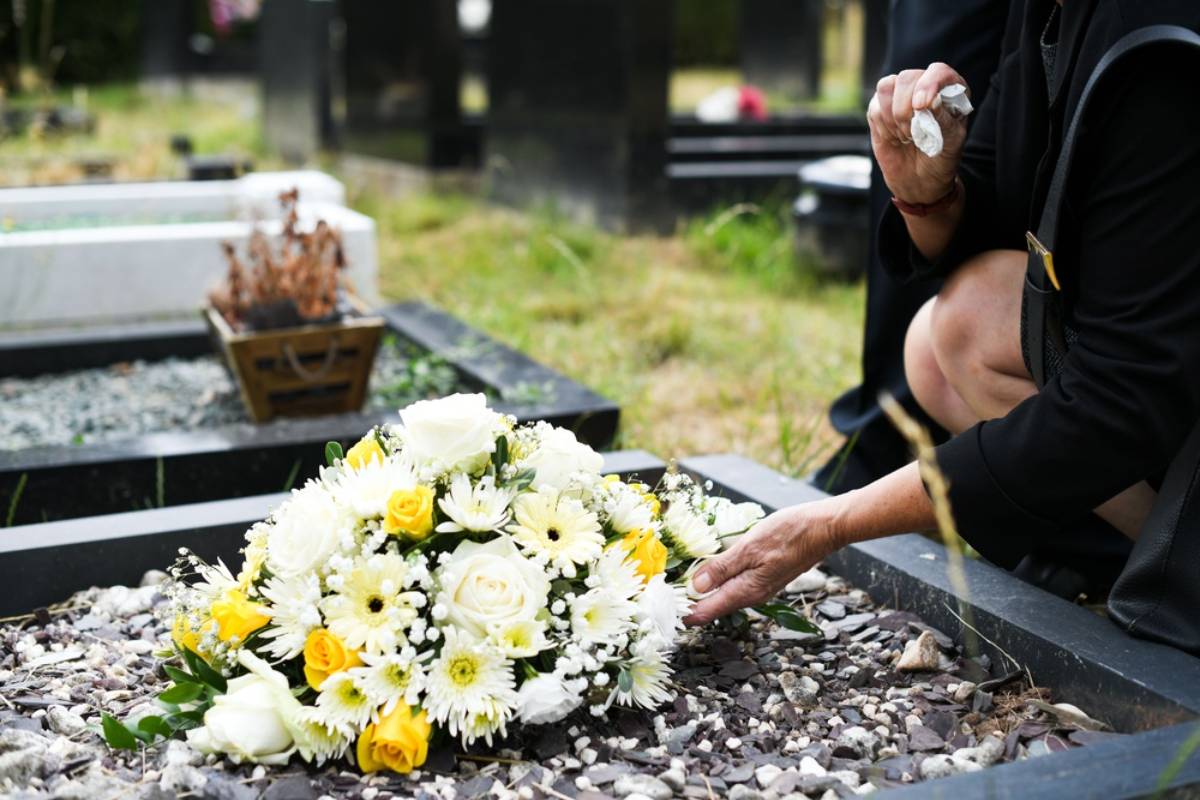
A Family Tried to Honor a Late Father’s Memory With a Simple Grave Decoration, Until an Old Feud Turned a Cross Into the Center of a Sheriff’s Investigation
A person shared his story about a family dispute that began after his father passed away and somehow followed him all the way to the cemetery. What should have been a peaceful place to remember a loved one became another battleground in a conflict that had already dragged on for months. Instead of arguing over flower beds, shrubs, or garden ornaments, the family found itself fighting over a cross placed beside a gravestone. The surprising part was that nobody had destroyed the decoration, but even turning it around became a source of serious tension.
For many families, tending a gravesite is a little like caring for a garden filled with memories, where every flower and keepsake carries a personal meaning. Some people prefer fresh bouquets, while others choose small stones, artificial arrangements, or religious symbols to make the space feel special. These gestures can provide comfort long after a funeral has ended. However, when relatives disagree about what belongs at a memorial, even a small decoration can become the seed of a much bigger dispute.
The Father’s Passing Left Behind More Than Grief
The man’s father had passed away early the previous year, leaving his family to navigate the difficult process of mourning and making arrangements. His grandmother had provided a burial plot for his stepmother, allowing his father to be laid to rest in a nearby government cemetery in West Virginia. The family eventually arranged for a tombstone to be purchased and installed, giving them a permanent place to visit and remember him. It was supposed to be a fresh start for a family already dealing with a painful loss.
Unfortunately, the relationships surrounding the funeral were already strained before the gravestone arrived. The man explained that he and his stepmother had fallen out with his father’s youngest brother over disagreements about how his father’s needs should be handled. According to his account, the uncle had not been visiting as much as they believed he should, yet still wanted to dictate decisions. The disagreement would soon spill into the cemetery, where a seemingly ordinary decoration reopened old wounds.
An Old Argument Over Family Property Made Everything Worse
The conflict did not begin with the grave decoration itself, and that detail made the situation considerably more complicated. After the father’s death, the uncle reportedly claimed that certain property belonging to the deceased man had actually always belonged to him. The storyteller disputed that claim, explaining that his grandfather had given the property to his father rather than to the uncle. What might have been a disagreement over inheritance eventually developed into a legal battle.
The man’s stepmother and he responded with a countersuit that included allegations of harassment and requests for restraining orders. The uncle eventually sought to dismiss his lawsuit after hiring a lawyer, and their attorney requested a dismissal with prejudice. That request was granted, meaning the same claim could not simply be brought again under the same circumstances. With the property dispute apparently settled, the family might have hoped to move forward, but the cemetery would soon become the next stage of the conflict.
The Gravestone Finally Arrived, Bringing a Chance to Remember
The father’s tombstone was purchased by his stepmother and installed in August 2025. For the family, this was an important milestone because it established a permanent memorial where they could visit, leave flowers, and spend time remembering him. A carefully maintained gravesite can offer the same kind of comfort that comes from tending a beloved garden, with familiar objects providing a sense of connection. After months of arguments, the family finally had something meaningful to focus on instead of another legal dispute.
Yet the memorial did not remain a place of uncomplicated remembrance for long. The uncle decided to place a cross at the grave, and the decoration included a photograph of the father with several family members. Although the gesture may have been intended as a tribute, the storyteller said the picture was one his father had explicitly disliked. Suddenly, the question was no longer simply about decorating a grave, but about whether a memorial should reflect the wishes of the person being remembered.
The Cross Featured a Photograph the Father Had Disliked
According to the storyteller, the photograph on the cross showed his father alongside his grandmother, two uncles, and two aunts. He explained that his father had previously told the family, including him and his stepmother, that he hated the picture. The image reportedly captured his father during a difficult period, making it particularly upsetting for those who knew how he felt about it. What the uncle considered a grand gesture was therefore seen very differently by the people closest to the father’s wishes.
The man and his stepmother attempted to address the issue by informing the family about the father’s feelings toward the photograph. They asked for the image to be changed rather than immediately removing or damaging the decoration. However, their request was not granted, leaving them with a memorial display they believed misrepresented the person they were trying to honor. The disagreement illustrates how even a seemingly small choice, such as selecting a photograph or planting flowers around a headstone, can carry enormous emotional weight.
Instead of Removing the Cross, They Found a Different Solution
When the family realized the photograph would not be changed, the man and his stepmother chose an unusual compromise. The cross was attached to a metal spike driven into the ground, and it could swivel if lifted slightly. Rather than taking the decoration away, they began turning it so that the photograph faced away from the grave and away from them. It was a small physical adjustment, but one that allowed them to visit the memorial without having to look at an image they associated with their father’s unhappiness.
The arrangement became a recurring part of their visits to the cemetery. Whenever they returned and found the cross facing them, they turned it around again. From their perspective, they were not destroying the decoration or preventing the uncle from owning it, but simply changing its orientation. However, the repeated action would later become the basis for a complaint that brought an entirely new set of worries into their lives.
A Small Twist of the Wrist Suddenly Became a Legal Question
The situation took an unexpected turn when the storyteller received a call from the sheriff’s office. He initially believed the call concerned another matter, only to learn that someone had complained about his handling of the cross at his father’s grave. The reported incident had occurred on December 30, 2025, just one day after the earlier lawsuit had officially been dismissed. The timing immediately caught his attention because the family had already spent considerable time dealing with conflict involving the same relative.
According to the storyteller, the complaint centered on his decision to turn the cross rather than remove or destroy it. He said the sheriff’s office wanted to discuss what had happened, but the officer told him he was not in trouble at that point. The man explained the background of the family dispute and why he and his stepmother had chosen to turn the decoration away. What had started as an attempt to avoid an upsetting photograph had now become a question about cemetery rules and potential criminal consequences.
The Uncle Reportedly Wanted the Prosecutor to Press Charges
During the conversation with the officer, the man learned that his uncle wanted him arrested. According to his account, the uncle had also pushed the prosecutor’s office to pursue charges over the incident. That was a dramatic escalation for an action that, as described, had not involved breaking the cross, removing it from the grave, or throwing it away. The possibility of criminal proceedings added a new layer of stress to an already painful family situation.
The storyteller believed the complaint was connected to the broader pattern of conflict between the relatives. He pointed out that the report had been made immediately after the previous lawsuit was dismissed, a timing he found particularly suspicious. However, the timing alone does not establish the uncle’s motive, and the available account does not show that charges were ultimately filed. What it does reveal is how quickly a disagreement about a memorial decoration can become entangled with a much longer family dispute.
Cemetery Decorations Can Have Rules That Surprise Visitors
For anyone who regularly visits a cemetery to leave flowers or maintain a small planted arrangement, this story raises an important question: who gets to decide what can be placed at a gravesite? Cemeteries often have their own rules covering flowers, religious symbols, decorative stones, small statues, and seasonal displays. These policies may exist to protect the grounds, prevent hazards, and make mowing and other maintenance tasks easier. Some cemeteries are flexible about decorations, while others have strict limits on what visitors can leave behind.
The rules may also depend on whether the cemetery is publicly operated, privately managed, or part of a government burial system. A decoration that is perfectly acceptable in one location might be prohibited in another, even if it seems harmless to the family placing it. For gardeners, this is a useful reminder that a memorial planting or decorative border should always be checked against the cemetery’s guidelines before anything is installed. The goal is to create a peaceful tribute without accidentally creating a new source of conflict.
West Virginia Law Became the Center of the Man’s Concern
The storyteller said he had researched West Virginia’s laws concerning cemetery decorations and believed that turning the cross did not violate the relevant provisions. As he understood the law, the issue involved intentionally destroying, removing, or injuring flowers, plants, or decorations within a cemetery. Because he had not removed or damaged the cross, he questioned whether rotating it could qualify as a violation. His concern was understandable, especially given the threat of possible criminal proceedings.
However, the legal distinction between turning an object, damaging it, removing it, or interfering with someone else’s property can depend on the exact wording of applicable law and the circumstances. Cemetery-specific rules, the rights associated with the burial plot, and other potentially relevant laws may also matter. The storyteller’s interpretation is not the same as a formal legal determination, and the account does not establish a definitive ruling on the question. Anyone facing a similar situation would need to consult a qualified West Virginia attorney rather than rely solely on a general description of the law.
A Response From a Person Suggested Keeping the Situation From Escalating
A response from a person advised the storyteller to stop discussing the matter with law enforcement or other people and suggested that the family member might be using the situation to continue the conflict. The advice reflected concern that further conversations could complicate an already sensitive legal matter. Even when someone believes they have done nothing wrong, repeated explanations made in the heat of a family dispute can sometimes create misunderstandings. The storyteller had already spoken with the officer, so the next step would be to approach any further communication carefully.
The man later added that he had nothing to hide about what happened. He also reported that the deputy did not believe a crime had been committed in the situation. That statement offered some reassurance, but it did not necessarily constitute a formal legal finding or guarantee that the matter could never be revisited. The distinction is important because an informal conversation with an officer and an official decision by a prosecutor are not the same thing.
The Family’s Earlier Lawsuit Made the Timing Even More Suspicious to Them
The timing of the complaint became one of the most striking details in the story. The previous lawsuit had been officially dismissed on December 29, 2025, and the reported incident involving the cross took place on December 30. From the storyteller’s perspective, the proximity between those dates made it difficult to view the new complaint as an entirely separate disagreement. The family had just reached the end of one legal battle when another possible legal problem appeared.
Still, the available account provides only the storyteller’s perspective, so it cannot establish exactly why the uncle made the complaint or what he hoped to accomplish. Family disputes can involve competing interpretations of the same events, especially when grief and property disagreements are already involved. What is clear is that the earlier conflict shaped how the man understood the incident at the cemetery. Without that history, turning a cross might have appeared to be a minor disagreement about a memorial, but with it, the gesture took on a much larger meaning.
Even a Garden-Inspired Memorial Can Become a Source of Conflict
Cemetery visits often involve the same thoughtful choices that go into maintaining a home garden. Families select flowers for their colors, choose plants that remind them of a loved one, or place small decorations that reflect a person’s personality. A carefully arranged memorial can become a place of peace, much like a favorite corner of a garden where someone can sit quietly and reflect. But when relatives disagree over the meaning of a decoration, the memorial can become a reminder of the conflict instead.
One family member might see a cross and photograph as a loving tribute, while another sees an image that the deceased person would never have wanted displayed. Neither flowers nor decorative objects automatically carry the same meaning for everyone who visits the grave. That is why discussing memorial choices before installing them can be so valuable, particularly when family relationships are already strained. A little consideration can sometimes prevent a small decorative decision from becoming the center of a much larger argument.
The Biggest Lesson Was About Respecting the Person Being Remembered
At the heart of the story was not simply a question about cemetery decorations, but a disagreement about how to honor someone who could no longer express his wishes. The storyteller believed that his father’s stated dislike of the photograph should have mattered when the cross was placed at the grave. His uncle apparently viewed the decoration differently, and the disagreement was never resolved through a change to the image. The result was a memorial that became associated with tension rather than the comfort it was meant to provide.
For gardeners and families who enjoy creating living memorials, the story offers a useful reminder to put the person being remembered at the center of every decision. That might mean choosing their favorite flowers, planting something they once grew themselves, or selecting a photograph they would have been happy to see displayed. It also means checking cemetery policies and communicating respectfully with relatives whenever possible. A memorial should ideally be a place where memories can grow peacefully, not another patch of ground where an old family feud takes root.