Some Homeowners Are Growing Sweet Potatoes as Ground Cover Instead of Grass, And People Who Tried It Say They Ended Up With More Food Than They Planned For
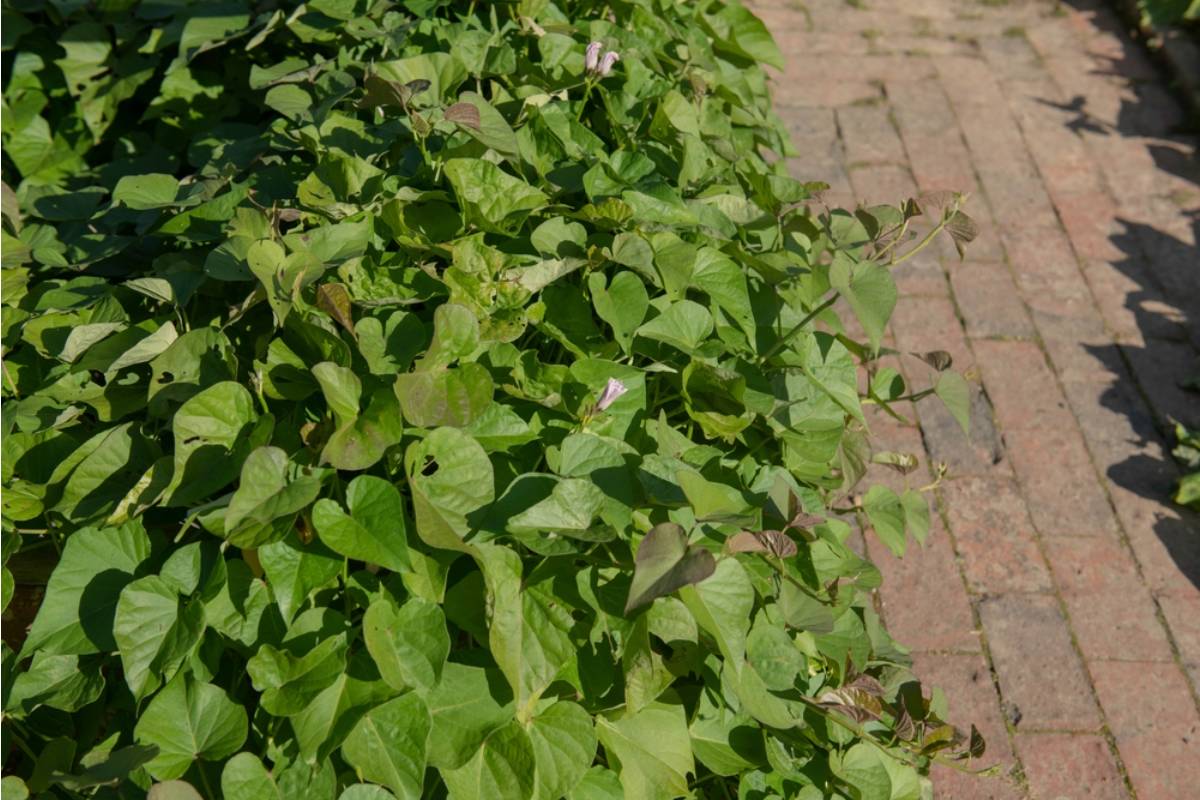
She had struggled with her front lawn for years, trying to keep it alive through dry summers and patchy soil. No matter how much she watered or reseeded, parts of it always turned brown and thin. One afternoon, she saw a neighbor’s yard covered in thick green vines that looked nothing like traditional grass. It turned out to be sweet potatoes spreading across the soil like a living carpet. That idea stayed in her mind longer than she expected.
A casual suggestion that changed her plan
A local gardening group met at a community center, and she mentioned her lawn problem in passing. One older member smiled and said, “Why are you fighting the ground when you could use it?” He explained that sweet potato vines could cover space quickly and choke out weeds naturally. The idea sounded unusual, but it also sounded easier than constant lawn repair. She went home that day thinking more about food than grass.
The first planting experiment in the yard
She started with a small section near the driveway, planting slips she bought from a local nursery. The soil was loosened and mixed with compost, but she did not expect fast results. For the first couple of weeks, nothing seemed to happen above the surface. Then small green shoots began to stretch outward in different directions. Her husband joked that it looked like the yard was slowly taking over itself.
When the vines started spreading faster than expected
By mid season, the vines were no longer staying in the section she planted. They moved across the yard in long trailing lines, curling around empty spots where grass had failed before. She tried guiding them gently, but they seemed to grow wherever they wanted. Instead of worrying, she started noticing fewer weeds than usual. The lawn was no longer patchy, just unevenly green in a way she did not expect.
A neighbor stopping by with questions
One afternoon, a neighbor slowed down while walking and asked if she had changed her entire yard design. He had never seen anything like it on the street and wanted to know if it was intentional. She explained it was sweet potatoes, not decorative vines or weeds. He looked surprised and asked if it was actually edible. That question made her realize she had not thought that far ahead yet.
The first time she pulled food from the ground
Curious, she checked under the soil near the base of the vines and found small forming tubers. It felt strange to harvest something from what used to be a lawn replacement idea. She carefully dug a few out and brought them inside, unsure if they would even taste good. That evening, she roasted them with simple seasoning. The flavor was better than she expected, soft and slightly sweet.
When the yard started feeling less like decoration
As weeks passed, the yard stopped feeling like something she was maintaining for appearance. It became more like a growing system that kept changing without permission. Some areas thickened while others opened small gaps where soil could still be seen. She stopped trimming and started observing instead. The yard was no longer static, and that shift made her slightly uneasy but also curious.
A friend who did not believe it was real
A friend visiting from another town laughed when she saw the yard and assumed it was decorative landscaping. When she explained it was edible ground cover, the friend asked if she was serious. To prove it, she dug up a small cluster and handed it over. The friend turned it over in her hands, surprised that something so chaotic could produce food. That moment made her realize how unusual the idea still sounded to most people.
The unexpected problem of too much growth
As the vines continued expanding, they started reaching sidewalks and neighboring property edges. She had to begin gently redirecting them back into her yard. It was no longer about planting but about controlling spread. Some mornings she would find new growth patterns she did not remember encouraging. The garden had started making its own decisions.
Harvesting more than she planned for
By late season, the tubers were forming in large clusters across different parts of the yard. Each digging session revealed more than she expected to find. She began storing baskets of sweet potatoes in the garage because the kitchen space was not enough. Friends joked that she had accidentally started a farm without planning to. She started giving away extra bags because she could not keep up.
The conversation with a skeptical passerby
A passerby once stopped and asked if the yard was abandoned or intentionally overgrown. When she explained it was edible ground cover, the person looked unconvinced. He said lawns were supposed to look clean and controlled. She replied that hers was controlled, just in a different way. The conversation ended without agreement, but she noticed more people slowing down afterward.
Realizing the shift in how she saw her home
One evening, she stood at the front door and looked at what used to be a traditional lawn. It no longer felt like something missing grass, but something actively producing food. The texture, movement, and color all changed with the season instead of staying fixed. She realized she had stopped thinking about mowing or watering schedules. The yard had become something closer to a living pantry than decoration.
The yard that no longer felt like a lawn
By the end of the season, she no longer called it a front lawn when describing it to others. It had turned into a dense, spreading cover that fed her household more than she expected. What started as an experiment to avoid lawn maintenance had turned into a steady source of food. Even with its uncontrolled edges, she did not feel the need to go back to grass. The yard had quietly rewritten what a front lawn could be.