Unglazed Terra-Cotta Pots Crack When Soaked Clay Freezes, So Country Living Says to Raise Them Off the Ground and Choose Plants Rated Two Zones Colder
When nights start dipping below freezing, the unglazed clay pots on the patio become one of the easiest things in the garden to lose. Country Living explains that terra-cotta soaks up water when temperatures hover just above freezing, then cracks as that water turns to ice and expands inside the clay.
Its fix is a short list of steps, including raising pots off the ground and choosing plants rated two zones colder than the local USDA zone. Extension horticulturists and public gardens back up the same approach.
Why Unglazed Clay Cracks in a Freeze
In its guide to protecting terra-cotta pots from winter, Country Living writer Christopher Michel says unglazed terra-cotta is the most vulnerable container. The clay is porous, so it pulls in moisture during wet, near-freezing weather. When that water freezes, it expands and can crack or break the pot.
Glazed pots resist absorbing water, Country Living notes, but they are not immune. Moist soil inside can expand enough in a freeze-thaw cycle to crack them too, especially in pots that drain poorly. Pots with plastic liners can also trap water between the liner and the clay, where it freezes and pushes outward.
HGTV describes the same damage. Its guide to preventing cracks in terra-cotta pots says temperature swings, freezing rain and snow make the clay expand and contract, and that freezing weather can make it fall off in sheets or chunks. Pots resting on wet ground can also freeze to the soil and break when someone tries to move them later.
Choosing Plants Rated Two Zones Colder
The plant matters as much as the pot. Country Living cites Penn State Extension’s advice that plants in above-ground containers should be rated at least two zones colder than the local zone.
Penn State Master Gardener Barb Ryan explains the reasoning in an extension guide to overwintering container plants. A plant’s USDA hardiness zone reflects how it survives in the ground, where soil insulates the roots. In a container sitting above ground, the roots can get as cold as the winter air. Her advice is to go two zones colder, use larger pots for more insulation and give the containers some protection.
Ryan also warns that clay, ceramic and glazed pottery may crack if left outside, and suggests wrapping any that must stay out in an insulating material like bubble wrap and covering them with plastic.
Raising, Covering and Grouping Pots That Stay Out
For pots too big to move, Country Living lists six protections. Glazed ceramic pots are the better choice for permanent outdoor containers; they cost more but last longer. Large rocks or lava rocks in the bottom of big pots improve drainage and leave room for water to expand. A lean-to, open shed or carport keeps rain and snow off.
Grouping movable pots together and surrounding them with hay or mulch adds insulation. Raising pots on stands keeps them out of standing water that can freeze against the clay. Bubble wrap is the last resort for short freezes, since the trapped air gives some insulation.
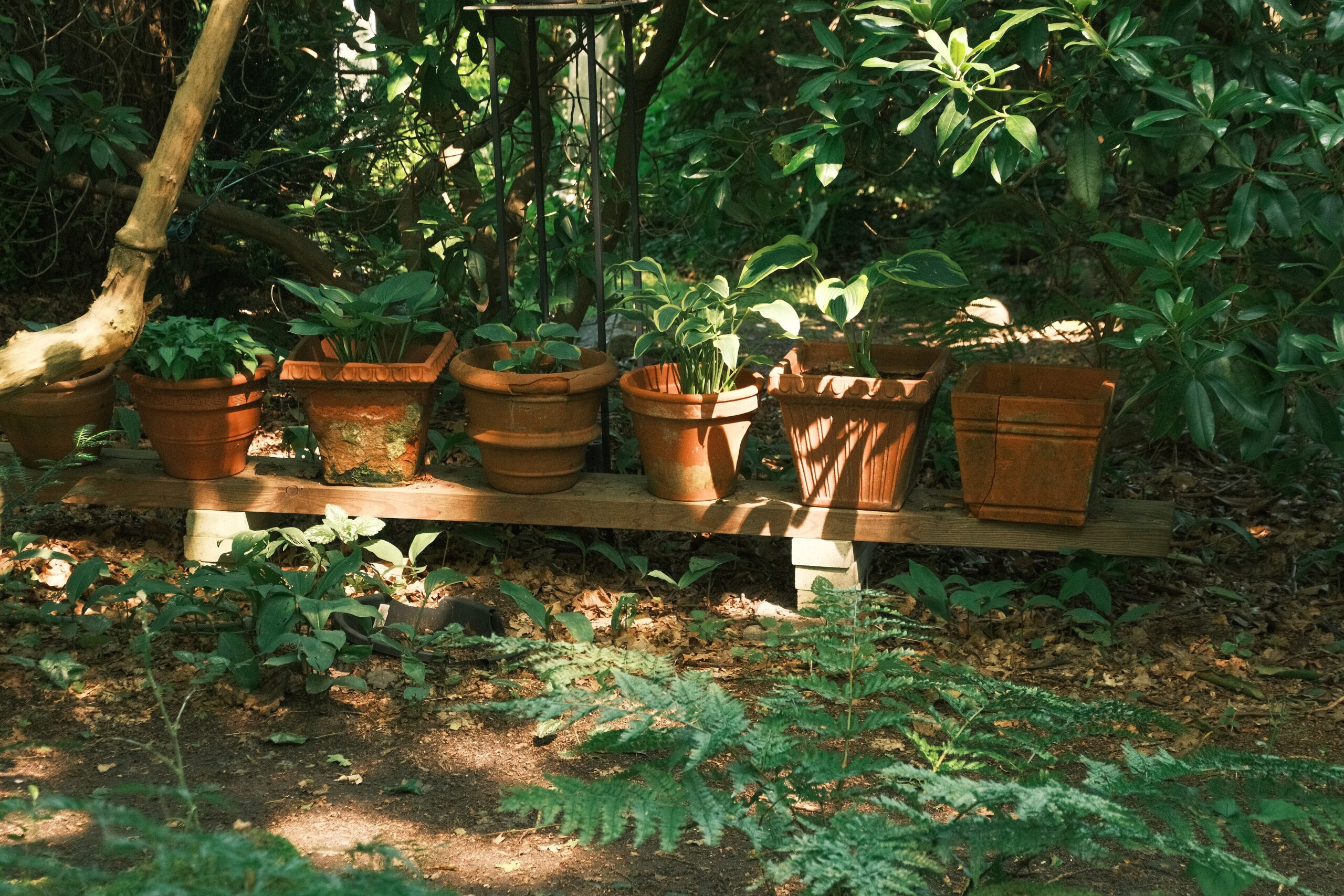
HGTV recommends the same raising step, using concrete, bricks, planter feet, rocks or wood to lift pots off wet ground. It also suggests a chicken-wire cage stuffed with leaves or straw around a pot for extra protection. Large pots that can’t come inside can be turned upside down under a waterproof tarp, HGTV says, or wrapped and laid on their sides if they are too heavy to flip, so water and snow can’t collect in them. Without indoor space, the eaves of a house or shed offer some shelter. HGTV also cautions that a “frost-proof” label only means something if the pot is actually rated for sub-freezing temperatures.
Tim Johnson, director of horticulture at the Chicago Botanic Garden, gave similar advice in a Daily Herald column on terra-cotta pots. For pots that must stay outdoors, he recommended raising them off the ground, storing them upside down and covering them with a tarp to keep them as dry as possible.
Emptying and Storing Pots Indoors
The safest place for terra-cotta in winter is inside. Johnson called indoor storage the best option, with the growing medium emptied once plants are done for the year and the pots kept in a garage or shed out of the rain.
Country Living suggests clearing out pots that held annuals and storing them indoors, and moving dormant plants such as caladiums to a garage or basement where they won’t freeze. For plants that must stay outside, it says the pot can be buried in the ground and covered with hay or insulating mulch until spring.
University of Illinois Extension makes the same point about soil in its guide to overwintering plants in containers. Most containers can be damaged by freeze-thaw cycles if soil is left in them over winter, it says. Large concrete and wooden planters generally hold up through northern Illinois winters, but other containers should be emptied and stored upside down to extend their life.
HGTV adds a cleaning step before storage. It recommends scrubbing empty pots with a mix of one part bleach to ten parts water, rinsing them well and letting them dry in the sun for a few days, which also helps keep pests and diseases from overwintering. Once dry, HGTV says to stack them upside down and staggered rather than nested, so air can circulate.
Gardeners already moving rosemary and other tender potted herbs indoors can bring the empty clay pots in on the same trip, where they will be ready for spring planting instead of in pieces on the patio.
Get stories like this by email. Sign up for The Parent Diaries Letter.
This article was produced with AI assistance and edited for accuracy against the sources linked above.
Image: Torsten Behrens – CC BY 2.0/Wikimedia Commons